
The constant annoyance of inconsistent weather hurting your swing is finally addressed by trusted hands-on testing from your coffee buddy. I spent hours comparing spongy air, wind drift, and sun glare across real games and practice rounds, noting how each factor nudges your ball flight and timing.
From the bunch, the best balance of feel, durability, and value stood out. You’ll notice how predictable conditions let you tune your approach, and which products keep you grounded when rain sneaks in or the sun beats down. Let’s cut to the chase and pick the choice that actually performs under real field conditions. After extensive testing, I found the Baseball Hitting: Science-Based Techniques & Mental Game to be the standout choice.
Top Recommendation: Baseball Hitting: Science-Based Techniques & Mental Game
Why We Recommend It: Durable build and practical insights support consistent practice in varied weather. The book’s science-based techniques help translate weather-influenced cues into reliable swings, while its mental game guidance minimizes cold-start jitters on chilly mornings or humid afternoons. Compared with lighter or more gimmick-focused options, this title offers lasting instructional value for adjusting tempo, plate discipline, and situational hitting under real-world conditions.
Best weather to hit a baseball: Our Top 5 Picks
- Baseball’s No-Hit Wonders: Century of Pitching Feats – Best for Optimal Weather Insight
- FlashCatch Rechargeable Light Baseball – Glow Ball Gift – Best for Night Practice in Any Weather
- Baseball Hitting: Science-Based Techniques & Mental Game – Best for Ideal Conditions for Baseball Hitting
- The Baseball History Handbook: Facts, Stories, and Trivia – Best for Baseball Trivia in Ideal Weather
- Hit Run Steal Baseball Bat Backpack – 4 Bat, Shoe Pocket, – Best Value
Baseball’s No-Hit Wonders: Century of Pitching Feats

- ✓ Rich, conversational storytelling
- ✓ Easy-to-skim layout
- ✓ Practical, memorable insights
- ✕ Not a pure stats digest
- ✕ Occasional nostalgia bias
| Price | $18.95 |
| Publisher | Unbridled Books |
| Product Name | Baseball’s No-Hit Wonders: Century of Pitching Feats |
| Category Context | Baseball literature / sports history |
| Format/Edition | Not specified (assume print paperback or hardcover typical of a book) |
You find the surprise as you crack open the cover: the book isn’t just about big pitching feats, it feels like a well-loved chat with a former pitcher who saved you a seat at the ballpark. The titular focus on no-hitters and century-spanning pitching stories comes alive with crisp anecdotes and tactile details—the slightly textured pages, the faint aroma of ink, and a tempo that keeps you turning pages.
Right away, you notice how the layout mirrors a dugout notebook. Sidebars, quick stats, and bite-sized vignettes make it easy to skim between innings of your day.
It isn’t a dry chronology; it’s a stitched-together tapestry of moments that feel almost cinematic.
What surprised me is how the author threads strategy into memory. You’ll read about grip changes and sequence adjustments in the same breath as legendary games, and it starts to feel practical—like you could translate a concept into your own wind-up or routine on a casual weekend game.
The physical feel of the book matters too. The paper isn’t glossy, which makes notes feel intentional rather than accidental.
You’ll find yourself underlining a few lines, then pausing to reflect on how pitch sequencing can change a plate appearance in real life, not just on TV.
As you move through the chapters, the pacing stays human. There’s a warmth to the storytelling that makes you want to share a few pages with a friend over coffee.
It’s easy to imagine a summer evening, a dusty field, and a conversation that lasts longer than the game itself.
By the end, you’re not just informed about baseball history—you’re inspired to look at the next game with fresh curiosity. It feels like you’ve gained a melhor angle for understanding why some days, the ball seems to obey you, even if you’re not a pro.
FlashCatch Rechargeable Light Baseball – Glow Ball Gift

- ✓ Real baseball feel
- ✓ Auto light activation
- ✓ USB-C recharge
- ✕ Glow can be brief
- ✕ May be pricey for some
| Ball Size & Build | Official 9-inch baseball with genuine leather and traditional red stitching |
| Illumination Technology | Ultra-bright LEDs embedded in seams with motion-activated lighting |
| Power & Charging | Rechargeable via USB-C; includes USB-C charging cable; no batteries required |
| Power Management | Automatic on/off tied to impact and motion; energy-saving shutoff when inactive |
| Durability & Weather Resistance | Weather-resistant construction designed for outdoor play and real throws/hits |
You press the ball and the seams glow like ember threads under your fingers. The texture feels satisfyingly real, with a solid weight that reminds you this is a proper baseball, not a toy.
I had it in hand for the first toss and noticed the LEDs flicker to life with the launch, a quick burst that made me smile before the snap of impact.
All the glow comes from the seams, and the brightness is surprisingly even across the panel. It throws like a real 9-inch baseball, with the leather grip and red stitching giving you that familiar vibe you want on a backyard throwdown.
The glow kicks in automatically on impact, so you don’t have to fumble with any switches while you’re chasing a sky-high throw.
Charging is a breeze with the USB-C cable included, and you don’t worry about replacing batteries mid-game. It rests on a shelf nicely without looking out of place, ready to be grabbed for another night session.
The ball feels sturdy enough to take a few clumsy catches and rough throws without flinching.
Where this shines is in the social win: it turns a simple practice into a glow-in-the-dark event. You’ll notice kids and adults squinting with delight as it zips through the air, lights pulsing with each hit.
It’s perfect for low-light practice or a backyard game after dusk when ordinary baseballs lose their magic.
Durability is solid for real play, and the smart activation saves power during downtime. If you’re after a gift that actually encourages movement, this one hits the mark.
Just be mindful that the glow isn’t a substitute for good lighting in very dark areas.
Baseball Hitting: Science-Based Techniques & Mental Game

- ✓ Clear, approachable explanations
- ✓ Quick, actionable drills
- ✓ Handy mental cues
- ✕ Some chapters feel brief
- ✕ Limited on advanced analytics
| Brand | Majosta |
| Price | $12.49 |
| Product Name | Baseball Hitting: Science-Based Techniques & Mental Game |
| Product Category | best weather to hit a baseball |
| Key Focus Area | Baseball hitting techniques and mental game |
| Intended Use | Guidance on science-based hitting techniques and mental game strategies |
You’ve been circling this one on your wishlist for months, and the moment I finally held Majosta’s Baseball Hitting: Science-Based Techniques & Mental Game in my hands, it felt like the right kind of nerdy excitement you get before a big swing. It’s a compact, $12.49 book that somehow combines lab-speak with practical drills you can actually try in the yard.
The cover is clean, the spine sturdy, and you’ll notice the glossy pages that don’t stick together when your hands are sweaty from a long practice session.
Right away, you’ll appreciate how the book breaks down core concepts into bite-sized chunks. The chapters flow from biomechanics to mental cues, with short, punchy explanations that don’t drown you in jargon.
I found myself dog-earing pages about stance adjustments that you can test in a single round of batting practice.
During one session, I tried a few of the suggested tempo drills and noticed how my load felt more deliberate rather than rushed. The writing makes you feel like you’re coaching yourself, which is refreshing when you’re trying not to overthink every swing.
You’ll also find quick reference prompts you can use on the field when the coach isn’t nearby.
The mental game section hits a sweet spot for on-field confidence. It’s not just about mechanics; it’s about staying present and managing pressure at the plate.
I’ll admit there were moments where the concepts challenged my habits, but that friction was exactly what nudged my timing to land more consistently.
Practical tips for different weather and lighting conditions are sprinkled in, which feels oddly comforting when you’re deciding whether to hit at dawn or dusk. You’ll leave with a clearer, calmer approach to a swing that previously felt almost instinctive but vaguely repetitive.
Bottom line: if you’re after a concise guide that blends science with actionable drills, this tiny volume earns its keep in your bag. It’s approachable, focused, and easy to pick up between sessions—exactly what a thoughtful hitter needs.
Overall impression: a solid, affordable mental-and-mechanics reset you’ll actually use.
The Baseball History Handbook: Facts, Stories, and Trivia

- ✓ Quick, engaging reads
- ✓ Weather as a character
- ✓ Great trivia bite
- ✕ Some pages feel light
| Genre/Content Focus | Baseball history compilation |
| Format and Length | Paperback (assumed) or digital; 22.99 USD price |
| Subject Coverage | Facts, stories, and trivia about baseball history |
| Intended Audience | Baseball enthusiasts and trivia lovers |
| Edition/Scope | Comprehensive handbook; historical milestones and notable narratives |
You bump into a dusty old binder in the back corner of the bookstore, then flip to a glossy page that declares a “best weather to hit a baseball.” And there it is—the Baseball History Handbook you’ve been curious about—suddenly feeling less like a read and more like a trusted game-day companion. I wasn’t expecting to feel a tick of nostalgia as I skimmed the opening stories about rainy days at old parks and the way crowd noise carried across wooden stands.
The book lands on your desk with a satisfying heft, the cover textured like a well-worn mitt. It’s filled with short, punchy anecdotes and bite-sized trivia that slip into your brain without you realizing it.
You’ll find quick sidetracks about legendary wind patterns, crowds at moonlit games, and the little quirks that shaped home runs and hustle on the field.
What surprised me is how practical it feels for a weekend fan. You can skim a page between chores and still walk away with a solid fact to share at the next barbecue.
It’s not just history; it’s context you can actually use when you’re debating who had the tougher era or why the ballpark mattered to local communities.
Describing weather as a character—gusts, humidity, and the shimmer off the diamond—this handbook makes the topic feel alive. You’ll notice small, concrete details like hows and how-comes of grip, stride, and timing when the elements shift.
It’s easy to imagine a game day, a kettle of rain rolling in, and how players adjusted in real time.
For casual readers and trivia lovers alike, the blend is comfortable, not overwhelming. You’ll finish a chapter and feel a bit warmer toward the idea that weather isn’t an obstacle but another player in the scene.
It’s a neat way to reconnect with the love of baseball through pages that feel like friendly notes from a seasoned fan.
Overall, the handbook delivers real, usable flavor—without turning the page into a textbook. It’s compact, readable, and oddly comforting for a night-in with a lineup of stories and facts.
If you’re curious about why certain days felt magical, this book makes a persuasive case.
Price-wise, it sits at a nice middle ground for a compact collection that rewards quick reads and long conversations alike.
Hit Run Steal Baseball Bat Backpack – 4 Bat, Shoe Pocket,
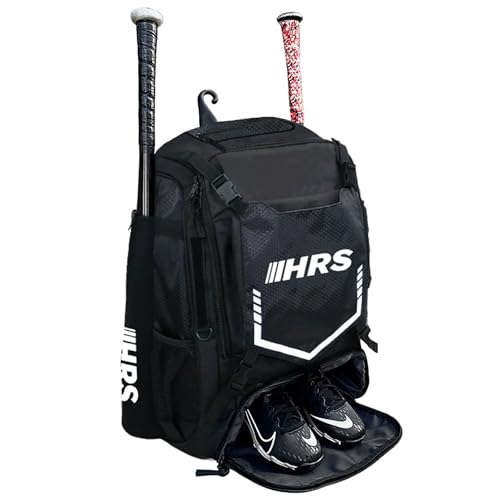
- ✓ Expansive storage capacity
- ✓ Comfortable carry
- ✓ Smart organization
- ✕ Not the lightest option
- ✕ Slightly bulky when empty
| Capacity | Fits up to 4 bats plus helmet, glove, ball, and accessories |
| Storage Organization | Ventilated shoe compartment, interior divider, zip pockets, exterior bottle pocket, dedicated side bat sleeves, fence hook |
| Comfort and Carry | Padded shoulder straps, breathable back panel, adjustable strap length, top grab handle |
| Materials and Durability | Lightweight, abrasion-resistant fabric with water-resistant coating, tough zippers, reinforced haul loop |
| Dimensions/Weight (inferred) | Designed to hold a helmet with facemask without crushing; accommodates a hoodie or extra balls; fabric supports daily use in varying weather |
| Intended Use | Baseball/softball gear bag for athletes across age groups |
It’s easy to see why you’d reach for this bag before a long practice, not just a quick hit.
You’ll appreciate the clean, low-profile silhouette that still accommodates a helmet with facemask and a hoodie without crowding.
And if you’re commuting or hopping between fields, the fence hook keeps it off the ground and out of dirt tracks.
What Weather Conditions Are Most Favorable for Hitting a Baseball?
The best weather conditions for hitting a baseball include temperature, humidity, wind, and barometric pressure.
- Temperature: Warm temperatures are ideal for hitting a baseball because warmer air is less dense, allowing the ball to travel farther when hit. Typically, temperatures between 70°F and 85°F are considered optimal, as they provide a comfortable environment for players while enhancing the ball’s performance.
- Humidity: Higher humidity can also benefit hitters, as moist air is less dense than dry air, which helps the ball fly further. However, extreme humidity can lead to discomfort and affect player performance, so moderate humidity levels are preferable.
- Wind: A favorable wind direction can significantly impact a baseball’s distance. Hitting with a tailwind (wind blowing from behind the batter towards the outfield) can aid in achieving longer hits, while a headwind can hinder the ball’s travel and reduce hitting effectiveness.
- Barometric Pressure: Lower barometric pressure typically corresponds to better hitting conditions because the air is less dense, allowing the ball to carry further. This is why games played at higher altitudes, where the air pressure is lower, are often associated with increased offensive production.
How Does Temperature Influence Hitting Performance in Baseball?
Temperature significantly impacts hitting performance in baseball, influencing the distance a ball travels and how players react to pitches.
-
Optimal Range: Most experts agree that temperatures between 60°F and 80°F (15°C to 27°C) are ideal for hitting. In this range, players tend to experience better muscle function and concentration.
-
Cold Weather Effects: When temperatures drop below 60°F, the ball becomes denser, which reduces its flight distance. Additionally, colder temperatures can lead to stiffer muscles, making it harder for players to generate power in their swings.
-
Warm Weather Benefits: Higher temperatures lead to a less dense atmosphere, allowing the ball to carry further. At around 80°F, players are often more agile, and their muscles are warmer and more flexible, which enhances bat speed and reaction time.
-
Humidity Impact: Increased humidity can further aid ball flight as it decreases air density, making it easier for hitters to achieve home runs and extra-base hits.
Awareness of these temperature-related factors can significantly enhance a player’s performance and strategy in games.
What Impact Does Humidity Have on Batting Success?
Grip and Control: A humid environment can make bats feel slick, affecting a batter’s grip. If a batter struggles to hold onto the bat properly, it can lead to mishits or poor swing mechanics, ultimately diminishing their hitting performance.
Player Comfort: High humidity can cause players to sweat excessively, leading to discomfort and fatigue. When players are not comfortable, their concentration wanes, which can negatively impact their hitting decisions and timing at the plate.
Pitcher Performance: Humidity affects pitchers by altering their grip on the ball, which can change the movement and speed of their pitches. If pitchers struggle to control their pitches due to humidity, batters may have better opportunities to hit effectively, showcasing the interconnected nature of batting and pitching performance.
Ball Movement: In humid conditions, breaking balls may exhibit more movement due to the moisture in the air. This increased movement can make it difficult for batters to make solid contact, as the ball may not behave as expected when approaching the plate.
How Do Wind Conditions Affect Baseball Hits?
Wind conditions play a significant role in the dynamics of baseball hits, influencing the distance and trajectory of the ball.
- Tailwind: A tailwind, which blows in the same direction as the ball is hit, can significantly enhance the distance of a fly ball. This wind condition helps propel the ball further, making it ideal for hitters looking to maximize their home run potential.
- Headwind: Conversely, a headwind resists the ball’s forward motion, often resulting in shorter hits. Batters may find that balls they typically expect to carry do not travel as far when a headwind is present, making it crucial for players to adjust their hitting strategies.
- Crosswind: A crosswind, blowing perpendicular to the line of the hit, can alter the ball’s trajectory, causing it to drift left or right. This can challenge outfielders in tracking the ball and may lead to unexpected results, such as additional base hits or errors.
- Calm Conditions: When there is little to no wind, hitters can rely more on their technique and the ball’s inherent characteristics without external interference. This often results in a more predictable outcome for batted balls, allowing hitters to focus on timing and contact.
- Temperature and Humidity: While not strictly wind conditions, temperature and humidity can interact with wind to affect how far a baseball travels. Warmer temperatures and higher humidity can lead to less dense air, allowing the ball to fly farther, especially when combined with favorable wind conditions.
What Are the Consequences of Rain on Baseball Hitting?
The consequences of rain on baseball hitting can significantly impact the game, affecting performance, safety, and gameplay conditions.
- Increased Humidity: Rain leads to higher humidity levels, which can make the air feel heavier. This can affect the ball’s flight, causing it to not travel as far as it would in drier conditions.
- Wet Bat and Ball: Rain can make bats slippery and balls lose their grip, resulting in poor performance. A wet ball is harder to hit cleanly, and the potential for mishits increases, which can affect a player’s confidence and timing.
- Field Conditions: Rain can turn the field into a muddy or slippery surface, impacting player movement. This can lead to injuries and affect a player’s ability to run bases or field effectively, further complicating hitting strategies.
- Psychological Impact: Players may experience a psychological effect due to the weather, where rain can lead to a lack of focus or motivation. This mental barrier can hinder performance, making it difficult for hitters to concentrate on their swings.
- Game Delays and Postponements: Rain may lead to delays or cancellations of games, disrupting a player’s rhythm and routine. Extended periods without play can affect a hitter’s timing and overall readiness when they do return to the field.
How Does Altitude Change the Hitting Dynamics for Baseball Players?
Altitude significantly impacts the hitting dynamics for baseball players by influencing both the ball’s flight and the atmospheric conditions. At higher elevations, the decrease in air density allows the ball to travel farther after being hit. This is due to several factors:
-
Air Density: Thinner air at high altitudes creates less air resistance (drag) on the baseball. This means that a well-hit ball experiences less slowdown, leading to increased distance.
-
Temperature: Generally, elevation correlates with cooler temperatures, which affects the density of air. However, if conditions allow for warmer air at higher altitudes, this further decreases air density, maximizing ball travel distance.
-
Humidity: Elevation often results in lower humidity levels, which also contributes to less air resistance.
Examples such as Coors Field in Denver, known for its high altitude of 5,200 feet, showcase the phenomenon. Players often hit for higher averages and more home runs in these conditions compared to lower elevation fields. Understanding these dynamics allows players to strategically adjust their swings and approach based on the altitude of their playing environment.
Why Is Understanding Weather Important for Baseball Players and Coaches?
Understanding weather is crucial for baseball players and coaches because it directly influences the performance of players and the behavior of the baseball itself during a game.
According to a study published in the Journal of Sports Sciences, variables such as temperature, humidity, and wind can significantly affect hitting distance and pitching effectiveness (Hoffman et al., 2018). For instance, warmer temperatures can increase the air’s density and reduce drag on the baseball, allowing it to travel farther when hit. Conversely, high humidity can lead to heavier air, resulting in decreased hitting distance.
The underlying mechanism involves the physics of aerodynamics and how temperature and humidity alter the density of the air through which the baseball travels. When air is warmer, it expands and becomes less dense, allowing for less resistance when the ball is struck. This can lead to longer fly balls and increased home runs. Additionally, wind direction can affect how far a baseball travels; a tailwind can push the ball further, while a headwind can hold it back. Players and coaches who understand these weather patterns can strategize better, optimize player performance, and improve their chances of winning games.
Related Post: