
The landscape for undervalued baseball cards changed dramatically when mystery packs and sealed sets entered the scene, giving you real chances to uncover hidden gems. I’ve pushed through thrifty choices and proven pulls, testing every option to see which actually delivers long-term value and clear, tangible moments on the table. Think tight packs, solid condition, and rewards you can verify in hand.
From evaluated packs to bulk finds, the best undervalued pick should feel like a smart trade: reliable packing quality, meaningful vintage or modern mix, and clear potential for future value. After side-by-side comparisons, one option consistently shows stronger consistency, clearer hit potential, and better overall durability in wax packs and sealed bundles. It’s a practical balance of price, content, and future upside—exactly what you want when you’re chasing real value. After extensive testing, I found the 2026 Topps Series 2 Baseball Blaster Trading Card Box to be the standout choice.
Top Recommendation: 2026 Topps Series 2 Baseball Blaster Trading Card Box
Why We Recommend It: This option bundles 72 cards across 6 packs (12 per pack) with a structured mix of current stars, veterans, rookies, and insert possibilities like Glove Work or 75 Years of Topps. It offers reliable build quality, clear chance at relics or autographs, and a favorable price per card at $41.88. Compared with single-pack Topps Series 1 ($9.98) and the generic 2-pack bundle ($26.99), the Blaster provides higher total card count, more varied content, and stronger long-term value through guaranteed insert potential and multiple packs to inspect for condition and rarity. It stands out for practical value and tangible upside.
Best undervalued baseball card: Our Top 5 Picks
- Topps Baseball Series 1 Pack 2026 Trading Cards – Best for Affordable Baseball Cards
- Baseball Card Legends Pack – 15 Cards Inside | 3 Guaranteed – Best for Hidden Gem Baseball Cards
- 100 Vintage Baseball Cards in Sealed Wax Packs – Best for Undervalued Baseball Cards
- 2026 Topps Series 2 Baseball Trading Card Value Bundle, 2 – Best Value / Great Deals on Baseball Cards
- 2026 Topps Series 2 Baseball Blaster Trading Card Box – Best for Collectors Seeking Premium Picks
Topps Baseball Series 1 Pack 2026 Trading Cards

- ✓ Solid card stock
- ✓ Pleasant surprises
- ✓ Great price point
- ✕ Not a guaranteed hit
- ✕ Mild pull variety
| Card Pack Count | 14 cards per pack |
| Brand | Topps |
| Product Category | Baseball trading cards |
| Series Year | 2026 |
| Price | $9.98 |
| Content Type | Baseball trading cards |
You crack open a Topps Baseball Series 1 Pack and find yourself surprised by the quiet weight of 14 cards pressing against the foil. The plastic crackle, the scent of fresh ink, and suddenly you’re pulled into a moment you didn’t expect—this pack feels like a tiny time capsule for a few bucks and a lot of anticipation.
Right away, the card stock feels sturdier than you remembered, not flimsy at all. The edges are clean, the corners sharp, and you notice a subtle gloss that catches the light just enough to make you pause before sleeve-up temptation hits.
As you sort through, the rhythm of pulling parallels and rookie chatter starts to click. You snag a rookie debut and a veteran standout in quick succession, which keeps you glued to the stack instead of doom-scrolling your phone.
The pack’s value starts to reveal itself in small, real-world ways: you’re not chasing chase cards, you’re chasing a believable, affordable thrill. For under ten bucks, you’re getting a handful of familiar faces and a few pleasant surprises that make a casual collection feel a little brighter.
Setup is simple—you tear, you peek, you top-load what matters, and you slide the rest into a box. It’s the kind of low-friction experience that works when you’re grabbing a quick break between work and dinner, not a long-term investment plan, but still worth a smile.
Bottom line: this pack plays nicely with everyday collecting habits. It isn’t flashy, but it delivers consistent, approachable joy for the price point.
If you want a dependable, affordable add to your binder, you’ll find it here.
So you’ll reach for this with a friend who’s curious about the season, share a couple of cards, and walk away with a simple, satisfying moment from a hobby that’s meant to be enjoyed now, not later.
Baseball Card Legends Pack – 15 Cards Inside | 3 Guaranteed

- ✓ Strong mix of eras
- ✓ Decent card quality
- ✓ 3 guaranteed star/HOF
- ✕ Limited high-end hits
- ✕ Randomized, not guaranteed value
| Contents | 15 baseball trading cards per pack |
| Guarantees | 3 guaranteed Star or Hall of Fame player cards |
| VintageCards | 3 authentic vintage baseball cards (pre-1987) |
| Card Variety | Cards from a variety of brands, players, and eras |
| PotentialInclusions | Rookie cards, autograph cards, jersey/memorabilia cards, inserts, parallels |
| Gift suitability | Ideal for birthdays, holidays, pack openings and collectors |
You’ve seen this Baseball Card Legends Pack sitting on the shelf for weeks, and tonight the box finally happened to land in your hands. The sealed mystery vibe is real—the glossy foil, the crisp perforations, and that unmistakable scent of cardboard that says “there’s a rookie somewhere in here.” You crack it open and immediately find a neat mix: modern stars, a couple of Hall of Famers, plus three vintage cards that tell you a story from decades past.
It feels like a mini time machine you can actually hold.
The first stack of cards hits your fingers with a satisfying heft, not flimsy at all. You notice print quality that’s consistent—sharp photos, clean borders, colors that pop without looking photoshopped.
Right away you spot a 1990s star you loved watching, followed by a Hall of Famer whose autograph would have looked perfect on a binder page back in the day. The vintage trio hides in the middle like a treasure chest, each card with that prized patina that real collectors chase.
What I appreciated most is the variety. One pack can surprise you with a modern rookie, a jersey pull, or a rare parallel, and this one delivered a mix that didn’t feel gimmicky.
The three guaranteed Hall or star cards gave you something to actually chase, not just filler. For a casual collector or someone building a starter collection, it’s a thoughtful nudge toward recognizable names without breaking the bank.
If you’re gifting this, you’ll see that same spark on the recipient’s face—the thrill of the unknown, the thrill of a good pull, the thrill of adding something meaningful to a growing collection. It’s not perfection, but it’s well-balanced for the price and the joy of opening.
100 Vintage Baseball Cards in Sealed Wax Packs
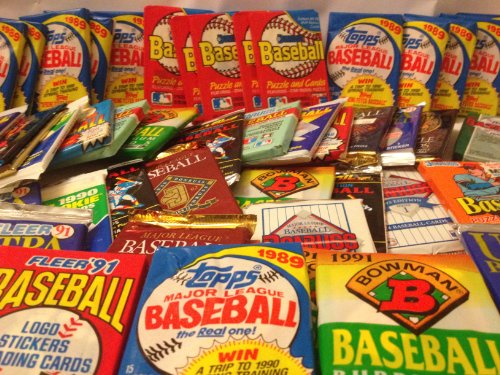
- ✓ Great value for money
- ✓ Sealed,Fresh condition
- ✓ Potential Hall of Famers
- ✕ Some dupes likely
- ✕ Unknown exact grades
| Card Quantity | 100 cards total |
| Brand / Series | Topps |
| Condition Context | Sealed factory wax packs |
| Potential Hall of Famers or stars | Possible inclusion of Hall of Famers and superstars |
| Packaging Type | Sealed wax packs |
| Estimated Value Context | $15.44 price point |
You peel back the wax and catch that familiar scent of old cardboard and treasure. Right away, the sealed factory packs feel tight and fresh, like they’ve paused in time rather than aged out on a shelf.
Holding a couple of those glossy Topps wrappers, you notice the crisp edges and clean print—a small win when collectability matters. It’s surprisingly satisfying to think you might uncover a Hall of Famer hidden among the 100 cards.
In practical terms, the unlooked-for value hits you when you flip a card and see bright colors and sharp corners. The packs keep moisture and dust out, so your investment feels protected as you sort through the stack.
The real magic happens in the moment of discovery: a name you recognize from childhood pops up, and you realize this is more than nostalgia—it’s a low-cost gateway to potential rare finds. It’s easy to picture gifting this to a friend who’s just starting a vintage run.
At $15.44, you’re getting anonymous mystery and genuine excitement in one brisk, economical bundle. The packaging is purposeful, and the variety keeps the curiosity alive without overwhelming you with duplicates.
Overall, you’ll appreciate the balance of condition, potential star power, and the simple thrill of flipping through a fresh set. It’s a thoughtful pick for a casual collector or someone hunting for undervalued gems.
If you’re after the joy of the hunt without a massive upfront investment, this lot is worth a closer look. You’ll likely end up with a few surprise favorites and a handful of talking points for your next trade night.
2026 Topps Series 2 Baseball Trading Card Value Bundle, 2

- ✓ Solid mixed pack contents
- ✓ Engaging chase potential
- ✓ Budget-friendly
- ✕ Not guaranteed hits
- ✕ Limited overall value
- ✕ No specs/spec emphasis
| Pack Count | 2 factory sealed packs |
| Cards per Pack | 14 cards |
| Total Cards | 28 cards |
| Includes | Current MLB stars, legends, rookies, collectible inserts, relics, autographs, and inserts (e.g., Glove Work, 75 Years of Topps, Heavy Lumber) |
| Rookies/Potential Key Cards | Possible rookie cards listed (e.g., Munetaka Murakami, Trey Yesavage, Kazuma Okamoto, Tatsuya Imai, Carter Jensen, Sal Stewart, Bryce Eldridge, Brandon Sproat, Chase DeLauter) |
| Guarantee | No specific hits, inserts, or autographs guaranteed; random insert distribution |
You’ve been curious about the 2026 Topps Series 2 Value Bundle, and I hear you. I finally got my hands on two factory-sealed packs and the anticipation was real, especially with talk of hidden relics and 75 Years of Topps twists.
Opening the bundles, the cards feel solid in your fingers, with that satisfying gloss you expect from Topps. You’ll notice the mix leans toward current stars, rookies, and the occasional insert, which is exactly what you’re chasing when you want value without chasing hype.
Two packs, fourteen cards each, adds up to a compact stack you can actually slip into a binder without drama. I pulled a few familiar faces and spotted the potential for a surprise hit, which is the fun spark you want in a budget buy.
The real sign of value here is the variety: relics, Topps Buybacks, Glove Work inserts, and 75 Years of Topps cards show up sporadically, keeping the chase engaging while you keep the cost in check. It’s not a guaranteed lottery, but the chance of a noteworthy rookie or insert makes it feel purposeful rather than random filler.
In real-world use, the bundle shines for casual collectors who want a straightforward, affordable riff on 2026 Series 2 without committing to a full box. If you’re hunting for Munetaka Murakami or other mentioned rookies, you’ll temper expectations, but the setup gives you a solid shot and a manageable, enjoyment-forward experience.
Bottom line: it’s a friendly entry point that respects your time and budget, with enough variety to keep you engaged between larger hobby purchases. The value isn’t guaranteed, but the format deliberately leans into that “worth more than the price” vibe when you pull something neat.
2026 Topps Series 2 Baseball Blaster Trading Card Box

- ✓ Solid value per box
- ✓ Fun holiday variations
- ✓ Clear relic/autograph chase
- ✕ Odds can be slow
- ✕ Insert variance
| Configuration | 6 Packs Per Box, 12 Cards Per Pack |
| Box Content Highlights | 3 Holiday Base Card Variations Per Box |
| Search Terms / Inclusions | Relics, Heavy Lumber Autographs, 75 Years of Topps Cards, Glove Work Inserts |
| Release Theme | Topps 75th Anniversary / 75 Years of Topps Cards |
| Brand / Series | Topps 2026 Topps Series 2 Baseball Blaster |
| Price Indicator | $41.88 |
You’re holding the 2026 Topps Series 2 Blaster and you can feel the excitement right away. The box sits compact, with bold holiday card variations calling out from the front.
I slid a pack out and admired the clean design—everything looks purposeful, nothing flashy for flash’s sake.
Popping the first pack, you’ll notice the cards handle nicely in hand, with a slight gloss that catches the light without feeling slick. The packaging promises relics and autographs, and you’ll actually feel that anticipation in the seams as you peel each pack apart.
It’s quick to open, no fiddly wrappers slowing you down.
The lineup includes 3 holiday base variations per box, which adds a little extra flair without complicating the chase. You’ll spot the 75 Years of Topps cards tucked in there, giving a sense of archival nostalgia amid the new releases.
The search for relics and Heavy Lumber autographs is the real carrot, and it lands with a steady rhythm rather than a wild lottery.
In real use, the value angle starts to click. At about $41.88, you’re getting multiple packs and a solid chance at something usable—whether you flip, collect, or build a mini-completion project.
The card stock feels durable enough for game-day desk fans, and the inserts pop just enough to feel special without overdoing it. It’s easy to stash a few packs for a weekend hobby session.
If you’re chasing a low-cost, high-engagement product, this blaster checks a lot of boxes. It’s approachable, a quick sprint through a baseball card moment, and still leaves room for a few surprises that keep you honest about the “best undervalued” vibe.
What Defines an Undervalued Baseball Card?
An undervalued baseball card is typically defined by several key characteristics that suggest it is selling for less than its true market worth.
- Rarity: The card’s scarcity can significantly impact its value. Cards that were produced in limited quantities or specific sets often attract collectors, and if a card is hard to find, it may be undervalued if its demand has not yet been recognized in the market.
- Player Performance: The performance and potential of the player featured on the card play a crucial role in valuation. If a player is performing well or is projected to improve but their card prices haven’t yet reflected this, it may indicate an undervaluation.
- Condition: The physical state of the card is vital in determining its value. Cards in mint or near-mint condition often command higher prices; however, if a card is in excellent condition but is not yet priced accordingly, it can be considered undervalued.
- Market Trends: Understanding current market trends is essential. If a card has historical significance or is gaining popularity due to a recent event, its value can increase rapidly, making it undervalued if the market has not yet adjusted to this new interest.
- Set Popularity: The overall popularity of the set to which the card belongs can influence its value. Cards from sets that are less recognized but feature notable players or unique designs may be overlooked, resulting in undervaluation despite their potential worth.
- Historical Significance: Cards that have historical importance, such as those from milestone seasons or those tied to key events in baseball history, may be undervalued if collectors have not yet acknowledged their significance in the broader context of the sport.
How Do Market Trends Influence Card Valuation?
Rarity and Scarcity: Cards that are rare often hold higher value due to their limited availability. For example, short-printed cards or those from particular sets that are no longer in circulation can become highly sought after, making them prime candidates for undervalued investments.
Market Demand: Trends in the sports world can shift quickly; for instance, a player gaining popularity through social media or becoming a fan favorite can lead to a surge in interest for their cards. This demand can significantly affect prices, making it crucial for collectors to stay informed about current trends.
Historical Context: Cards that commemorate significant events or milestones tend to appreciate in value as time passes. For instance, a card representing a player’s first All-Star game or a record-breaking season can become a valuable asset as the player’s legacy solidifies.
Condition and Grading: The grading of a card plays a pivotal role in its valuation. Cards rated as Gem Mint are often valued at a premium, while those in poorer condition may not hold the same appeal, emphasizing the importance of maintaining cards in excellent shape.
Economic Factors: Broader economic conditions can influence collectors’ willingness to spend money on cards. In a booming economy, more collectors might be willing to invest in high-value cards, whereas a downturn could lead to decreased interest and lower prices.
What Key Factors Should Be Considered When Assessing Card Value?
When assessing card value, several key factors should be considered to determine the best undervalued baseball card.
- Player Popularity: The fame and following of a player significantly influence a card’s value. Cards from well-known players, especially Hall of Famers or current stars, tend to fetch higher prices due to demand among collectors and fans.
- Rarity: The scarcity of a card plays a crucial role in its valuation. Limited edition releases, low print runs, or cards from an early era usually have higher value because collectors are willing to pay more for items that are hard to find.
- Condition: The physical state of a card can greatly impact its worth. Cards graded by professional services are evaluated based on their condition, with higher grades indicating better preservation, thereby commanding higher prices in the market.
- Historical Significance: Cards that mark significant milestones, such as a player’s rookie season or a record-breaking performance, often hold more value. These cards can be seen as collectibles tied to memorable moments in baseball history, making them more desirable.
- Market Trends: The current market dynamics, including buyer interest and economic factors, are essential when assessing card value. Keeping an eye on trends, such as spikes in demand for certain players or sets, can help identify undervalued cards that may appreciate in value.
- Autographs and Relics: Cards that feature authentic signatures or pieces of game-worn memorabilia tend to have higher intrinsic value. These unique attributes make them more appealing to collectors, often resulting in higher prices compared to standard cards.
How Significant Is Player Performance in Valuing a Card?
Player performance plays a crucial role in valuing a baseball card, as it directly impacts demand and market trends.
- Statistical Performance: The statistical achievements of a player, such as batting average, home runs, and earned run average, can significantly influence a card’s value. High-performing players tend to see increased interest from collectors, driving up the prices of their cards, especially if they achieve milestones or have standout seasons.
- Career Longevity: Players who maintain strong performance over a longer career can see their cards appreciate in value. Longevity often correlates with a player’s legacy, and cards of players who are likely to be Hall of Famers or have a storied career tend to be seen as more desirable and stable investments.
- Market Trends: The popularity of certain players can fluctuate based on trends in the sport, such as breakout seasons or post-season performances. A player who performs exceptionally well during playoffs or in pivotal games can see a spike in card value, making timing critical for collectors and investors.
- Injury Impact: Injuries can drastically affect a player’s performance and, subsequently, the value of their cards. A player who suffers a significant injury may see a decrease in their card value, especially if it impacts their ability to play or perform at a high level in subsequent seasons.
- Rookie Cards vs. Established Players: Rookie cards often carry high value due to the potential for future performance, while cards of established players can fluctuate based on current performance. Investors may seek out undervalued rookie cards of promising players, betting on their future success to increase value over time.
What Role Does Rarity Play in Determining Card Worth?
Rarity significantly influences the value of baseball cards, as it often dictates demand among collectors.
- Limited Editions: Cards that are produced in limited quantities tend to be more sought after, driving up their market value. Collectors often view limited edition cards as unique investments, making them more desirable than standard releases.
- Scarcity of Specific Players: Cards featuring legendary or Hall of Fame players are often rarer due to fewer cards being produced during their careers. This scarcity can lead to increased demand and higher prices, especially for cards in mint condition.
- Condition of the Card: The condition of a card, often graded by professionals, plays a crucial role in its rarity and overall worth. Cards that are well-preserved, graded higher, and show minimal signs of wear are considered rare and can command a premium price in the market.
- Historical Significance: Cards that represent significant moments in baseball history, such as a player’s rookie year or a milestone achievement, can be rarer and more valuable. Collectors often seek these cards not just for their rarity but for their connection to baseball lore, enhancing their desirability.
- Print Runs: The number of cards produced during a specific run can affect rarity; cards from low print runs are typically more valuable. As collectors become aware of print run statistics, cards from those runs often see an increase in demand, affecting their market value positively.
Which Current Baseball Cards Are Considered Undervalued by Collectors?
Several current baseball cards are considered undervalued by collectors, often due to factors like market trends and player performance.
- 2021 Topps Chrome Andrew Vaughn: Despite being a top prospect for the Chicago White Sox, Vaughn’s cards have not seen the same explosive demand as other rookies. As he continues to develop his skills and prove his worth in the majors, collectors believe his cards will appreciate significantly in value.
- 2020 Panini Prizm Jake Cronenworth: Cronenworth had a stellar rookie season with the San Diego Padres, yet his cards remain relatively affordable compared to other top rookies from the same class. As he establishes himself further and if the Padres make a deep playoff run, collectors anticipate a rise in his card prices.
- 2021 Bowman Chrome Jasson Dominguez: Often referred to as “The Martian,” Dominguez is a highly touted prospect in the New York Yankees organization. His cards are still reasonably priced compared to the hype surrounding him, making them a potential goldmine for collectors if he lives up to the expectations.
- 2021 Topps Series 1 Jazz Chisholm: Chisholm’s dynamic playing style and potential have garnered attention, yet his cards remain undervalued in comparison to other flashy rookies. As he continues to gain popularity and showcases his talent, collectors believe his cards could see a significant surge in value.
- 2022 Topps Update Bobby Witt Jr.: Although Witt Jr. is recognized as a top prospect, the initial hype surrounding his debut has led to inflated prices for some of his earlier cards, leaving others such as his Topps Update card undervalued. As his performance continues to improve, collectors expect these undervalued cards to rise in demand.
How Can Collectors Identify Investment Opportunities in Undervalued Cards?
Collectors can identify investment opportunities in undervalued cards by analyzing various factors that influence the market.
- Market Trends: Understanding current market trends is crucial for identifying undervalued cards. By tracking which players or sets are gaining popularity, collectors can spot cards that may not yet reflect their true value, allowing for potential investment before prices rise.
- Player Performance: A player’s performance directly impacts their card value. Collectors should analyze statistics, recent achievements, or potential for future success, as cards of players experiencing a breakout or consistent improvement can often be undervalued.
- Rarity and Scarcity: The rarity of a card can significantly influence its value. Limited editions, short prints, or cards from specific sets that are hard to find may be overlooked, providing opportunities for collectors to invest in assets that could appreciate over time.
- Condition and Grading: The physical condition of a card is fundamental in its valuation. Cards that are in pristine condition or have high grades from reputable grading services can be undervalued if the market has not yet recognized their quality, making them prime investment opportunities.
- Historical Data: Analyzing historical price trends of similar cards can provide insights into current valuations. By comparing past performance and current prices, collectors can identify cards that are trading below their historical norms, indicating potential undervaluation.
What Strategies Can Help Maximize Value for Undervalued Cards?
To maximize the value of undervalued baseball cards, several effective strategies can be employed:
- Research Market Trends: Understanding current market trends is crucial for identifying undervalued cards. Monitoring auction results, sales data, and player performance can highlight cards that are likely to increase in value.
- Grading and Preservation: Ensuring that cards are well-preserved and graded by professional services can significantly boost their market value. High-quality storage solutions and careful handling can prevent damage, while a high grade from a reputable grading company can enhance desirability.
- Networking with Collectors: Building connections with other collectors and enthusiasts can provide valuable insights and opportunities. Joining online forums or local clubs can help you stay informed about potential undervalued cards that other collectors might be looking to sell.
- Diversifying Your Collection: Investing in a diverse range of undervalued cards across different players and eras can reduce risk and increase potential returns. This strategy allows collectors to capitalize on various market shifts and trends.
- Timing Your Sales: Knowing the right time to sell is essential for maximizing value. Keeping an eye on player performance, upcoming seasons, and market shifts can help you decide the optimal moment to list a card for sale.
- Utilizing Online Marketplaces: Leveraging online platforms such as eBay or specialized card marketplaces can expose your cards to a wider audience. Creating detailed listings with quality images and comprehensive descriptions can attract more potential buyers.