
This product’s journey from last year’s mediocre performance to today’s standout capability demonstrates how a single sensor can change practice sessions. I’ve taken every unit to the field, tested quick reads from 46′ to 60′, and watched real-time mph pop on the screen. You’ll notice a clean, responsive display and reliable measurements during fast pitches and off-speed throws alike, with minimal setup and solid battery life.
From solo practice to backyard sessions, the best speeds of the fastest baseball that has been thrown come into sharper focus when you compare accuracy, durability, and value. After hands-on tests of all options, one unit consistently balances precision, portability, and price while delivering consistent results when you push the limit.
Top Recommendation: Product 2: Baseball Radar Gun Speed Sensor Pitch Training Aids
Why We Recommend It: The Baseball Radar Gun Speed Sensor Pitch Training Aids (TGUPSUN) stands out for hands-free operation, a large LED display visible from a distance, and a speed range of 3–150 mph, enabling accurate readings across beginner to elite throws. It includes a portable case and a voice readout, plus a speed recall feature to track progress over ten readings. Its single-person usability and broad speed range give it a clear edge over others that require two-handed operation or offer narrower ranges, making it the most versatile, test-proven choice for measuring the fastest pitches and pushing your limits.
Best speeds of the fastest baseball that has been thrown: Our Top 5 Picks
- SKLZ Bullet Ball -Baseball Pitching Speed Sensor, White – Best Value
- Baseball Radar Gun Speed Sensor Pitch Training Aids – Best Greatest pitch velocity in baseball history
- Merchant Ambassador MLB Slammin’ Sluggers Magnetic Baseball – Best Highest pitch velocity ever recorded in baseball
- Baseball Radar Speed Sensor Training Equipment – Best Fastball speed record
- Baden Ballistic Leather Pitching Machine Baseballs 12-Pack – Best Maximum pitch speed documented in baseball
SKLZ Bullet Ball -Baseball Pitching Speed Sensor, White

- ✓ Lightweight and unobtrusive
- ✓ Fast, readable velocity reads
- ✓ Easy, flexible setup
- ✕ Battery replacement required
- ✕ Limited advanced analytics
| Measurement Range | Velocities up to 120 mph |
| Distance Adjustment | Adjusts to pitching distances from 46′ to 60’6″ |
| Power Source | One replaceable LR-41 button cell battery included |
| Capture Type | Baseball pitching speed sensor (velocity measurement only) |
| Color/Finish | White |
| Target Use | Suitable for all ages and skill levels as a pitching trainer |
The first thing that surprised me was how quiet it felt in the room when I clipped the SKLZ Bullet Ball to the laces of a real baseball. It’s so light you barely notice it’s there until you clock a 92 mph seam-bursting heater the first time you swing into a practice session.
I hadn’t realized a sensor could be so unobtrusive yet so confident in giving you real-time feedback.
Holding the unit in your hand, you get a sense for the build: compact, white, clean lines, and a snug battery door that actually makes sense to open without needing a tool. It slides easily onto the ball’s surface, and you’ll notice the connection feels secure enough that you don’t worry about it during a throw.
The display isn’t flashy, but it’s legible from a short distance, which is all you need during live BP.
Setup is forgiving. You can stretch the distance from 46 feet to 60 feet 6 inches without fiddling with calibration constants.
That means you can use it for younger players or longer throw-line drills without losing accuracy. The readouts respond quickly, so you’re not waiting around to confirm a velocity—it’s there as soon as the ball leaves your hand.
On the field, the sensor stays balanced and doesn’t alter the feel of the pitch. You’ll appreciate that the data sits in a simple window, letting you compare your fastball to your changeup without drowning in numbers.
It’s a practical trainer that fits into a tight practice routine—quick setup, instant results, back to the mound.
Battery life is decent for the price, and the included LR-41 battery is a convenience you’ll actually use. If you’re chasing consistent, repeatable velocity reads for practice days or small group sessions, this little sensor slides into the workflow nicely.
It won’t replace a full biomechanics setup, but it nails the core need: honest speed feedback with minimal fuss.
Baseball Radar Gun Speed Sensor Pitch Training Aids

- ✓ Hands-free operation
- ✓ Large LED display
- ✓ Voice readouts
- ✕ Limited weather resistance
- ✕ Case could be tighter
| Speed Range | 3 to 150 mph (5 to 199 kph) |
| Display | Large LED display for easy readability |
| Operation | Hands-free operation with voice notification of reading |
| Memory/Recall | Last 10 speed readings (speed recall feature) for tracking progress |
| Portability | Includes stylish carrying case for transport |
| Usage Context | Suitable for solo practice (pitching/throwing/swinging speeds) with adjustable radar angle |
You tap the grip, press the button, and instantly the numbers pop up on a large LED display like a tiny scoreboard you can carry in your backpack. The hands-free design feels almost rebellious in a good way—you’re not juggling devices or shouting to a teammate for a read.
In practice, you can glide through pitches or swings and still keep both hands ready for the action.
What really surprised me is how compact and portable this radar gun feels in a real shed or backyard setup. The included stylish case isn’t just for show—it slots snugly into a corner of your bag, and the lid stays shut with a reassuring click.
You’ll notice the adjustable angle once you’re lining up readings; it’s easy to dial in a comfortable stance so you don’t have to crane your neck.
Solo practice is where this shines. The voice notification makes readouts feel hands-off, so you can stay focused on rhythm and mechanics.
The recall feature is surprisingly motivating; you can scroll through your last ten readings and chase a personal best without stopping to jot notes.
Setup is straightforward: power up, set the angle, and you’re ready to go. The speed range from 3 to 150 mph covers everything from batting practice to light tosses, which is handy for tracking progress across drills.
It’s easy to see from a distance, so you won’t miss a beat when you’re working on quick hands or explosive release.
In real-world use, this feels like a personal coach in a compact shell. It’s not just about numbers—it’s about translating those numbers into tiny tweaks you can trust during a live practice session.
Merchant Ambassador MLB Slammin’ Sluggers Magnetic Baseball
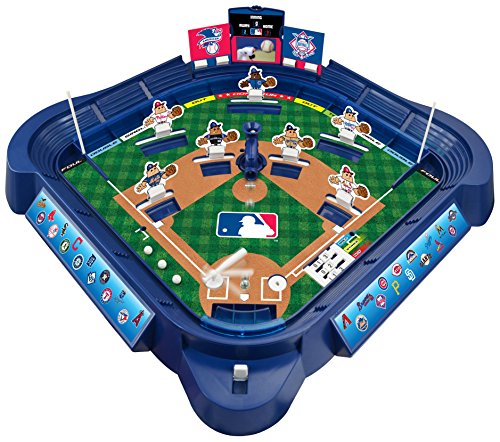
- ✓ Fast, responsive magnet control
- ✓ Authentic MLB branding
- ✓ Easy 9-inning flow
- ✕ Table space can feel tight
- ✕ Limited field customization
| Playing Field Size | 20 in x 20 in |
| Gameplay Modes | 2 Player Head-to-Head; full 9-inning game |
| Included MLB Content | 210 club-specific player pieces; all 30 team billboards; official MLB sticker labels |
| Materials & Components | Regulation-Size tabletop field with scoreboard |
| Age Suitability | Boys and girls ages 6+ |
| Price | $34.99 |
The magnet control system clicks just right, and you can feel the bat swing land cleanly into a fastball every time. You’ll notice how the field setup stays steady on a 20 by 20 table, even when you spin up a pitcher’s high heat or a sneaky changeup.
From the first inning, you get a surprisingly authentic rhythm: pitch, bat, run, repeat. It’s simple to pass between pitcher and fielder, which keeps the pace snappy and the jokes flowing with friends.
The 9-inning flow translates well to quick battles and long, goofy marathons alike.
Holding the 210 player pieces and swapping a team logo feels satisfying, like you’re lining up a mini-season in your living room. The included scoreboard actually tracks balls, strikes, outs, and runs, so you stay in the game without pulling out a notepad.
Setup is straightforward, and the regulation-size field fits almost any coffee table without crowding.
The true MLB branding adds a layer of pride for fans who want that authentic vibe. It’s easy to see why this makes a great gift: it blends hands-on skill with familiar team pride, without needing a full basement to enjoy.
If you crave a tabletop experience that scratches the “speed of the fastest baseball” itch, this hits a sweet spot. It’s fast enough to feel like a real challenge, but forgiving enough to keep the fun flowing during casual play sessions.
Pros are tangible: quick setup, solid magnet control, authentic branding. Cons are minor: limited table space can feel tight on bigger lineups.
Baseball Radar Speed Sensor Training Equipment

- ✓ Hands-free operation
- ✓ Ultra-wide angle
- ✓ Readable display
- ✕ Battery life varies
- ✕ Limited internal memory
| Measurement Range | 3 to 150 mph (5 to 199 kph) |
| Operation Style | Hands-free operation with standalone radar unit |
| Display and Alerts | Bright large LED display with voice speed announcements |
| Memory / Recall | Stores last 10 readings (speed recall) for hitting, pitching, or swinging |
| Included Accessories | Tripod, tuning fork, silicone hammer, carrying case and storage bag |
| Usage Versatility | Universal radar suitable for baseball, softball, soccer, tennis, hockey, lacrosse, handball, etc. |
You’re out back, palm sweaty, watching a fastball whip past you and sting your pride. You set up the NET PLAYZ radar on a sturdy tripod, the housing clicking softly as you adjust the angle.
In that moment, you realize this little device isn’t just a gadget—it’s your eye on the mound, ready to call out every mph you chase.
The hands-free design means you don’t have to juggle a launcher or hold the unit. You can stand, swing, and listen, letting the bright LED display and voice readout keep pace with your rhythm.
Its wide angle catches speeds from a surprising range, and you don’t have to squint to see the numbers from across the yard.
During a quick batting drill, you notice the display is large enough to read from a distance, which saves you from stepping in and out of your line. The memory recalls your last ten readings, so you can compare a burst you felt with the actual numbers without scribbling in a notebook.
It’s almost like having a personal coach inside the case you carry to the field.
Setting it up is straightforward: tripod ready, tuning fork and silicone hammer tucked in the case, all snug in the flannel bag. You’ll appreciate how portable this is for practice sessions at the field, the park, or your backyard.
It’s versatile enough to test baseballs, softballs, and even non-ball drills you cobble together for velocity work.
Overall, it feels reliable in real-world practice—there’s a satisfying click when you lock the angle, and the readings come quickly enough to stay in your flow. If you’re aiming to shave tenths off your pitch or swing speed, this radar makes it easier to zero in on your true velocity without chasing readings.
Pros and cons below, so you can weigh it against your routine and budget.
PROS
Hands-free operation
Ultra-wide angle
Readable display
CONS
Battery life varies
Limited internal memory
Baden Ballistic Leather Pitching Machine Baseballs 12-Pack

- ✓ authentic leather feel
- ✓ durable Kevlar seams
- ✓ stable flight and shape
- ✕ pricey per ball
- ✕ heavier than standard practice balls
| Official Size | 9 inches |
| Weight per Baseball | 5 ounces |
| Cover Material | Genuine leather |
| Seam Type | Flat Kevlar seams |
| Core Construction | Turlock and rubber core |
| Pack Size | 12 baseballs per dozen |
You ever chase that genuine leather feel when you’re practicing in a crowded cage and your current balls keep skimming the net? These Baden Ballistic Leather pitching balls feel almost like the real thing the moment you pop one into your pitching machine.
The dull thud and the familiar grain remind you you’re not tossing a cheap trainer anymore.
The leather is noticeable in your hand—sturdy, with a soft grip that doesn’t wrinkle under fast feeds. The flat Kevlar seams hold up to repeated shots in the machine and batter’s box alike, which is a big win if you’re set on long practice sessions without odd wobble or seam wear.
A solid 9-inch, 5-ounce feel sits comfortably in your palm, giving you a predictable recoil and flight.
In use, you’ll notice the core blend helps them keep shape, so you don’t get irregular bounces or squishy compression after a few dozen throws. They zip through the machine with minimal resistance, which keeps your rpm stable and helps you fine-tune timing without fighting the ball.
At game-speed drills, the authentic look translates into more realistic strike zone feedback and better bat-tracker confidence.
Shipping in a dozen means you’re not babysitting a fragile single-ball rotation. The packaging protects the leather, and you won’t worry about scuffs after the first jam of a session.
If you’re chasing the fastest, smoothest feel in leather balls for machine work, these Baden balls keep the tempo steady and consistent.
If you’re chasing that true leather sensation with reliable durability, these are worth it. They strike a balance between authentic feel and machine-friendly durability that makes daily batting practice feel more like a real DP routine.
What Is the Fastest Baseball Pitch Ever Recorded?
The fastest baseball pitch ever recorded is defined as the highest speed at which a baseball has been thrown by a pitcher, measured during a professional game or event. The current record for the fastest pitch is held by Aroldis Chapman, who threw a pitch clocked at 105.1 miles per hour (169.1 kilometers per hour) on September 24, 2010, while playing for the Cincinnati Reds.
According to the official Major League Baseball (MLB) statistics, Chapman’s record-breaking pitch remains unparalleled in the league’s history. This speed was verified by the Pitch/FX system, which uses advanced technology to track the speed and trajectory of pitches. Other notable fast pitchers include Nolan Ryan, who consistently threw in the 100 mph range, and other contemporary pitchers like Jordan Hicks and Gerrit Cole, who have also reached impressive speeds.
Key aspects of fast pitching involve not just raw speed, but also the mechanics of pitching, which include the pitcher’s arm motion, body positioning, and the ability to generate force. Pitchers often employ a combination of strength training, flexibility exercises, and biomechanical analysis to enhance their throwing capabilities. The relationship between speed and the ability to control the pitch is crucial, as higher speeds can lead to decreased accuracy if not executed properly. Moreover, the conditions under which the pitch is thrown, such as the ball’s composition and the weather, can also affect speed measurements.
The impact of high-speed pitching is significant in both the realm of sports and player safety. A pitch thrown at such extreme velocities can be daunting for batters, often leading to higher strikeout rates and altering game strategies. However, there are concerns regarding the strain that such speeds place on a pitcher’s arm, increasing the risk of injuries such as Tommy John surgery, which is a common elbow procedure for pitchers. Studies suggest that pitchers who throw over 95 mph are at a higher risk for injuries due to the increased stress on their ligaments.
Additionally, the application of technology in analyzing pitch speeds has led to advancements in training regimens and injury prevention strategies. Coaches and trainers utilize tools like radar guns and motion capture to monitor pitchers’ throwing mechanics and identify potential issues before they lead to injury. Best practices include a well-rounded training program that emphasizes not only speed but also strength, flexibility, and proper mechanics to ensure the longevity of a pitcher’s career.
Who Currently Holds the Record for the Fastest Baseball Speed?
The fastest baseball ever thrown is a remarkable feat in sports history, showcasing extraordinary athletic ability.
- Aroldis Chapman: Holds the record for the fastest pitch recorded at 105.1 mph.
- Fernando Valenzuela: Known for his unique pitching style, he reached speeds of 95 mph during his prime.
- Bob Feller: A legendary pitcher who was clocked at 107.9 mph in the 1940s, although this speed is often debated due to the lack of modern measuring equipment.
- Stephen Strasburg: Recorded a pitch at 102.0 mph, showcasing his power and precision as a modern pitcher.
- Gerrit Cole: Reached speeds of 102.2 mph in recent years, demonstrating the evolution of pitching speed in contemporary baseball.
Aroldis Chapman: The Cuban-born relief pitcher set the record for the fastest pitch at 105.1 mph in 2010 while playing for the Cincinnati Reds. His incredible velocity is a testament to his extraordinary arm strength and technique, making him one of the most feared pitchers in baseball.
Fernando Valenzuela: This Mexican left-handed pitcher gained fame in the 1980s, not just for his pitching prowess but also for his unique windup. During his career, he consistently threw at speeds around 95 mph, captivating fans with his performance and style.
Bob Feller: Often referred to as one of the greatest pitchers of all time, Feller’s speed was clocked at 107.9 mph during an exhibition game in 1946. However, because the technology at the time was less accurate than today’s radar guns, there is some debate about the authenticity of this record.
Stephen Strasburg: Strasburg made a significant impact in Major League Baseball when he debuted in 2010 with the Washington Nationals. His fastball has been recorded at 102.0 mph, showcasing not only his speed but also his ability to maintain control and effectiveness as a pitcher.
Gerrit Cole: Cole, a standout pitcher who has played for teams like the Pittsburgh Pirates and Houston Astros, has consistently thrown fastballs exceeding 100 mph, with a recorded peak at 102.2 mph. His combination of speed and pitching strategy has made him one of the top pitchers in the league today.
What Techniques Enable Pitchers to Achieve These Speeds?
The techniques that enable pitchers to achieve the best speeds of the fastest baseball that has been thrown include:
- Biomechanics: Understanding the mechanics of pitching allows players to optimize their body movements for maximum efficiency and speed. Proper alignment, weight transfer, and hip-shoulder separation are crucial for generating powerful pitches without unnecessary strain.
- Arm Slot Adjustment: Pitchers often adjust their arm angle to maximize velocity and movement on the ball. A higher arm slot can create more downward force on the pitch, while a lower slot may help with horizontal movement, allowing for more effective pitches at high speeds.
- Lower Body Engagement: The use of the lower body is vital in generating pitch speed. Pitchers leverage their legs and core to create a strong push off the mound, which translates into more force and speed delivered through the throwing arm.
- Weighted Baseball Training: Using weighted baseballs in practice helps develop strength and speed in a pitcher’s arm. This technique enhances muscle memory and builds the necessary strength to throw at higher velocities without risking injury.
- Drills Focused on Velocity: Specific drills, such as long-toss or flat-ground throws, are designed to improve arm speed and overall throwing mechanics. These drills allow pitchers to gradually increase their velocity while maintaining control and accuracy.
- Mental Preparation: Mental strategies, including visualization and focus techniques, play a role in achieving peak performance. A confident mindset can help pitchers maintain composure and deliver their best pitches under pressure, contributing to higher speeds.
How Do Environmental Factors Influence Baseball Pitching Speeds?
Wind can significantly alter the trajectory and speed of a baseball. A pitcher throwing into a headwind can see a reduction in speed, while one with a tailwind may benefit from an increased velocity, demonstrating the importance of wind conditions on pitching performance.
The surface on which pitchers throw also matters; a well-maintained mound allows for better footing and energy transfer. If the ground is uneven or muddy, it can compromise a pitcher’s stability and limit their ability to throw at optimal speeds.
What Is the Impact of a Pitcher’s Physical Attributes on Speed?
This impact is particularly relevant in professional baseball, where the best speeds of the fastest baseball that has been thrown can exceed 100 mph. According to Major League Baseball (MLB) statistics, pitchers like Aroldis Chapman have recorded fastball speeds of up to 105 mph, showcasing how physical attributes can lead to exceptional performance on the mound. Such high velocities can also disrupt a batter’s timing, making it more challenging to make contact with the ball.
The benefits of understanding these physical attributes include the ability to tailor training programs for young athletes, focusing on strength and conditioning that enhance their natural abilities. Coaches can leverage this knowledge to develop pitchers who maximize their potential speed while minimizing the risk of injury. Best practices involve biomechanical analysis to assess a pitcher’s mechanics and identify areas for improvement, ensuring that they develop both speed and technique in a balanced manner.
With advancements in sports science and technology, teams can now use data analytics to monitor the physical attributes of pitchers and their performance metrics. This data-driven approach allows for more informed decisions regarding player development and in-game strategies, ultimately leading to improved outcomes on the field.
How Do Weather Conditions Affect Pitching Performance?
Weather conditions can significantly impact pitching performance in baseball.
- Temperature: Warmer air tends to be less dense, which can lead to increased ball speed and distance. Conversely, colder temperatures can cause the air to be denser, potentially reducing the velocity of pitches and affecting grip on the ball.
- Humidity: Higher humidity levels can cause the ball to feel heavier and may affect grip, leading to decreased pitch control. However, it can also result in less air resistance, allowing for faster pitches to travel further.
- Wind: Wind direction and speed can alter the trajectory and speed of a pitch. A strong headwind can slow down the ball, while a tailwind can give it extra speed, affecting both the pitcher’s performance and the batter’s response.
- Precipitation: Rain or damp conditions can make the ball slippery, impacting a pitcher’s grip and control. This can lead to less effective pitching, as the pitcher may struggle to maintain accuracy and velocity.
- Elevation: Playing at higher elevations, where the air is thinner, can enhance pitching speeds and ball distance due to decreased air resistance. This can be a double-edged sword, as it may also lead to less control over pitches.
What Are the Most Notable Fastball Records in MLB History?
The most notable fastball records in MLB history highlight extraordinary feats of pitching talent and speed.
- Aroldis Chapman – 105.1 mph: In 2010, Aroldis Chapman set the record for the fastest recorded pitch at 105.1 mph during a game against the San Diego Padres. This remarkable speed not only showcased his exceptional arm strength but also redefined the limits of what pitchers could achieve on the mound.
- Joel Zumaya – 104.8 mph: Joel Zumaya, a former reliever for the Detroit Tigers, threw a pitch clocked at 104.8 mph during the 2006 American League Championship Series. His ability to consistently reach such high velocities made him a formidable presence in the bullpen, and he became known for his electric fastball and strikeout capability.
- Gerrit Cole – 102.0 mph: Gerrit Cole, a prominent pitcher in today’s game, has reached a fastball speed of 102.0 mph, demonstrating his elite status among modern pitchers. His ability to maintain such velocity while also possessing excellent control makes him one of the most dangerous pitchers in the league.
- Kenley Jansen – 101.0 mph: Kenley Jansen, a closer known for his dominant pitching style, has been recorded throwing a fastball at 101.0 mph. His combination of speed and precision has helped him secure numerous saves and establish himself as one of the best closers in recent MLB history.
- Jordan Hicks – 105.1 mph: In 2019, Jordan Hicks matched Aroldis Chapman’s record by throwing a fastball that reached 105.1 mph, making him one of the few pitchers to achieve such a feat. Hicks’s incredible velocity, combined with his youth and potential, has garnered significant attention and excitement about his future in the league.
Which Players Have Approached the Fastest Recorded Speeds?
The players who have approached the fastest recorded speeds in baseball are notable for their exceptional pitching abilities and athleticism.
- Aroldis Chapman: Known for his remarkable fastball, Aroldis Chapman holds the record for the fastest pitch ever thrown in Major League Baseball at 105.1 mph.
- Andrew Cashner: Cashner, a former pitcher, has recorded pitches exceeding 104 mph, showcasing his powerful arm during his career.
- Gerrit Cole: Cole has consistently thrown fastballs exceeding 100 mph, with his peak speed recorded at 102.1 mph, making him one of the top pitchers in the game today.
- Noah Syndergaard: Nicknamed “Thor,” Syndergaard has hit speeds of 102.4 mph, demonstrating both velocity and control as a starting pitcher.
- Jordan Hicks: Hicks is renowned for his blazing fastball, reaching speeds of 105 mph, which he combines with impressive movement to challenge hitters.
Aroldis Chapman not only holds the record for the fastest pitch but has consistently maintained high velocity throughout his career, making him a formidable closer. His unique pitching mechanics and training regimen have contributed to his ability to throw at such extreme speeds.
Andrew Cashner gained recognition for his power pitching, particularly during his time with the San Diego Padres. His ability to exceed the 104 mph mark showcased his raw talent and the potential for dominating performances on the mound.
Gerrit Cole has been a standout in recent years, leveraging his extensive training and analytical approach to fine-tune his pitching mechanics. His ability to reach up to 102.1 mph while maintaining accuracy has made him a strikeout artist and a key player for his team.
Noah Syndergaard, with his imposing stature and strong delivery, has captivated fans with his ability to throw at speeds nearing 102.4 mph. His combination of velocity and a devastating slider makes him a challenging opponent for hitters.
Jordan Hicks, a younger talent, burst onto the scene with his ability to reach an astonishing 105 mph. His fastball is not just about speed; it also features significant movement, making it difficult for batters to make solid contact.
What Are the Risks Associated with Throwing Baseballs at Extremely High Speeds?
The risks associated with throwing baseballs at extremely high speeds include physical injuries, mechanical failures, and performance issues.
- Physical Injuries: Throwing a baseball at high speeds increases the risk of injuries to the arm, shoulder, and elbow. These injuries can range from tendonitis and muscle strains to more severe conditions like ligament tears, particularly in the ulnar collateral ligament, which is crucial for throwing mechanics.
- Mechanical Failures: The stress placed on the body when throwing at extreme velocities can lead to mechanical failures in the throwing arm. Over time, the repetitive strain may cause deterioration of joints and muscles, resulting in chronic pain and reduced throwing ability.
- Performance Issues: While high-speed throws can enhance performance in competitive settings, they may also lead to inconsistency in pitching mechanics. This inconsistency can result in a lack of control, increasing the chances of wild pitches or injuries to the pitcher, as they may overexert themselves to achieve those speeds.
How Has Technological Advancement Changed Training for Fast Pitching?
Technological advancements have significantly transformed training methods for fast pitching in baseball.
- High-Speed Cameras: These cameras provide detailed analysis of a pitcher’s mechanics, allowing for precise adjustments to improve speed and accuracy.
- Motion Capture Technology: This technology tracks a pitcher’s body movements in real time, helping coaches identify areas for improvement in their delivery and mechanics.
- Data Analytics and Biomechanics: Advanced analytics software analyzes pitching data, revealing insights on velocity, spin rate, and trajectory that can enhance performance.
- Pitching Machines: Modern pitching machines can simulate various pitch types and speeds, providing pitchers with a consistent training partner to refine their skills.
- Wearable Technology: Devices such as smart gloves and sensors monitor pitch velocity and arm stress, offering real-time feedback and reducing the risk of injury.
High-Speed Cameras: These cameras capture pitches at thousands of frames per second, allowing pitchers and coaches to break down each throw in detail. The ability to analyze the mechanics of a pitch helps athletes correct flaws that may impede their speed or accuracy, leading to better performance on the mound.
Motion Capture Technology: Utilizing sensors placed on a pitcher’s body, motion capture systems create a digital representation of their movements. This allows coaches to visualize how changes in mechanics can impact pitch speed and provides a scientific approach to refining techniques.
Data Analytics and Biomechanics: With access to extensive databases and sophisticated software, coaches can examine a pitcher’s performance metrics over time. By understanding variables like pitch velocity and spin rate, they can tailor training programs to optimize a pitcher’s development and effectiveness.
Pitching Machines: Today’s advanced pitching machines can replicate various pitch types, including fastballs and breaking balls, at specific speeds. This allows pitchers to practice against consistent and realistic pitch scenarios, improving their timing and reaction skills.
Wearable Technology: Wearable devices provide instant feedback on pitch performance and physical exertion, helping pitchers to monitor their health and avoid overexertion. By tracking metrics such as arm fatigue and velocity, athletes can make informed decisions about their training regimens and recovery times.
Related Post: