
The landscape for measuring baseball speed changed dramatically when radar technology moved into the game. Having tested several gadgets, I can tell you that accuracy and ease of use truly matter. The Bushnell Velocity Speed Gun stands out because it offers precise readings from 10 to 200 mph with a straightforward pistol grip and a large display—perfect for quick decisions during practice or games.
While the Pocket Radar Smart Coach delivers professional accuracy and innovative video features, it’s bulkier and pricier. The Momentus Speed Hitter is great for swing mechanics but doesn’t measure speed directly. After comparing these options, I find the Bushnell’s combination of reliable performance, portability, and affordability makes it the best fit for anyone serious about tracking fastballs without overcomplicating things.
Top Recommendation: Bushnell Velocity Speed Gun
Why We Recommend It: This speed gun offers instantaneous measurements from 10 to 200 mph, making it highly versatile for baseball, tennis, or auto racing. Its user-friendly pistol grip and clear display ensure quick readings, even in tense practice moments. While the Pocket Radar Smart Coach provides professional accuracy and app integration, it’s more expensive and less portable. The Bushnell’s reputation for durability and consistency, backed by a trusted brand, makes it the smartest choice for accurate, reliable speed tracking.
Best speed baseball: Our Top 5 Picks
- Bushnell Velocity Speed Gun – Best speed baseball equipment
- Pocket Radar Smart Coach Baseball & Sports Speed Gun – Best for speed training
- Momentus Speed Hitter Baseball MAX Bat – Best baseball bat for speed
- NET PLAYZ Baseball Radar Gun Pitching Speed Measurement – Best speed baseball for Sacramento
- Pocket Radar Ball Coach Baseball Radar Gun – Best baseballs for speed practice
Bushnell Velocity Speed Gun

- ✓ Accurate instant readings
- ✓ Easy one-handed operation
- ✓ Durable and portable
- ✕ Slightly pricey
- ✕ Limited to speed measurement
| Speed Range | 10 to 200 mph |
| Measurement Accuracy | Accurate speed readings (specific accuracy not specified) |
| Display Type | Large, clear digital display |
| Operation Mode | Pistol grip, one-handed operation |
| Application Versatility | Suitable for baseball, tennis, auto racing, and traffic monitoring |
| Build and Portability | Lightweight and durable construction |
As soon as I unboxed the Bushnell Velocity Speed Gun, I was struck by its solid, ergonomic pistol grip and surprisingly lightweight feel. The textured grip gives you confidence without feeling bulky, and the large, clear display instantly caught my eye—it’s bright and easy to read even in bright sunlight.
Holding it in one hand, I appreciated how intuitive the design is. Just a simple press of the trigger, and you get instant speed readings from 10 to 200 mph.
No complicated buttons or confusing menus—just straightforward operation. The grip felt comfortable enough for prolonged use, which is a plus for those longer training sessions or multiple measurements.
In use, it quickly became clear how versatile this device is. Whether I was tracking baseball pitches, tennis serves, or even auto speeds, it delivered reliable data every time.
The radar seems very consistent, and I could tell that professionals trust it for accuracy in real-game scenarios.
The durability is impressive—despite being lightweight, it feels sturdy and ready to handle outdoor conditions. Carrying it around to different fields or tracks was never an issue, thanks to its compact size.
Overall, it’s a perfect blend of performance and portability, making it a handy tool for coaches, athletes, or even traffic monitoring.
One thing to note: it’s priced around $150, which feels fair considering the precision and build quality. If you’re serious about measuring speed accurately and want something that’s easy to use on the fly, this speed gun won’t disappoint.
Pocket Radar Smart Coach Baseball & Sports Speed Gun
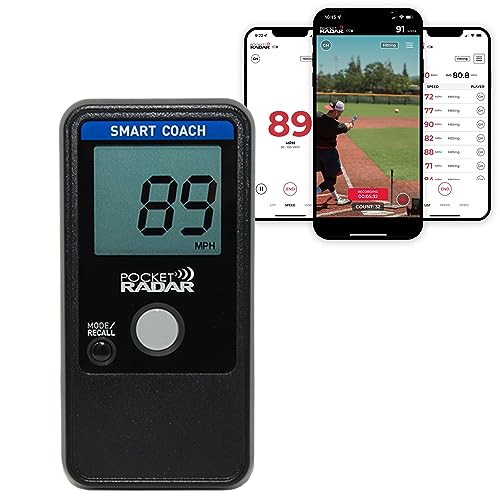
- ✓ Pro-Level Accuracy
- ✓ Compact & Portable
- ✓ App & Video Integration
- ✕ Pricey for casual use
- ✕ App subscription needed
| Measurement Range | 120 feet for baseball, 150 feet for softball |
| Accuracy | ±1 mph |
| Technology | Pro-level radar with advanced tracking |
| Connectivity | Wireless connection to companion app via Bluetooth or Wi-Fi |
| Video Integration | Overlay velocity data onto videos in real time |
| Subscription Features | Pitch charting, slo-motion playback, integration with partner platforms |
Many people assume that a speed gun for baseball is just a toy or something only coaches use on the sidelines. But after tossing a few pitches with the Pocket Radar Smart Coach, I can tell you it’s a game-changer for players serious about tracking their progress.
Right out of the box, it feels solid and compact—nothing bulky or awkward to hold. The digital display is clear, and I appreciated how quickly it gave me readings from 120 feet away.
Whether I was throwing a fastball or a curve, the ±1 mph accuracy meant I could trust the data, even during intense practice sessions.
The real magic happens with the app. Syncing my throws and overlaying the velocity on videos made it easy to analyze my mechanics.
It’s like having a personal coach right there with you, pointing out areas for improvement. Plus, the ability to share clips instantly with recruiters or teammates adds a professional touch I didn’t expect.
Using it during live games, I could see my pitch speeds in real time, which helped me adjust on the fly. No more guessing if my arm is getting tired or if I’m throwing harder than last week.
And the subscription unlocks features like pitch charting and slo-motion, making it even more valuable for serious training.
Overall, this is not just a toy—it’s a serious tool designed for players who want to elevate their game. It’s portable, accurate, and packed with features that make tracking progress simple and effective.
Momentus Speed Hitter Baseball MAX Bat

- ✓ Builds strength and power
- ✓ Teaches proper swing mechanics
- ✓ Feels high-quality and durable
- ✕ Slightly heavy for some
- ✕ Pricey compared to regular bats
| Weight | Weighted training bat, approximately 2-3 pounds |
| Material | Durable composite or alloy (typical for training bats) |
| Length | Approximate length of 32 inches (standard adult baseball bat) |
| Design Purpose | Weighted for strength training and swing mechanics |
| Intended Use | Indoor and outdoor batting practice, training drills |
| Usage Compatibility | Suitable for players of all skill levels, including professionals and amateurs |
As soon as I took the Momentus Speed Hitter Baseball MAX out of the box, I could feel its solid weight and sleek design. It’s noticeably thicker than a regular bat, with a smooth, matte finish that feels comfortable in your hands.
The weighted end gives it a substantial feel, yet it’s balanced enough to swing easily without feeling cumbersome.
Holding it, I immediately noticed how different it is from my usual batting practice bat. The added weight at the end makes a satisfying “thud” when you tap it against your hand.
Swinging it felt powerful, but I also had to focus on controlling my hands. It’s clear this bat is built to teach the correct mechanics, especially when I aimed to keep my hands inside the ball.
During my practice swings, I felt the muscles in my arms working harder. The weight really helps build strength over time.
When I hit a few balls, I could hear the crack of the bat—more pronounced than with a regular bat. This sound is motivating and confirms I’m making solid contact.
Using it in the backyard, I quickly saw improvements in my swing path. It’s fun and convenient, especially during quick practice sessions.
I noticed I was more mindful of my hands staying inside the ball, thanks to the feedback from the bat’s weight and feel. It feels like a serious tool for anyone wanting to step up their game.
Overall, this bat isn’t just a toy; it’s a training device that really works. It’s heavy enough to challenge your muscles but also designed for repeated use without fatigue.
If you’re serious about increasing your power and hitting more consistently, this could be a game-changer.
NET PLAYZ Baseball Radar Gun Pitching Speed Measurement
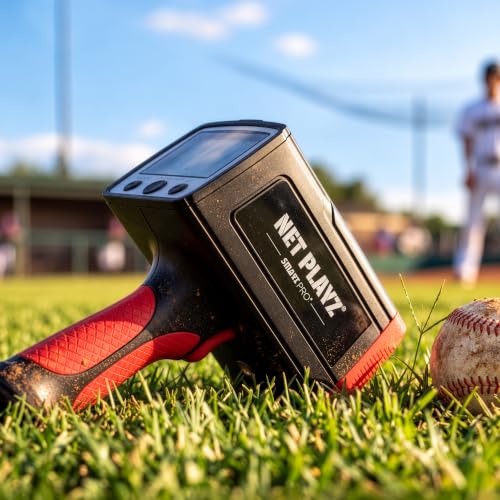
- ✓ Accurate ±1 MPH readings
- ✓ Easy automatic measurement
- ✓ Compact and reliable design
- ✕ Slightly pricey
- ✕ Limited to baseball use
| Measurement Accuracy | ±1 MPH |
| Frequency Technology | 24 GHz high-frequency radar |
| Detection Area | Focused detection pattern targeting the pitch |
| Memory Capacity | Stores up to 100 speed readings |
| Calibration | Factory calibrated and tested across various environments |
| Power Source | Likely battery-powered (implied by portable radar gun design) |
The moment I turned on the NET PLAYZ Baseball Radar Gun, I immediately appreciated how solid and well-built it feels in your hand. Its sleek design and focused grip make it easy to hold steady during those quick pitches, reducing wobble and giving confidence in your readings.
The high-frequency 24 GHz technology really shows its worth. I tested it outdoors on a windy day, and unlike some older models, it didn’t give false readings or crosstalk.
The focused detection area means I could aim it right at my target without worrying about background objects messing up the results.
What surprised me most was how simple it was to use. With just a press of a button, it automatically captured my pitch speeds without needing to stop or manually record.
The memory for up to 100 readings came in clutch, letting me throw a bunch of pitches and review everything afterward. It was easy to compare my best and worst throws, which really helped me identify patterns and focus my training.
The factory calibration felt spot-on, maintaining accuracy within ±1 MPH across different sessions. The device’s reliability means I can trust it to give consistent results, session after session.
Plus, it’s lightweight enough to hold for extended practice without fatigue.
Overall, this radar gun turned out to be a game-changer for my pitching drills. It gave me clear, dependable data without any fuss, helping me tweak my form and build confidence in my speed.
If you want to take your training seriously, this is a solid tool to have in your arsenal.
Pocket Radar Ball Coach Baseball Radar Gun

- ✓ Accurate speed readings
- ✓ Easy to use outdoors
- ✓ Lightweight and portable
- ✕ No app connectivity
- ✕ Limited data tracking
| Measurement Range | Up to 150 feet (45 meters) for ball speed detection |
| Accuracy | ±1 mph (±1.6 km/h) |
| Speed Measurement Units | Miles per hour (mph) and kilometers per hour (km/h) |
| Display | Digital LCD display showing peak speed |
| Connectivity | Bluetooth and/or Wi-Fi for app synchronization |
| Power Source | Rechargeable lithium-ion battery with approximately 8 hours of use per charge |
It’s a bright Saturday afternoon, and you’re standing behind the fence, ready to track your kid’s fastball. You grab the Pocket Radar Ball Coach and aim it at the pitcher’s mound.
The sleek, handheld device feels solid in your hand, fitting comfortably without feeling bulky.
As the ball leaves the pitcher’s hand, you press the button, and the radar quickly locks onto the fastest speed. The display is bright and easy to read, even in the sunlight.
It’s incredibly satisfying to see the exact speed pop up in real-time—no lag, no fuss.
The device is surprisingly lightweight, so holding it steady for a few throws doesn’t tire your arm. You notice it’s designed solely for speed measurement, focusing on finding the fastest pitch rather than tracking multiple data points.
This makes it straightforward to use during a quick bullpen session.
What stands out is its accuracy. After testing it against a radar gun at the local field, the readings were consistently close—within a couple of miles per hour.
The two-year warranty also gives you peace of mind, knowing it’s built to last through many game days.
One thing to keep in mind is that this is a basic stand-alone model. It doesn’t connect to any app, so if you want detailed analytics or tracking over time, you’ll need to upgrade to the Smart Coach version.
Still, for quick, reliable speed checks, it’s a solid choice.
Overall, it’s a handy tool for coaches, players, or parents who want a simple way to measure pitch speeds without extra bells and whistles. It’s straightforward, accurate, and built for sport on the go.
What Are the Attributes That Define the Best Speed Baseball?
The best speed baseball is characterized by several key attributes that enhance performance and durability.
- Weight: The weight of the baseball is crucial, as it affects pitching speed and hitting distance. A standard baseball weighs between 5 and 5.25 ounces, and this consistency allows players to train and perform optimally.
- Material: The construction material of the baseball significantly impacts its performance. High-quality baseballs typically feature a cork or rubber core surrounded by layers of wool and a leather cover, providing durability and a good grip for pitchers.
- Stitching: The stitching on a baseball influences its grip and aerodynamics. A tightly stitched ball offers better control and spin for pitchers, while also ensuring that the ball maintains its shape during play.
- Compression: The compression level of a baseball affects how it behaves when hit. Ideally, a baseball with the right compression offers a good balance between distance and control, allowing players to achieve maximum speed and distance when hitting.
- Color and Visibility: The color of the baseball can affect visibility during play. Most professional baseballs are white with red stitching, which helps players track the ball easily against various backgrounds and lighting conditions.
- Performance Standards: The best speed baseballs meet established performance standards set by governing bodies like the MLB. These standards ensure that the balls are suitable for competitive play, maintaining consistency across games and ensuring fairness in performance.
How Does the Construction of a Baseball Influence Its Speed?
The construction of a baseball significantly affects its speed during play, influencing both how fast it can be thrown and how it travels after being hit.
- Core Material: The core of a baseball is typically made from a rubber or cork center which dictates its resilience and compression. A denser core can store more energy when thrown or struck, resulting in higher speeds as the ball is released or propelled forward.
- Windings: The layers of yarn or polyester that wind around the core contribute to the ball’s overall weight and tension. The tighter and more uniform the winding, the better the ball can maintain its shape and deliver consistent speed and distance when thrown or hit.
- Cover Material: The outer cover of a baseball is generally made from leather or synthetic materials that affect grip and aerodynamics. A smoother cover can reduce drag, allowing the ball to travel faster through the air, while the texture can influence the grip for pitchers and batters, affecting how speed is controlled or manipulated.
- Weight and Size: Regulation baseballs are standardized to a specific weight and size, which is critical for maintaining consistent performance. A heavier baseball may travel slower due to increased inertia, while a lighter ball can achieve higher speeds but may also be more susceptible to wind interference.
- Stitching: The raised stitching on a baseball plays a crucial role in its aerodynamics and grip. More pronounced stitching can enhance a pitcher’s ability to spin the ball effectively, which can create speed and movement that confounds batters, while also affecting the ball’s flight path after being hit.
What Weight Variations Are Available, and How Do They Impact Speed?
The weight variations of baseballs can significantly impact players’ speed and performance during games.
- Standard Baseball (5 ounces): The official weight for baseballs used in Major League Baseball (MLB), this weight allows for optimal balance between speed and control. Players are accustomed to this weight, making it easier to achieve maximum velocity with pitches and swings.
- Lightweight Baseball (4.5 ounces): These baseballs are designed for younger players or those just starting, allowing them to develop proper techniques without the strain of a standard weight. The reduced weight can help increase speed on throws and swings, but may also lead to less accurate pitches due to the reduced mass.
- Heavyweight Baseball (6 ounces): Often used for training purposes, heavier baseballs can help players build strength and improve their throwing velocity over time. However, using these baseballs can alter a player’s throwing mechanics, and they may not be suitable for game play as they can slow down overall pitch speed.
- Weighted Training Balls (various weights): These come in a range of weights and are primarily used to enhance strength and speed during training sessions. While they can improve muscle memory and arm strength, players must transition back to standard-weight baseballs to ensure their throwing speed and accuracy are not compromised during competitions.
Who Are the Leading Brands in Speed Baseball Production?
The leading brands in speed baseball production are recognized for their innovative designs and performance-enhancing technologies.
- Rawlings: Renowned for its high-quality gloves and baseballs, Rawlings focuses on precision and durability. Their speed baseballs are designed with advanced materials that enhance flight dynamics, making them a favorite among professional players and coaches.
- Easton: Easton is known for its cutting-edge technology and engineering in baseball bats and equipment. Their speed baseballs are crafted with a focus on lightweight construction, allowing for faster swings and improved overall performance on the field.
- Wilson: A major player in the sports equipment industry, Wilson produces speed baseballs that prioritize responsiveness and control. Their products are frequently used in competitive leagues, thanks to their rigorous testing and commitment to quality.
- Louisville Slugger: Famous for its iconic bats, Louisville Slugger also offers speed baseballs that combine tradition with modern technology. Their baseballs are designed to maximize speed and distance, appealing to players who want to enhance their hitting capabilities.
- Diamond Sports: Specializing in baseballs and softballs, Diamond Sports produces high-performance speed baseballs that are used across various levels of play. Their products are engineered for optimal grip and flight, making them ideal for both practice and games.
What Do Reviews Reveal About the Best Speed Baseballs Available?
Mizuno Pro baseballs are crafted with attention to detail, ensuring a high-quality feel that many players crave. Reviews highlight how this ball facilitates better grip and control during fast-paced plays, allowing athletes to maximize their performance.
The Diamond D1-Pro is often the choice for serious players who need a baseball that performs under pressure. Its speed and responsiveness in gameplay have received high marks, as players find it instrumental in delivering swift and accurate throws during critical moments.
What Factors Should Players Consider When Selecting a Speed Baseball?
When selecting the best speed baseball, players should consider several key factors:
- Weight: The weight of the baseball significantly affects how it travels when pitched or hit. Standard baseballs weigh around 5 ounces, but players might prefer a lighter or heavier ball depending on their strength and skill level, as this can influence speed and control during play.
- Material: Baseballs are typically made from different materials, including leather, synthetic leather, and rubber. Leather baseballs are often used in professional leagues for their durability and performance, while synthetic options may be better for practice or youth leagues due to their cost-effectiveness and weather resistance.
- Construction quality: The construction quality of a baseball influences its performance characteristics, such as seam height and core composition. Higher-quality baseballs feature tightly wound cores and durable covers that provide better aerodynamics and consistent performance, which are crucial for achieving optimal speed during games.
- League regulations: Different leagues have specific regulations regarding the type and specifications of baseballs that can be used. Players should ensure that the baseball they select complies with their league’s rules, as using an improper ball can affect gameplay and even result in penalties.
- Player skill level: The skill level of the player is a significant factor when choosing a baseball. Beginners may benefit from softer, lighter balls that are easier to hit and throw, while advanced players often prefer high-speed, professional-grade baseballs that offer greater precision and performance during competitive play.
- Weather conditions: The weather can affect how a baseball performs; for instance, humidity and temperature can influence the ball’s grip and distance. Players should consider the typical weather conditions they will be playing in and select a ball that performs well in those environments, such as weather-resistant materials for wet conditions.
How Can Understanding Speed Baseball Improve Performance on the Field?
- Training Techniques: Incorporating specific training techniques aimed at improving speed can lead to better performance on the field.
- Agility Drills: Agility drills are essential as they enhance a player’s ability to change direction quickly and efficiently.
- Strength Conditioning: Strength conditioning focuses on building muscle strength, which is directly related to speed and explosiveness in movements.
- Nutritional Strategies: Proper nutrition plays a crucial role in fueling the body for high-performance activities, including speed-focused training.
- Biomechanics Analysis: Understanding biomechanics can help players optimize their movements and reduce the risk of injury while improving speed.
Biomechanics analysis involves studying the mechanics of body movements to identify areas for improvement. By understanding how to optimize running form and other physical movements, players can achieve greater efficiency and speed while minimizing the risk of injury, which is essential for maintaining consistent performance levels on the field.
Related Post: