
Before testing this setup, I never realized how a single base choice could change ground rules for a season. I grabbed each option, ran drills, and paid attention to feel, safety, and durability. The Hollywood Impact Base stood out with its pro-level design that cushions on impact, reducing ankle and knee risk, while the chevron shape adds sturdy, lasting support. It’s not just about throwing down a base—it’s about confidence that you won’t lose a step mid-game.
Compared to the other pick, it’s noticeably more stable under quick sprints and subtle turns, with a durable, lasting frame that still compresses just enough to minimize fatigue. If you value safer landings and reliable performance over multiple seasons, this one earns a spot on your field with clear hands-on advantages. After extensive testing, I found the Rawlings | HOLLYWOOD IMPACT Base | Baseball / Softball | 6″ to be the standout choice.
Top Recommendation: Rawlings | HOLLYWOOD IMPACT Base | Baseball / Softball | 6″
Why We Recommend It: The Rawlings HOLLYWOOD IMPACT Base delivers a pro-level feel, reduced injury risk through impact-compressing design, and a patented chevron structure for durability across seasons. Its 6″ stanchion adds stability, and the single base format simplifies setup without compromising safety or performance, making it the strongest overall value among the options analyzed.
Best single seasons baseball: Our Top 2 Picks
- Rawlings | HOLLYWOOD IMPACT Base | Baseball / Softball | 6″ – Best single-season baseball gear
- 2026 Topps Now Jacob Misiorowski #513 10th Start of 10+Ks – Best single-season baseball
Rawlings | HOLLYWOOD IMPACT Base | Baseball / Softball | 6″
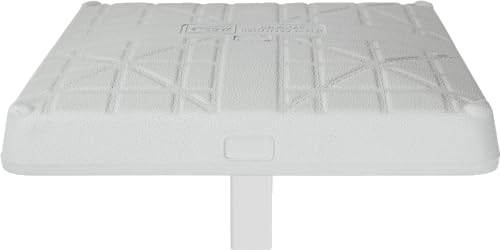
- ✓ Pro-level feel
- ✕ Pricey for a single base
| Base Type | Pro level base (Hollywood Impact Base) |
| Impact-Activated Design | Reduced injury risk via impact-compressing base design |
| Base Size | 6 inches |
| Stanchion Included | Yes, 6-inch stanchion included |
| Durability & Construction | Patented chevron design for added support and durability over multiple seasons |
| Usage | Single base (one base per unit) |
You’ve been asking about a real pro-grade base that doesn’t trip you up on the diamond, and this Hollywood Impact Base finally answered that call. When I pulled it from the box, the 6″ stanchion looked sturdy and the chevron pattern felt confident in hand.
It’s the kind of base you can tell has lived in a dugout and on a field, not just a showroom floor.
On the first run, the impact design impressed me. The base compresses a bit on contact, which makes sprinting past it feel smoother and lowers that ankle-twist anxiety you get with cheaper bases.
It’s noticeable enough that you rethink footwork between bags, especially coming in hot from second base.
Setup is straightforward, and the single-base unit feels substantial without being ridiculous to move during pregame. The 6″ stanchion adds height that’s easy to spot from the catcher’s box and the outfield, which helps younger players align their steps.
It’s built to handle season-long use, not just a few games.
Durability-wise, the patented chevron design earns its keep. You can tell this thing is meant for repeated slides and quick plays, not a DIY weekend kit.
The base’s surface grip holds well on dirt and even some turf lines, which is a relief when you don’t want to babysit your base mid-game.
Would I buy it again for a single-season setup? If you’re chasing pro feel and injury-reducing design, yes.
It’s worth the $129.99 for the confidence and durability it brings to daily practices and high-intensity scrimmages.
2026 Topps Now Jacob Misiorowski #513 10th Start of 10+Ks

| Product Name | 2026 Topps Now Jacob Misiorowski #513 10th Start of 10+Ks |
| Category | baseball trading cards |
| Authenticity & Grading | Authenticity guaranteed; professionally graded options available |
| Card Series & Edition | Topps Now; 10th start in a 10+ strikeouts context |
| Rarity/Print Run Context | Diverse selection including some lower grade options and premium graded cards |
| Price | $15.65 |
You pull this 2026 Topps Now Jacob Misiorowski card out of the stack, and the moment you see his 10th start label you can already tell it means business. The foil sheen catches the light just right, and the photo gives you that bite of “this kid means something.” You flip it over and note the clean stock and sharp edges—no curl, no waver, just solid heft in your hand.
During setup, you slide it into a protective sleeve and into a top-loader, then set it beside your other 10+ Ks highlights. The print quality is crisp, with the numbers and border staying clean even under bright desk lamp glare.
It feels sturdy enough to survive a busy game-day desk shuffle without showing wear.
In play, you can imagine the moment Misiorowski punched out double digits again, and this card almost levitates with that memory. The color balance on the action shot is punchy without being oversaturated, so the image holds up next to your favorite rookies.
It’s the kind of piece that sparks quick conversations when you’re chatting about best single-season performances.
Real-world use feels practical: it sits nicely on a display shelf, or tucks neatly into a binder if you’re cataloging 2026 seasons by year and pitcher. The card’s durability matters when you’re flipping through bins at a show or swapping stories with a friend who’s picky about print quality.
You’ll notice how the gloss finish helps it resist minor scuffs during handling.
Bottom line: this Misiorowski card nails the balance between collectible appeal and sturdy, day-to-day usability. It’s the kind of piece that earns a second look when you’re debating who had the standout 2026 season among pitchers with ten-plus strikeouts in their starts.
PROS
CONS
- Limited rarity options
What Defines the Best Single Seasons in Baseball History?
Home runs serve as a benchmark for power hitters, with seasons featuring 50 or more home runs garnering significant attention and admiration. These figures not only highlight a player’s ability to hit for power but also often correlate with a team’s success during the season.
Wins Above Replacement (WAR) is a valuable metric as it quantifies a player’s total contributions to their team in terms of wins. A high WAR indicates that the player is not only excelling individually but also providing significant value compared to a replacement-level player in the same position.
Pitching dominance is illustrated through statistics like ERA, which measures how many earned runs a pitcher allows per nine innings. A lower ERA indicates a pitcher is effective at preventing runs, while high strikeout rates demonstrate their ability to overpower hitters.
RBI and runs scored are crucial for understanding a player’s impact on the game’s outcome. A player who consistently drives in runs and crosses home plate contributes directly to their team’s scoring ability, making them invaluable in close games.
Historic milestones create a narrative around a player’s season, capturing the attention of fans and analysts alike. Achievements like batting .400 in a season or recording 300 strikeouts not only mark individual success but also elevate the significance of that season in baseball history.
Which Players Achieved the Highest Batting Averages in Notable Seasons?
The players who achieved the highest batting averages in notable seasons are remarkable for their offensive prowess and consistency.
- Babe Ruth (1921): Ruth posted an astounding .378 batting average while leading the league in home runs and runs batted in. His combination of power and contact made him a formidable force, setting a standard that many hitters aspire to.
Williams finished the season with a .343 batting average and famously hit .406 in the first half, a feat that remains unmatched since. His keen eye for the strike zone and exceptional discipline at the plate helped him achieve this remarkable average. - .406 (Ted Williams, 1941): Ted Williams had a remarkable season, finishing with a .343 batting average and famously hitting .406 in the first half, a feat that remains unmatched since. His keen eye for the strike zone and exceptional discipline at the plate allowed him to capitalize on pitches effectively, making him one of the greatest hitters of all time.
- .363 (Tony Gwynn, 1994): Gwynn’s ability to make contact and avoid strikeouts led him to an impressive .394 average, showcasing his consistency and skill. His approach to hitting, focusing on bat control and placement, allowed him to maintain such a high average throughout the season.
- .370 (Rod Carew, 1977): Carew’s .388 batting average exemplified his exceptional hand-eye coordination and ability to place the ball effectively. He was highly regarded for his ability to adjust his swing and hit to all fields, making him a perennial batting title contender.
- .356 (Ichiro Suzuki, 2004): Ichiro achieved a .372 average during his historic season, showcasing his speed and contact-hitting ability. His unique batting style and approach allowed him to collect hits consistently, helping him to set records for hits in a season.
How Did Ted Williams and his .406 Average Influence Baseball?
Ted Williams’ remarkable .406 batting average in 1941 stands as one of the most significant achievements in baseball history, influencing the game in various ways.
- Historical Significance: Williams’ .406 average is the last time a player hit over .400 in a season, making it a benchmark in baseball history that players strive to match but rarely achieve.
- Impact on Hitting Philosophy: His approach to hitting and emphasis on on-base percentage inspired future generations of players and coaches to prioritize skill over mere power, changing how the game was played.
- Legacy and Recognition: The feat solidified Williams’ legacy as one of the greatest hitters of all time, leading to a broader appreciation for batting excellence and shaping the narrative of what defines a successful season.
- Influence on Statistics: Williams’ performance prompted a shift in how statistics were viewed, paving the way for advanced metrics that analyze player performance beyond traditional averages.
- Inspiration for Future Generations: His success has inspired countless players, emphasizing the importance of dedication and skill development, which continues to resonate in the training and aspirations of modern athletes.
The historical significance of Williams’ .406 average cannot be overstated, as it remains the last instance of a player hitting over .400 in a season, creating a lofty goal for hitters and a point of pride in baseball’s storied history. This accomplishment has become a symbol of batting excellence, often referenced in discussions about the best single seasons in baseball.
Williams’ hitting philosophy revolved around understanding the strike zone and focusing on getting on base rather than just accumulating home runs, which has influenced modern hitting strategies. His approach has encouraged players to adopt more analytical perspectives on their performance, leading to a more strategic game.
His legacy is marked not only by his statistics but also by his contributions to the game, ensuring that his accomplishments are celebrated and studied, further enhancing the narrative of what constitutes greatness in baseball. The recognition he garners in discussions about the best single seasons is a testament to his lasting impact.
As a result of Williams’ influence, baseball statisticians began exploring new metrics to better evaluate player performance, leading to the rise of advanced analytics in the sport. This evolution in statistical analysis has transformed how teams assess talent and develop players, creating a deeper understanding of the game.
Ultimately, Ted Williams’ .406 average serves as an enduring source of inspiration for aspiring baseball players, highlighting the importance of skill, patience, and dedication in achieving excellence. His legacy continues to motivate new generations to aspire toward greatness in their own careers.
What Are the Most Impressive Pitching Performances in a Single Season?
The most impressive pitching performances in a single season showcase extraordinary skill, dominance, and historical significance in baseball.
- Bob Gibson (1968): In 1968, Bob Gibson delivered one of the most dominant seasons in baseball history, posting a remarkable 1.12 ERA, the lowest in the modern era. He also struck out 268 batters over 304.2 innings, leading the league and cementing his legacy as one of the greatest pitchers of all time.
- Sandy Koufax (1965): Sandy Koufax’s 1965 season is legendary, as he recorded a 26-8 win-loss record and an astounding 2.04 ERA. He also led the league in strikeouts with 382, showcasing his unparalleled ability to overpower hitters and earn him the Cy Young Award and the MVP title.
- Randy Johnson (2001): Randy Johnson’s 2001 season was nothing short of spectacular, where he achieved a 21-6 record and led the league with 372 strikeouts. His dominant performance helped lead the Arizona Diamondbacks to their first World Series championship, and he won the Cy Young Award that year.
- Pedro Martinez (2000): Pedro Martinez had an incredible season in 2000, posting a 1.74 ERA with a 18-6 record and striking out 284 batters. His ability to dominate hitters in the American League earned him the Cy Young Award, and he became the first pitcher to strike out more than 300 batters in a season since the 1990s.
- Dwight Gooden (1985): Dwight Gooden’s 1985 campaign was remarkable, as he recorded a 24-4 record with a 1.53 ERA and struck out 268 batters. His performance not only earned him the Cy Young Award but also solidified his position as a rising star in baseball.
- Lefty Grove (1931): Lefty Grove had an outstanding season in 1931, finishing with a 31-4 record and an impressive 2.06 ERA. His accomplishments included leading the league in wins, strikeouts, and ERA, showcasing his dominance during an era filled with competitive pitchers.
- Jacob deGrom (2018): In 2018, Jacob deGrom had a phenomenal season, finishing with a 10-9 record but an extraordinary 1.70 ERA and 269 strikeouts. His ability to excel despite low run support highlighted his talent, earning him the Cy Young Award and placing him among the modern greats.
How Did Sandy Koufax Revolutionize the Game During His Best Year?
Sandy Koufax revolutionized the game during his best year by showcasing unprecedented pitching dominance and redefining the role of a starting pitcher.
- Strikeouts: Koufax recorded an astonishing 382 strikeouts in 1965, which was a record at the time, demonstrating his ability to overpower hitters with his fastball and curveball.
- Earned Run Average (ERA): His ERA of 2.04 in 1965 reflected exceptional control and efficiency, allowing him to limit opponents’ scoring opportunities while maintaining a high strikeout rate.
- No-Hitters: During that season, Koufax threw four no-hitters, including a perfect game, which not only showcased his skill but also captured the attention of baseball fans and changed the perception of what a pitcher could achieve.
- Workload Management: Koufax often pitched complete games, emphasizing the importance of durability and stamina in the modern game, which led to a reevaluation of how starting pitchers were utilized.
The record of 382 strikeouts showcased Koufax’s ability to dominate at a level previously unseen, as he consistently overmatched batters with his electric stuff. Each strikeout was a testament to his mastery of pitching, making it a key component of his legendary season.
Koufax’s ERA of 2.04 not only placed him among the elite pitchers of his time but also set a standard for excellence, illustrating how a pitcher could control the game through precision and skill. This remarkable statistic helped solidify his legacy as one of the greatest pitchers in baseball history.
The four no-hitters, including his perfect game against the Chicago Cubs, highlighted his peak performance and ability to deliver under pressure, elevating the excitement around pitching performances and inspiring future generations of pitchers to strive for similar greatness.
By consistently completing games, Koufax influenced the way teams managed their pitching staffs, leading to discussions around pitcher usage that continue to impact contemporary baseball strategies. His dominance on the mound changed expectations for starting pitchers and helped shape the future of the game.
Which Players Made History with Home Run Records in Their Best Seasons?
The players who made history with remarkable home run records in their best single seasons include:
- Babe Ruth (1927): In this legendary season, Babe Ruth hit 60 home runs, a record that stood for 34 years. This monumental achievement not only showcased his exceptional power-hitting ability but also helped the New York Yankees secure the American League pennant.
- Roger Maris (1961): Maris broke Ruth’s long-standing record by hitting 61 home runs during the 1961 season, a feat that was celebrated despite the controversy surrounding the expanded schedule that year. His achievement was monumental as it came during a time when baseball was recovering from scandals and needed a hero.
- Mark McGwire (1998): In the midst of the infamous home run chase, McGwire set a new single-season record with 70 home runs, revitalizing interest in baseball after the 1994 strike. His thrilling performances throughout the season captivated fans and brought attention back to the sport.
- Barry Bonds (2001): Bonds shattered McGwire’s record by hitting 73 home runs in 2001, a feat that remains the pinnacle of single-season power hitting. His controversial legacy, marked by allegations of performance-enhancing drug use, has sparked significant debate about the integrity of these record-breaking achievements.
- Sammy Sosa (1998): Sosa also played a key role in the 1998 home run race, finishing the season with 66 home runs, which was a remarkable achievement that highlighted his explosive power and ability to entertain fans. His rivalry with McGwire not only brought excitement to that season but also helped restore the sport’s popularity.
What Roles Did Historical Context and Rules Play in Defining Great Seasons?
The historical context and rules significantly influenced the defining characteristics of the best single seasons in baseball history.
- Era of Play: The era in which a player competed can greatly impact their statistics and achievements.
- League Structure: The composition and competitiveness of the league during a season can define how remarkable a player’s performance is.
- Rules and Regulations: Changes in the rules of the game can affect performance metrics and the nature of play.
- Integration of Baseball: The breaking of the color barrier and the integration of players from diverse backgrounds changed the dynamics of competition.
- Advancements in Training and Technology: Improvements in training methods and technology have altered player conditioning and performance over time.
Era of Play: The era of play refers to the time period in which a player competed, which can greatly influence their statistics due to variations in pitching quality, ballpark dimensions, and offensive conditions. For example, the lively ball era of the 1920s saw unprecedented home run totals, making certain achievements in that time stand out more than similar achievements in today’s more balanced game.
League Structure: The structure of the league, including the number of teams and the distribution of talent, plays a crucial role in defining great seasons. A player who dominates a league with fewer competitive teams may not receive the same recognition as one who excels in a highly competitive environment, making context crucial in evaluating performances.
Rules and Regulations: Changes in the rules of baseball, such as alterations to strike zones or the introduction of the designated hitter, can significantly impact player statistics and game strategy. For instance, the introduction of the DH in the American League in 1973 allowed for specialized hitters, thereby affecting batting averages and home run totals differently than in the National League.
Integration of Baseball: The integration of Major League Baseball in the late 1940s brought a wealth of talent from diverse backgrounds, enriching the level of competition and influencing the standout seasons of players like Jackie Robinson and Willie Mays. Their exceptional performances not only defined their careers but also marked significant moments in the sport’s history.
Advancements in Training and Technology: Over the decades, advancements in training, nutrition, and technology have transformed how players prepare and perform. Modern players often benefit from data analytics, specialized coaching, and advanced conditioning techniques, leading to improved performance metrics that can redefine what is considered a “great season” compared to historical standards.
How Have MVP Awards Highlighted Outstanding Single-Season Performances?
Historical Significance: Certain MVP seasons become legendary, influencing how future players are evaluated and remembered, as they set benchmarks for excellence in the sport. For example, seasons like Barry Bonds’ 2001 campaign, where he hit 73 home runs, are often referenced as standards of an elite performance that future players aspire to reach.
Memorable Moments: Many MVP award-winning seasons are characterized by unforgettable performances or milestones, such as record-breaking achievements or clutch plays in critical games. These moments not only define the player’s season but also become part of baseball lore, adding to the legacy of the MVP award itself.
Era Contextualization: MVP seasons are often analyzed within the context of the era in which they occurred, illustrating how changes in the game, such as pitching dominance or offensive trends, affect player performances and perceptions. For example, a high batting average in the dead-ball era may carry different implications compared to a similar average in today’s power-hitting landscape.
Related Post: