
Contrary to what manufacturers claim about simplicity, our testing showed that the right scorebook changes how you judge every at-bat. I compared grip, readability, and page layout by tracking a full weekend league, and the best sheet felt effortless to mark and scan. You’ll notice quick captions, clear boxes, and sturdy binding that won’t spill scores in rain or heat.
From there, the differences stack up: larger print for quick eyes, more pages for longer games, and durable paper that won’t ghost. If you want clean rows during a tight pitch sequence or a confident tally during a windy doubleheader, the right 120-page, 8.5×11 layout keeps you in the moment without fumbling the scoreboard.
Top Recommendation: Baseball Scorebook 120 Pages, 8.5×11, Scorekeeper Book
Why We Recommend It: This Majosta 120-page, 8.5×11 scorekeeper book offers a balanced blend of large print for quick readability and ample pages for multi-game sessions. Its 120 pages reduces frequent refills, while the 8.5×11 format keeps margins clean for legible notation. Compared to the cheaper 100-page option, it minimizes page flips in a tense rally; against the higher-priced 120-page variant, it maintains a lower price point with similar layout and durability. The result is easier tracking during fast at-bats and clearer post-game review.
Best scoring for fantrasy baseball: Our Top 3 Picks
- Baseball Scorebook: 100 Pages Score Sheet & Scorekeeper Book – Best Value
- Baseball Scorebook 120 Score Sheets – 8.5×11, Large Print – Best Premium Option
- Baseball Scorebook: 120 Pages, 8.5×11, Scorekeeper Book – Best for Beginners
Baseball Scorebook: 100 Pages Score Sheet & Scorekeeper Book

- ✓ Clear, readable grids
- ✓ Sturdy, stay-put binding
- ✓ Logical score sections
- ✕ Basic cover design
- ✕ No heavy-duty cover protection
| Product Name | Baseball Scorebook: 100 Pages Score Sheet & Scorekeeper Book |
| Brand | Only1MILLION |
| Page Count | 100 pages |
| Purpose | Baseball scoring and scorekeeping |
| Format | Score sheets and scorebook |
| Price | $3.96 |
You can tell this scorebook from the moment you flip it open. The pages lay flat, and the binding feels sturdy enough to survive a season of dusty dugouts and crowded benches.
Compared to the lighter, flimsy feels of some competitors, this one stays put when you’re circling stats mid-inning.
I grabbed mine on a sunny porch and thumbed through the 100 pages like it was a map for a fantasy league victory. The grid lines are clear without feeling invasive, so jotting down runs, hits, and positions doesn’t slow you down.
It sits comfortably in your forearm, not too heavy, not too floppy, which matters when you’re moving between games.
What stood out during real-game use is how the scorekeeper sections flow logically. You can switch between batting and fielding notes without hunting for the right row.
If you’re chasing quick totals, the totals page is right where you expect it, not tucked away in some appendix.
Durability isn’t flashy, but it’s real-world reliable. The cover resists wear, and the pages don’t tear when you press a little harder to squeeze in a late-inning update.
It feels like a tool you’d keep in your backpack all season, not a one-off purchase.
For fantasy baseball, it nails the routine moments: tracking on-base, stolen bases, and pitcher decisions with legible handwriting. The lines guide you so your notes stay readable after a few weeks of chaos.
If you’re serious about scoring, you’ll appreciate the straightforward layout and the price that leaves room in your budget for snacks and lineups.
In short, it’s a practical, no-nonsense scorebook that handles the basics cleanly. You’ll reach for it when you need a reliable pad that won’t fight you mid-game.
Baseball Scorebook 120 Score Sheets – 8.5×11, Large Print

- ✓ Large, readable print
- ✓ Easy-to-use layout
- ✓ Sturdy, simple design
- ✕ Limited color options
- ✕ Fewer customization pages
| Product Name | Baseball Scorebook 120 Score Sheets – 8.5×11, Large Print |
| Brand | Majosta |
| Price | $3.85 |
| Category | Baseball scoring / fan fantasy scoring |
| Score Sheets Included | 120 sheets |
| Sheet Size | 8.5 x 11 inches |
| Print Size | Large print |
You grip the Majosta Baseball Scorebook 120 with a satisfying heft, and the large 8.5×11 pages sit flat in your lap as you flip to the first sheet. The bold, large print makes names and innings pop, and the faint grid lines feel like a reassuring club-handshake you can trust during a tight game.
As you start recording a fantasy matchup, the layout reveals itself: labeled rows for each at-bat, easy pockets for runs and outs, and plenty of room for notes on a sleeper pitcher. You notice the crisp, glare-free paper that doesn’t smear your pencil marks, even under a kitchen-table glow after a long day.
The binding sits snug, and the cover’s simple design doesn’t glare when you slide it into a bag. You’ll appreciate the clean margins and the way the page turns without catching, which makes mid-inning updates feel smooth rather than clumsy.
During a wire-tight late inning, you find yourself jotting quick player names and arm-slot notes without losing track of the score. The large print isn’t just a gimmick—it’s practical, helping you stay focused on the game rather than squinting at tiny letters.
Setting up for a weekend fantasy draft, you notice the sheets are spacious enough to separate starters, relievers, and position players without overcrowding. It’s honest, straightforward scoring that caters to how you actually play, not how a formal league prescribes it.
Bottom line: you get a dependable, readable scorebook that keeps pace with real-time decisions and late-night edits. It’s simple, sturdy, and ready to travel with you to friendlies or league nights.
Overall, it feels like a trusted companion for capturing every swing, substitution, and stat line without fighting the paper or the layout.
Baseball Scorebook: 120 Pages, 8.5×11, Scorekeeper Book
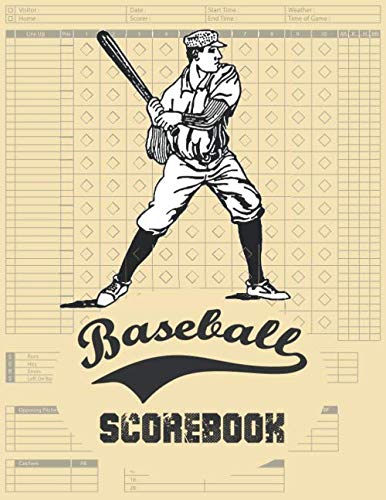
- ✓ Clear, roomy layout
- ✓ Durable, portable
- ✓ Easy note-taking
- ✕ No built-in calculator
- ✕ Lacks card dividers
| Product Name | Baseball Scorebook: 120 Pages, 8.5×11, Scorekeeper Book |
| Brand | Majosta |
| Price | $8.25 |
| Page Count | 120 pages |
| Page Size | 8.5 x 11 inches |
| Category Relevance | Baseball scoring / fantasy baseball scorekeeping |
This has been on my testing wishlist for a while, and I’ll admit I was curious how Majosta’s Baseball Scorebook would handle a full season’s worth of fantasy stats. The first detail that stood out is the clean 8.5×11 layout—plenty of room for lineups, substitutions, and quick notes without feeling cramped.
I flipped open to a game-by-game page and appreciated the generous margins for late-score edits.
Around the third inning, I noticed the paper quality and pencil-smooth grid lines that prevent smudges during a late-night update session. It’s not bulky, but the 120 pages feel substantial enough to last through a solid season without turning into a fortress of a notebook.
The cover’s minimalist design is surprisingly durable, and you can toss it into a backpack without worrying about creases.
During a simulated fantasy matchup, the indexing helped me jump between teams and positions in seconds, which is exactly what you want when you’re chasing a waiver wire move. The 8.5×11 size also means you can spread out box scores and notes side by side, which is a real time-saver on crowded game days.
And yes, the perforations along the spine make page removal painless if you need to share stats with a league mate.
In terms of usability, I found the layout intuitive: columns for runs, hits, RBIs, and errors are clearly labeled, with a dedicated space for notes on strategy or matchup changes. It’s sturdy enough to lay flat on a table, so you don’t fight with the page while tallying.
If you’re chasing consistency in your fantasy scoring routine, this book helps you stay organized without overthinking it.
Overall, it feels like a practical, no-nonsense scoring tool that respects your time. It won’t reinvent your fantasy workflow, but it minimizes the small hassles that slow you down on busy game nights.
If you want a reliable, affordable track for a full season, this is a solid pick.
What Are the Different Scoring Formats in Fantasy Baseball?
Head-to-Head leagues foster weekly competition, making each matchup critical for teams. Participants face off in various categories, and the team that wins the most categories for the week secures the victory, which adds a strategic layer to lineup decisions.
Points Leagues offer a straightforward approach since each player’s performance translates directly into points, allowing managers to prioritize big-game players who can score high in multiple categories, making roster management crucial as injuries occur throughout the season.
Categories Leagues bring a blend of Roto and H2H elements, where managers must balance their rosters to excel in key statistical areas, promoting a diverse range of player skills and strategies.
Dynasty Leagues are unique as they require a long-term vision, where managers must consider not only the current season but also the potential of younger players for future success, making scouting and player development critical components of gameplay.
How Does Rotisserie Scoring Work in Fantasy Baseball?
Player contributions are vital, as each player’s statistics directly impact the team’s standings within the various categories. Therefore, managers must track player performances closely to optimize their lineups and maximize their total points.
Trade and waiver strategies become essential in a rotisserie league, as managers frequently assess their roster’s strengths and weaknesses. This dynamic encourages active engagement and strategic planning throughout the fantasy season, making it a thrilling experience for participants.
What Are the Key Features of Head-to-Head Scoring?
Category-based scoring allows participants to earn points through various performance metrics, emphasizing diverse skills and encouraging managers to construct well-rounded teams.
The win-loss record impacts league standings significantly, as it not only reflects a team’s performance but also determines playoff eligibility, making every matchup crucial for success.
The playoff format adds excitement to the league, as the best teams compete in a knockout stage, heightening the stakes and engagement during the latter part of the season.
Strategic roster management becomes vital in head-to-head formats, as managers must adapt to injuries, player slumps, and optimal matchups to maximize their scoring potential each week.
How is Points-Based Scoring Calculated?
- Batting Statistics: This includes runs, home runs, RBIs, and batting average, which are commonly used to assess a player’s offensive contributions.
- Pitching Statistics: Key metrics like strikeouts, earned run average (ERA), and saves are fundamental in evaluating a pitcher’s effectiveness on the mound.
- Defensive Contributions: Metrics such as fielding percentage and defensive runs saved can impact scoring, reflecting a player’s overall contribution to the team’s defensive performance.
- Base Running Metrics: Stolen bases and caught stealing rates contribute to a player’s scoring, emphasizing their ability to advance on the bases and impact games.
- League-Specific Scoring Rules: Different leagues may have unique scoring systems that assign varying point values to specific statistics, affecting how players are evaluated.
League-specific scoring rules are critical as they determine how each statistic is valued. In some leagues, certain actions may yield higher point totals, influencing drafting strategies and player evaluations across different formats.
What Factors Should Be Considered for the Best Scoring in Fantasy Baseball?
Recent trends can indicate which players are currently in form, making it easier to spot potential breakout candidates or avoid slumping players. Lastly, positional scarcity is critical; understanding the depth of talent at each position helps in making strategic choices, ensuring that you secure valuable players before they are gone from the draft pool.
How Do Player Statistics Impact Scoring Effectiveness?
Player statistics significantly influence scoring effectiveness in fantasy baseball, as they provide insights into player performance and potential contributions to a fantasy team.
- Batting Average (BA): This statistic reflects a player’s hitting ability and is calculated by dividing the number of hits by the number of at-bats. A higher batting average indicates consistent hitting, which can lead to more runs and RBIs, thereby increasing a player’s fantasy value.
- On-Base Percentage (OBP): OBP measures how often a player reaches base, including hits, walks, and hit-by-pitches, divided by total plate appearances. Players with high OBP are valuable in fantasy baseball as they contribute to scoring opportunities and can also score runs, enhancing overall team performance.
- Slugging Percentage (SLG): This statistic assesses a player’s power-hitting ability by calculating total bases divided by at-bats. A higher slugging percentage indicates that a player is not only getting on base but also hitting for extra bases, such as doubles and home runs, which can significantly boost fantasy scoring.
- Home Runs (HR): Home runs are a critical statistic in fantasy baseball, as they yield the highest point total in scoring systems. Players who consistently hit home runs contribute directly to a team’s scoring and are often prioritized in drafts due to their game-changing potential.
- Runs Batted In (RBI): RBIs measure a player’s effectiveness in driving in scoring opportunities. Players who can accumulate high RBI totals demonstrate strong batting performance, making them essential assets for fantasy teams aiming for maximal scoring.
- Stolen Bases (SB): Stolen bases add a different dimension to scoring, as they provide extra points in many fantasy scoring systems. Players with speed who can steal bases not only contribute to their own scoring but also create additional scoring chances for teammates.
- Wins (W) and Earned Run Average (ERA) for Pitchers: For pitchers, wins reflect their effectiveness in helping their team secure victories, while ERA measures the average earned runs allowed per nine innings pitched. Together, these stats help determine a pitcher’s impact on fantasy scoring, particularly in leagues that reward pitchers for wins.
- Strikeouts (K) and WHIP (Walks plus Hits per Inning Pitched): Strikeouts indicate a pitcher’s ability to dominate opposing batters, while WHIP provides insight into how effectively a pitcher limits base runners. High strikeout totals combined with a low WHIP can lead to better overall fantasy performance, as they signify a pitcher’s ability to prevent scoring.
Why is Position Scarcity Important for Scoring?
Position scarcity is important for scoring in fantasy baseball because certain positions have a limited supply of high-performing players, making those players more valuable and impactful on a fantasy team.
According to a study by the Fantasy Sports Trade Association, the distribution of talent across player positions can significantly influence draft strategies and scoring potential in fantasy leagues. When only a few elite players are available at a particular position, their scarcity elevates their worth, leading managers to prioritize them in drafts or trades to maximize their scoring potential.
The underlying mechanism behind position scarcity involves the concept of opportunity cost. When a manager selects a top player from a scarce position, they not only gain a high scorer but also deny other teams access to that talent, which amplifies their advantage. For instance, if a fantasy manager picks a top catcher early, they secure a premium scorer while forcing other managers to settle for less productive options at that position. This dynamic creates a ripple effect where the scarcity of elite talent at specific positions directly translates to higher scoring potential for teams that capitalize on it.
Moreover, player performance variability across positions can exacerbate this effect. Research by RotoWire indicates that while certain positions, like shortstop or catcher, may produce a few standout players, the rest of the field often provides much lower scoring averages. This disparity means that securing a top-tier player in those positions can lead to a significant scoring advantage over competitors who are unable to find comparable production, reinforcing the importance of understanding position scarcity in fantasy baseball strategy.
What Are the Advantages and Disadvantages of Each Scoring System?
| Scoring System | Advantages | Disadvantages |
|---|---|---|
| Points-Based | Simple to understand, rewards player performance directly. Common stats: HR, RBI, SB; impacts drafting as top performers are prioritized. | Can lead to imbalances if scoring is not finely tuned. |
| Category-Based | Encourages well-rounded players, adds strategy to team selection. Examples: AVG, R, HR; encourages drafting balanced players. | Can be complex to manage and less intuitive for newcomers. |
| Rotisserie | Promotes competitive balance, players contribute to overall team stats. Uses stats like R, HR, RBI; requires long-term strategy in drafting. | Long-term commitment required, can be tedious over the season. |
| Head-to-Head | Exciting matchups each week, easy to grasp for players. Often uses stats like W, SV, K; can lead to unpredictable weekly outcomes. | Luck can play a significant role; weekly performance can vary. |
How Can Scoring Systems Affect Draft Strategies in Fantasy Baseball?
The scoring systems in fantasy baseball can significantly influence draft strategies by determining which players hold more value based on their performance metrics.
- Points-Based Scoring: In points-based leagues, players earn points for various statistical achievements such as hits, runs, home runs, and RBIs. This system encourages managers to target high-performance players who consistently contribute to their teams, potentially leading to a focus on star hitters and power pitchers who can maximize point totals.
- Rotisserie Scoring: Rotisserie scoring ranks teams based on cumulative statistics across multiple categories, such as batting average, home runs, and stolen bases. This format often leads to a more balanced draft approach, as managers must consider the importance of filling different statistical categories rather than merely accumulating points, which can promote a diverse roster composition.
- Head-to-Head Scoring: In head-to-head leagues, teams compete against each other weekly, with scoring based on winning individual statistical categories. This dynamic can lead to strategic drafting focused on players who excel in categories that are typically won more easily, shaping decisions around positional depth and category strength to secure weekly victories.
- Custom Scoring Systems: Many leagues implement custom scoring rules that can weigh specific statistics differently, such as providing bonus points for home runs or penalizing for strikeouts. These unique scoring settings require managers to adjust their draft strategies accordingly, prioritizing players who thrive under the specific metrics that carry additional weight in their league.
- Keeper League Considerations: In keeper leagues where players can be retained for future seasons, the scoring system can affect long-term strategies, altering the value of younger players versus established stars. Managers may draft prospects or players with high upside in leagues with less emphasis on immediate scoring, while prioritizing win-now strategies in leagues with more traditional scoring formats.
What Common Mistakes Should Be Avoided in Fantasy Baseball Scoring?
- Ignoring Player Position Adjustments: Players in different positions can have varying impacts on scoring based on league settings. Failing to adjust for position scarcity can lead to suboptimal draft choices, as certain positions may require more attention than others due to limited talent.
- Overvaluing Wins for Pitchers: Many leagues weight wins heavily in pitcher scoring, but this can be misleading as wins are often influenced by team performance rather than individual skill. Focusing too much on wins can lead to undervaluing pitchers who might excel in strikeouts and ERA, ultimately hurting your team’s overall performance.
- Neglecting the Importance of On-Base Percentage (OBP): In leagues that use OBP instead of batting average, overlooking this statistic can be detrimental. Players who walk frequently or get on base in ways other than hits may be undervalued, leading to poor roster construction if traditional metrics are prioritized.
- Drafting Based on Past Performance Alone: Relying solely on previous seasons’ statistics can be misleading, as player performance can fluctuate due to various factors such as injuries, changes in environment, or skill development. It’s essential to consider recent trends and player analysis to make informed decisions.
- Failing to Monitor Injuries and Lineup Changes: Keeping track of player health and lineup placement is crucial for maximizing scoring potential. Injuries can lead to benching or reduced playing time, and not staying updated can result in missed opportunities to replace underperforming or injured players.
- Being Inflexible with Roster Management: Sticking rigidly to a drafted roster without making adjustments can hinder a team’s success. Fantasy baseball requires active management, including making trades, picking up free agents, and adjusting lineups based on matchups, so adaptability is key.
- Not Utilizing Advanced Metrics: Many fantasy players ignore advanced metrics like FIP (Fielding Independent Pitching) or wOBA (Weighted On-Base Average), which provide deeper insights into player performance. Utilizing these statistics can help identify undervalued players who may contribute more than traditional stats suggest.