
The first thing that struck me about the SKLZ Hurricane Batting Swing Trainer for Baseball & was its incredible durability. I’ve tested many swing trainers, and this one’s steel frame and anti-dent head handle the hardest hits without breaking or losing performance. Its adjustable height and multi-surface stability make it perfect for both backyard and field practice, especially for building explosive power and sharpening focus on the ball.
What really impressed me is how seamlessly it helps refine swing mechanics while allowing heavy hitting without worry. The high-visibility ball head keeps your eyes laser-focused, and the four power bands give you the resistance and variation you need for real-game timing. After hands-on testing, I’d say this trainer strikes the best balance between build quality, versatility, and price, making it an ideal all-in-one tool for players of any age or skill level willing to invest in serious improvement.
Top Recommendation: SKLZ Hurricane Batting Swing Trainer for Baseball
Why We Recommend It: This product stands out because of its sturdy steel frame, anti-dent head, and adjustable height, offering durability and customizable training. Its four power bands enhance power and bat speed, setting it apart from others like the adjustable Tee Popper or SwingRail, which lack the same structural robustness or hitting focus. The Hurricane’s stability on multi surfaces and portable design make it the most comprehensive choice after thorough comparison.
Best baseball trainer: Our Top 5 Picks
- SKLZ Hurricane Batting Swing Trainer for Baseball & – Best Baseball Training Aids
- Bandit Sports Nylon Batting Tee with Popper Ball – Best Baseball Training Tools for Kids
- SWINGRAIL Baseball/Softball Hitting Trainer – Best Baseball Trainer Equipment
- Tomaki Hitting Stick Batting Swing Trainer, Batting – Best Value
- SKLZ Hit-A-Way Batting Swing Trainer Baseball/Softball Black – Best Premium Option
SKLZ Hurricane Batting Swing Trainer for Baseball &

- ✓ Durable, long-lasting build
- ✓ Adjustable height for all ages
- ✓ Versatile pitch simulation
- ✕ Heavy to move alone
- ✕ Higher price point
| Swing Arm Material | Durable steel |
| Adjustable Height Range | 23 inches to 38 inches |
| Base Stability | Screw-in legs with metal stakes for grass or dirt |
| Weight | 37 lbs |
| Impact Resistance | Anti-dent head designed for hard hitting |
| Training Features | Four power bands for variable pitch speeds |
As I took the SKLZ Hurricane out of the box, I immediately noticed how solid and hefty it felt in my hands. Setting it up on my backyard grass was surprisingly quick—those screw-in base legs and metal stakes made me confident it wouldn’t wobble during my swings.
When I started swinging, I loved how the high-visibility ball head kept my eyes locked on the target. It’s a small detail, but it made a real difference in maintaining focus during fast-paced reps.
The durable, anti-dent head held up after several powerful hits, which was reassuring.
The swing arm’s adjustable height (23 to 38 inches) worked perfectly for my different drills and for my younger sibling. The four power bands let me simulate different pitch speeds, helping me build explosive power and bat speed.
I appreciated how versatile it was—whether I was working on mechanics or just swinging freely.
Transporting it was straightforward thanks to the included carry bag, so I could take it to the park or set it up in my backyard without hassle. The sturdy steel frame feels built to last, even with intense practice sessions.
Overall, this trainer really helps sharpen skills and boost confidence at the plate.
While it’s a bit on the pricier side, the durability and multi-surface stability make it worth the investment for serious hitters. Plus, it’s suitable for all ages, making it great for family practice or individual training.
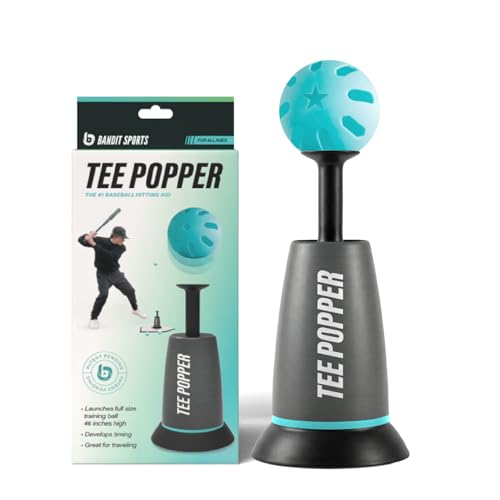
Bandit Sports Nylon Batting Tee with Popper Ball
- ✓ Durable glass-infused nylon
- ✓ Adjustable height for all levels
- ✓ Smooth, consistent pop-up
- ✕ Works best with supplied ball
- ✕ Slightly heavier than basic tees
| Material | Glass-infused nylon with reinforced spring |
| Maximum Pop-up Height | 46 inches |
| Ball Compatibility | Works best with Bandit Sports Popper Balls, not compatible with real baseballs |
| Durability | 15 times stronger and 5 times heavier than standard tees |
| Ball Holder Design | Gearbox with delayed pop-up mechanism for better timing |
| Included Accessories | One Popper Ball included |
Unlike the typical batting tees that just sit there, this Bandit Sports Nylon Batting Tee with Popper Ball actually mimics a real pitch with its popping action. When I first set it up in my backyard, I was impressed by how smoothly the ball popped up, thanks to that new gearbox and reinforced spring.
It’s surprisingly sturdy, too—made from glass-infused nylon, it feels built to last through countless swings.
The adjustable height up to 46 inches gives you a lot of flexibility. Whether you’re working on your swing as a beginner or fine-tuning for the pros, this trainer adapts easily.
I loved how the ball pops up cleanly and consistently, making practice feel more realistic. It’s great to have a tool that doesn’t require a partner—perfect for solo sessions after work or on weekends.
Using the included popper ball, I noticed how much more control I had compared to other mechanical tees. The delay feature really helps me get into position without rushing.
Plus, the heavy-duty construction means I don’t have to worry about breaking it on contact. Just a heads-up: using a real baseball isn’t ideal, as it can damage the holder, but the included ball works perfectly.
Overall, this tee feels like a significant upgrade over traditional training tools. It’s reliable, adjustable, and designed to improve your timing and consistency.
Whether you’re just starting out or already playing regularly, it’s a smart investment for focused practice sessions that really boost your swing.
SWINGRAIL Baseball/Softball Hitting Trainer

- ✓ Guides hands perfectly
- ✓ Immediate feedback system
- ✓ Easy to use with videos
- ✕ Might be tricky for beginners
- ✕ Best for tee work only
| Intended Age Range | Ages 9 and up (younger players may find it challenging to use) |
| Material | Durable fabric with Velcro straps |
| Feedback Mechanism | Detachable Velcro strap releases for immediate correction feedback |
| Usage Compatibility | Optimized for hitting off a batting tee; suitable for front toss and controlled pitching drills |
| Instructional Support | Includes detailed online videos for proper use |
| Design Purpose | Guides hand path, enhances swing feel, builds muscle memory, and corrects swing mechanics |
The SWINGRAIL Baseball/Softball Hitting Trainer immediately caught my attention with its science-backed design aimed at improving swing mechanics. It’s clearly built for players ages 9 and up, which makes it perfect for growing athletes eager to refine their technique. I appreciated how lightweight yet durable it felt, making it easy to take to the field or practice in the backyard.
This trainer’s standout feature is how it guides your hands through the swing, helping you develop muscle memory with every use. The detachable Velcro strap provides instant feedback if your swing is off, which is a game-changer for self-correction without needing constant coaching. I tested it off a tee, and the immediate tactile feedback made me realize when I was rushing or dropping my hands. When comparing different best baseball trainer options, this model stands out for its quality.
After a few sessions, I noticed how the trainer helps players “feel” the correct swing path, which is crucial for consistency. Its design simplifies the learning process by eliminating confusing coaching cues, making practice more efficient. Overall, SWINGRAIL is a solid investment for young players looking to build true muscle memory and improve their game, especially given its proven training method and online instructional videos.
Tomaki Hitting Stick Batting Swing Trainer, Batting

- ✓ Easy to adjust pitches
- ✓ Comfortable, non-slip grip
- ✓ Durable build quality
- ✕ Limited to solo practice
- ✕ May need extra space
| Material | High-quality, durable materials with non-slip grip design |
| Targeted Pitches | Adjustable to simulate outside, inside, high, and low pitches |
| Suitable For | All ages and skill levels, for baseball and softball training |
| Size | Compact, portable design for use at home or on the field |
| Training Focus | Improves swing, contact, bat control, and reaction time |
| Price | $32.99 |
The first time I held the Tomaki Hitting Stick Batting Swing Trainer, I immediately noticed how sturdy and comfortable it felt in my hands. The non-slip grip really locks it in during swings, giving me confidence even during quick, aggressive movements.
As I started practicing, I loved how easy it was to adjust the ball target to different positions. It’s surprisingly quick to change from inside to outside pitches, which means I can simulate game-like scenarios easily.
This flexibility really helps sharpen my reaction time and bat control.
Using it at home, I was able to focus on my stance and swing path without needing a partner. The trainer’s size is perfect for quick drills in the backyard or on the field.
I found that it’s especially good for working on hitting low and high pitches, which used to throw me off.
One thing that stood out is how durable the construction feels. Made from high-quality materials, it seems built to last through many practice sessions.
Plus, it’s lightweight enough to carry around, so I can keep honing my skills anywhere.
Overall, this trainer is straightforward to use but highly effective. It’s a great way to get one-on-one coaching without needing a coach or partner all the time.
If you’re looking to improve your swing consistency and reaction, this tool really delivers.
SKLZ Hit-A-Way Batting Swing Trainer Baseball/Softball Black

- ✓ Easy to attach and adjust
- ✓ High swing capacity
- ✓ Improves timing rapidly
- ✕ Setup can be time-consuming
- ✕ Not for live pitching drills
| Material | Durable plastic and metal components |
| Adjustable Height Range | Suitable for heights from approximately 3 to 6 feet |
| Swing Capacity | Up to 500 swings per hour |
| Attachment Method | Quick-attach tethered ball and cord system |
| Compatibility | Attaches to poles or trees of various diameters |
| Intended Use | Batting training for baseball and softball |
As I set up the SKLZ Hit-A-Way in my backyard, I immediately noticed how easy it was to attach to any pole or tree—no fuss, no tools needed. The tethered ball snaps onto the cord in seconds, and I was surprised at how quickly I could get into a rhythm.
It’s like having a mini batting cage right outside your door.
The adjustable height feature really shines. I could easily modify it to match different players’ stances, making it versatile for everyone.
The sturdy construction felt durable, even after dozens of swings, and the black finish looks sleek and professional.
What impressed me most is how it allowed me to get up to 500 swings per hour without ever chasing a ball. The tether keeps the ball close, so I can focus solely on my swing mechanics and timing.
It’s a game-changer for solo practice sessions, especially when I don’t have a partner around.
Using this trainer, I noticed my timing improved quickly. I was able to work on my stance without the interruptions of chasing baseballs or softball after every hit.
It’s perfect for building confidence and muscle memory, whether you’re practicing swings or just warming up.
That said, it’s not a substitute for live pitching, but for solo drills, it’s incredibly effective. The only downside is that it takes a little time to set up at different heights, but once it’s adjusted, it stays securely in place.
What Qualities Should You Look for in the Best Baseball Trainer?
When searching for the best baseball trainer, several essential qualities should be considered.
- Experience: A trainer with extensive experience in coaching or playing at a high level can provide invaluable insights and techniques. Their background allows them to understand the game intricately and tailor their coaching to meet the specific needs of their players.
- Communication Skills: Effective communication is crucial for a trainer to convey instructions clearly and motivate players. A trainer who can articulate concepts in a relatable way fosters a better learning environment and helps players grasp complex techniques more easily.
- Personalized Training Programs: The best baseball trainers develop customized training regimens that cater to the individual strengths and weaknesses of each player. This personalized approach ensures that players improve in areas that require focus while also enhancing their overall game performance.
- Knowledge of the Game: A deep understanding of baseball strategies, techniques, and player development is essential. Trainers who stay updated on the latest training methods and game analytics can provide players with a competitive edge both on and off the field.
- Positive Attitude: A trainer with a positive and encouraging demeanor can boost players’ confidence and foster a love for the game. This quality is particularly important when players face challenges, as a supportive trainer can help them persevere and maintain a growth mindset.
- Reputation and References: A trainer’s reputation in the baseball community often reflects their effectiveness. Seeking feedback from past players or parents can provide insights into the trainer’s style, results, and overall impact on player development.
- Commitment to Safety: The best trainers prioritize the health and safety of their players by teaching proper techniques, ensuring adequate warm-ups, and monitoring for signs of injury. This commitment helps create a safe training environment where players can develop their skills without unnecessary risk.
What Training Techniques Do Top Baseball Trainers Utilize?
Top baseball trainers employ a variety of training techniques to enhance player performance and skills.
- Video Analysis: Trainers utilize video technology to analyze players’ mechanics and performance during practice and games.
- Strength and Conditioning: Customized fitness programs are designed to enhance players’ physical abilities, focusing on strength, agility, and endurance.
- Skill Drills: Specific drills are tailored to improve individual skills such as hitting, pitching, and fielding, ensuring players develop their techniques effectively.
- Mental Training: Incorporating mental conditioning techniques helps players develop focus, confidence, and resilience under pressure.
- Progress Tracking: Trainers implement systematic tracking of players’ progress through measurable metrics to adjust training regimens as needed.
Video analysis allows trainers to break down the player’s movements frame by frame, identifying areas for improvement and reinforcing proper techniques. By reviewing game footage, trainers can provide targeted feedback that helps players make informed adjustments in their performance.
Strength and conditioning programs are essential for building a player’s athletic foundation. Trainers often focus on exercises that enhance core strength, flexibility, and explosive power, tailored to the specific demands of baseball, which can lead to improved performance on the field.
Skill drills are critical for reinforcing the fundamentals of the game. Trainers create repetitive practice sessions that focus on specific skills, ensuring that players can execute plays consistently and effectively under game conditions.
Mental training is increasingly recognized as a vital component of athlete development. Techniques such as visualization, goal setting, and mindfulness help players manage stress and maintain concentration during high-pressure situations, which can significantly enhance their performance.
Progress tracking involves regular assessments to measure improvements in skills and fitness levels. This systematic approach allows trainers to adapt training plans based on individual player needs, ensuring that each athlete is challenged appropriately and can see their development over time.
How Does Experience Influence a Baseball Trainer’s Effectiveness?
Experience plays a crucial role in determining a baseball trainer’s effectiveness due to various factors that enhance their skill set and knowledge.
- Practical Knowledge: Experienced trainers have a wealth of practical knowledge gathered from years of hands-on training with athletes at different levels.
- Understanding of Techniques: With experience comes a deeper understanding of various training techniques and methods that can be tailored to individual players’ needs.
- Adaptability: An experienced trainer is more likely to adapt their coaching style and strategies based on the specific challenges and strengths of each player.
- Network and Resources: A seasoned trainer typically has a broader network within the baseball community, which can provide access to additional resources and insights.
- Mentorship and Leadership: Experienced trainers often take on mentorship roles, offering guidance and support that can foster an athlete’s personal and professional growth.
- Injury Prevention and Management: Trainers with more experience are likely to have better knowledge of injury prevention strategies and how to manage player health effectively.
Practical knowledge gained over time equips trainers to implement effective drills and respond to player inquiries with confidence, fostering a productive training environment.
Understanding of techniques allows experienced trainers to introduce advanced skills and drills that novice trainers might overlook, ensuring athletes develop a comprehensive skill set.
Adaptability is crucial as every player has unique strengths and weaknesses; experienced trainers can modify their approaches to maximize player potential and address specific areas for improvement.
A strong network enables experienced trainers to stay updated on the latest training innovations, connect players with college scouts, and collaborate with other professionals for enhanced training programs.
Mentorship and leadership qualities are vital for creating a supportive atmosphere where players feel valued and motivated, helping them to achieve their goals both on and off the field.
Injury prevention and management knowledge helps ensure that players not only perform optimally but also maintain their health throughout the season, reducing the risk of long-term damage.
What Skills Can You Expect to Improve with a Professional Baseball Trainer?
Working with a professional baseball trainer can significantly enhance various skills essential for the game.
- Hitting Mechanics: A trainer can help refine your swing technique, ensuring proper body alignment and bat path for optimal contact and power. This includes drills tailored to improve bat speed and accuracy while also addressing any bad habits that may hinder performance.
- Pitching Techniques: Professional trainers provide personalized coaching on pitching mechanics, focusing on arm action, delivery, and follow-through to maximize velocity and control. They often analyze video footage to identify areas for improvement and develop a training regimen to enhance your overall pitching effectiveness.
- Fielding Skills: Trainers can work on footwork, glove skills, and throwing mechanics to improve defensive capabilities. They often implement drills that simulate game situations, teaching players how to react quickly and make precise plays under pressure.
- Base Running: A skilled trainer teaches techniques for effective base running, including leads, steals, and sliding. This training focuses on speed, agility, and decision-making, helping players become more aggressive and strategic on the basepaths.
- Strength and Conditioning: A professional trainer can design a tailored conditioning program that enhances athletic performance and reduces the risk of injury. This often includes strength training, agility drills, and endurance exercises specifically catered to the demands of baseball.
- Mental Toughness: Trainers often incorporate mental training techniques to help players develop resilience, focus, and confidence. This aspect of training can involve visualization, goal-setting, and coping strategies to manage pressure during games.
What Should You Expect During Your First Session with a Baseball Trainer?
During your first session with a baseball trainer, you can expect a comprehensive evaluation of your skills and a tailored training plan.
- Skill Assessment: The trainer will start by evaluating your current skills, including batting, pitching, and fielding. This helps identify your strengths and areas for improvement, allowing the trainer to customize your training experience.
- Goal Setting: After assessing your skills, the trainer will discuss your personal goals, whether they are improving specific techniques or preparing for a competitive season. This collaborative approach ensures that the training plan aligns with your aspirations and performance targets.
- Warm-Up and Conditioning: Expect to go through a warm-up routine designed to prepare your body for training. This typically includes dynamic stretches and conditioning exercises to enhance your agility, strength, and overall athleticism.
- Individualized Drills: The session will include drills tailored to your skill level and goals, focusing on techniques such as swing mechanics, pitch accuracy, and defensive strategies. These drills are essential for building muscle memory and improving your performance on the field.
- Feedback and Adjustments: Throughout the session, the trainer will provide real-time feedback on your performance, helping you make immediate adjustments. This ongoing communication is vital for your development and fosters a better understanding of the game’s nuances.
- Post-Session Discussion: At the end of your training, the trainer will review the session with you, discussing what went well and what requires further attention. This recap is crucial for tracking your progress and setting the stage for future training sessions.
Are There Specific Benefits to Hiring a Certified Baseball Trainer?
Hiring a certified baseball trainer offers several key benefits that can significantly enhance a player’s skills and performance.
- Expert Knowledge: Certified baseball trainers possess in-depth knowledge of the game, including techniques, strategies, and training methods.
- Customized Training Programs: These trainers can design personalized training programs tailored to an athlete’s specific needs, strengths, and weaknesses.
- Injury Prevention: A certified trainer is trained to recognize common injuries and implement preventive measures, ensuring athletes stay healthy and can perform at their best.
- Accountability and Motivation: Working with a trainer provides structured training schedules and accountability, which can motivate athletes to push their limits and stay committed to their goals.
- Access to Resources: Certified trainers often have access to advanced training equipment and technology that can enhance skill development and performance analysis.
They keep up with the latest trends and techniques in baseball, ensuring that players receive the most effective training available.
By evaluating a player’s current abilities, a certified trainer can create a program that focuses on specific areas for improvement, leading to more efficient and effective skill development.
Injury prevention is crucial in baseball, and certified trainers can implement safe training practices, teach proper mechanics, and monitor physical exertion to minimize the risk of injuries.
Having a dedicated trainer encourages players to stay disciplined and consistent in their training, as they provide support and encouragement that can lead to significant improvements.
Moreover, access to cutting-edge training tools and resources gives athletes a competitive edge, allowing them to gain insights into their performance that may not be available otherwise.
How Can You Choose the Right Baseball Trainer for Your Needs?
Choosing the right baseball trainer involves several important considerations to ensure you find the best fit for your development needs.
- Experience and Credentials: Look for trainers with a proven track record in coaching or playing baseball at a high level. Their experience can provide valuable insights and techniques that are critical for skill development.
- Specialization: Different trainers may focus on specific aspects of the game such as pitching, hitting, or fielding. Selecting a trainer who specializes in the area you want to improve will ensure you receive targeted instruction tailored to your needs.
- Training Philosophy: Understand the trainer’s approach to coaching, including their methodologies and techniques. A trainer whose philosophy aligns with your learning style will likely be more effective in helping you reach your goals.
- Reputation and Reviews: Research the trainer’s reputation through online reviews, testimonials, and word-of-mouth recommendations. Positive feedback from previous clients can provide assurance of the trainer’s effectiveness and reliability.
- Location and Availability: Consider the trainer’s location and their availability for sessions. A trainer who is conveniently located and has flexible scheduling can make it easier to maintain consistent training.
- Cost and Value: Evaluate the cost of training sessions and what is included in the price. While it’s important to stay within budget, also consider the value and quality of instruction you are receiving for the investment.
- Trial Sessions: Many trainers offer trial sessions or consultations. Taking advantage of these opportunities can help you gauge the trainer’s compatibility with your learning style before committing to a longer-term agreement.