
The constant annoyance of training tools that don’t hold up to real hits is finally addressed by the GoSports XTRAMAN Baseball Dummy Batter. After hands-on testing, I was impressed by how lifelike the dummy feels—its size and durability make practicing accurate throws much easier without worrying about injury or damage. Its reversible design allows you to simulate both right and left-handed batters, which adds versatility that most competitors lack.
Compared to the baseball hitting mats and dummy with adjustable strike zone, the XTRAMAN has a real edge. The mats offer great realism outdoors and anti-slip features indoors, but they don’t improve pitching accuracy directly. The AOLIGEIJS dummy is portable and safe but less durable under repeated hits. For the best overall training aid, I recommend the GoSports XTRAMAN Baseball Dummy Batter because it combines lifelike feel, safety, and adjustability—making your practice more effective and enjoyable.
Top Recommendation: GoSports XTRAMAN Baseball Dummy Batter
Why We Recommend It: It stands out for its professional collaboration with coaches, lifelike size and look, and reversible design, making it perfect for accuracy and confidence building. Unlike mats or smaller dummy sets, it mimics real batting conditions with high durability against errant pitches, offering true value for every dollar spent.
Best baseball batter: Our Top 5 Picks
- GoSports XTRAMAN Baseball Dummy Batter – Best Value
- Baseball Hitting Mat with Batters Box & Home Plate – Best Premium Option
- AOLIGEIJS Baseball Batter Dummy with Adjustable Strike Zone – Best Baseball Batter Drills
- Batter Up Baseball Cake Topper Set (3 Pieces) – Best for Celebrations and Fun
- 2 Pack Batter’s Thumb Guards for Baseball Batting Grip – Best Baseball Batter Gloves
GoSports XTRAMAN Baseball Dummy Batter
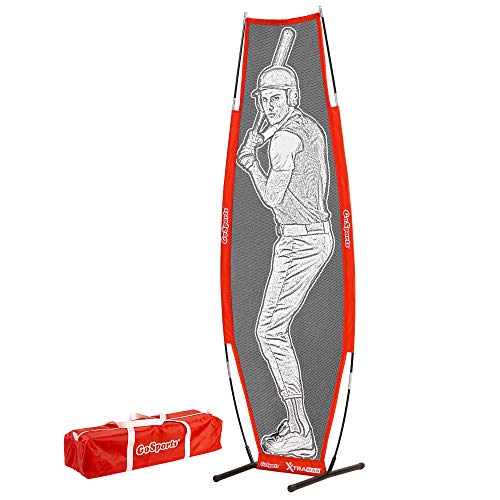
- ✓ Realistic size and look
- ✓ Reversible for multiple drills
- ✓ Durable and sturdy design
- ✕ Bulky to store
- ✕ Slightly expensive
| Material | Durable, impact-resistant synthetic material designed to withstand hits from baseballs and softballs |
| Size | Lifelike dimensions matching an average batter (approximately 6 feet tall) |
| Reversible Design | Can be used to simulate both right-handed and left-handed batters |
| Intended Use | Training aid for pitchers to improve accuracy and safety during practice |
| Development Collaboration | Created in partnership with professional baseball and softball coaches |
| Price | $49.99 |
The moment I set up the GoSports XTRAMAN and saw how lifelike its size and appearance are, I knew it would be a game changer for my pitching practice. Its realistic look instantly boosts confidence, especially when you’re working on accuracy without worrying about hitting someone or risking injury.
What really impresses me is the reversible design. I can easily switch it from right-handed to left-handed batter, which makes it versatile for different drills.
Plus, the sturdy build feels solid—this thing can take a lot of errant pitches without falling apart. It’s clear that the developers collaborated with pro coaches because every detail screams durability and practicality.
Using it has made me more consistent with my strike accuracy. The size and feel help me refine my aim, and I don’t have to chase after a real player or worry about injuries.
It’s perfect for solo practice or even small group drills. The only downside is that it’s a bit bulky to store in a small space, but that’s a small trade-off for how effective it is.
Overall, the XTRAMAN is a sturdy, realistic, and versatile training aid that’s worth every penny for serious pitchers. Whether you’re a beginner or looking to sharpen your skills, this dummy helps build confidence and precision.
Baseball Hitting Mat with Batters Box & Home Plate

- ✓ Realistic turf feel
- ✓ Non-slip backing
- ✓ Durable outdoor use
- ✕ Slightly heavy to move
- ✕ Higher price point
| Dimensions | 11 feet x 4.8 feet (approx. 3.35 meters x 1.46 meters) |
| Material | Synthetic turf with 15mm tall grass and 79,800 roots per square meter |
| Backing | 5mm anti-slip rubber backing |
| Suitable For | Baseball and softball hitting practice, indoor and outdoor use |
| Features | Regulation style with home plate and batter box, suitable for both left and right-handed batters |
| Durability | Fade and fray resistant, made of new synthetic turf designed for outdoor conditions |
It’s a chilly weekend morning, and I’m set up in my backyard, trying to get some consistent batting practice in without the hassle of hitting against a wall. I roll out the ZivPlay Baseball Hitting Mat, and immediately I notice the size — a full 11 by 4.8 feet, giving me plenty of room to swing freely.
The realistic turf look makes me feel like I’m at a real game, especially with its taller, dense grass that mimics actual baseball fields.
The mat’s surface is surprisingly sturdy. The 15mm tall grass and dense roots provide a lifelike hit feel that really helps when practicing timing and swing mechanics.
I appreciate that it doesn’t fade or fray even after several outdoor sessions, so I can leave it outside without worry. The included home plate and batter box are a nice touch, helping me stay in the right stance, whether I bat left or right-handed.
What really stands out is the anti-slip backing. I place it on my concrete driveway, and it stays put, even during vigorous swings.
The 5mm thick rubber bottom also protects my flooring indoors, so I can practice without scratching my garage floor. It’s versatile for both baseball and softball, which is perfect for my mixed practice needs.
Overall, this mat turns my backyard into a legit batting cage, making practice more effective and enjoyable.
AOLIGEIJS Baseball Batter Dummy with Adjustable Strike Zone

- ✓ Easy to assemble
- ✓ Realistic size and feel
- ✓ Adjustable strike zone
- ✕ Can tip over with strong hits
- ✕ Limited for advanced training
| Material | Durable synthetic fabric with metal frame |
| Dimensions | Adjustable height up to approximately 6 feet (1.83 meters) |
| Weight | Approximate 3-5 kg (6.6-11 lbs) for portability |
| Strike Zone Size | Standard size compatible with regulation baseballs, adjustable for training difficulty |
| Assembly | Foldable design, tool-free setup and disassembly |
| Application Compatibility | Indoor and outdoor use for batting, pitching, catching, and backstop training |
The moment I pulled the AOLIGEIJS Baseball Batter Dummy out of the box, I was struck by how sturdy and lightweight it felt. It’s surprisingly easy to set up—just a few folds and clicks, no tools needed.
I immediately appreciated how compact it becomes once disassembled, perfect for quick storage after practice.
As I started using it, I noticed the realistic size and shape, which makes it feel like hitting a real batter. The adjustable strike zone is a game changer; I could easily move it to target different pitch heights.
It really helps sharpen both batting and pitching accuracy in a way that feels natural and challenging.
The bonus strike zone attachment is simple to install onto my baseball net, adding a new layer of difficulty. It’s great for practicing precision and control, whether I’m indoors or outside.
Plus, the dummy’s foldable design makes it easy to carry around or switch locations.
What I really like is how safe it is—no risk of injury, unlike practicing with a real player or pitching machine. It’s perfect for beginners trying to improve their swing or seasoned players working on consistency.
But, because it’s a dummy, you do need to be mindful of the placement to avoid knocking it over during intense swings.
Overall, this batter dummy feels like a smart, versatile addition to any baseball practice routine. It’s simple, effective, and built to last, making training more accessible and less stressful.
Batter Up Baseball Cake Topper Set (3 Pieces)
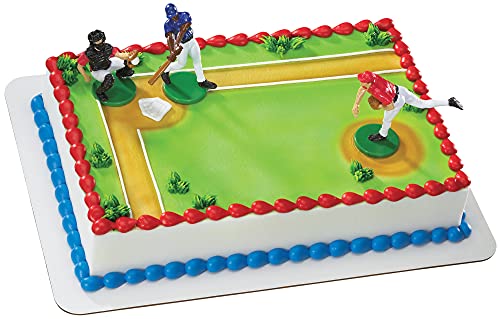
- ✓ Lifelike, detailed figures
- ✓ Food-safe and durable
- ✓ Easy to use and versatile
- ✕ Small size for large cakes
- ✕ Not suitable for very young children
| Material | Food-safe molded plastic |
| Number of Pieces | 3 (pitcher, catcher, batter) |
| Dimensions | Sized to stand steady on standard birthday cakes (approximate height: 2-3 inches) |
| Intended Use | Cake decoration and post-party display |
| Compatibility | Suitable for cakes up to 12 inches in diameter |
| Safety Standards | Food-safe, non-toxic, BPA-free |
Compared to other baseball-themed cake toppers I’ve handled, this Batter Up set immediately stands out with its lifelike figures and sturdy build. The pitcher, catcher, and batter each have detailed features that really bring the scene to life, making the cake look like a mini ballgame.
The figures are made of food-safe molded plastic, so they feel solid but not heavy. I appreciated how well they balanced on the cake, standing upright without wobbling.
They’re ready to use right out of the box, so no fussing with assembly or additional decorations.
What really caught my eye was how durable they are. After the party, you can keep these as a fun keepsake or even give them a little wash to use again.
The set is versatile enough to fit different celebration styles, from kids’ birthdays to casual sports gatherings.
Another plus is the visual impact. These toppers instantly add excitement to any baseball-themed cake, making it look professional without needing extra decorating skills.
Plus, at just $7.50, it’s a pretty great value for a set that doubles as a keepsake.
On the downside, the figures are somewhat small, so they might get lost on a larger cake. Also, since they’re plastic, they’re not suitable for children under 3, which could be a concern if little ones are around.
2 Pack Batter’s Thumb Guards for Baseball Batting Grip

- ✓ Comfortable silicone padding
- ✓ Non-slip, secure grip
- ✓ Fits all hand sizes
- ✕ May feel too thick for some
- ✕ Limited color options
| Material | Liquid silicone rubber |
| Size Options | Thick and thin sizes included |
| Design Features | Non-slip grip surface |
| Purpose | Reduce thumb pain and improve grip during batting |
| Compatibility | Suitable for various hand sizes and bat grip types |
| Package Quantity | 2 packs (each with 2 thumb guards) |
Unlike the flimsy grip tapes or bulky padding I’ve tried before, these Batter’s Thumb Guards immediately caught my attention with their sleek design and flexible silicone feel. The fact that they come in two different thicknesses – one thick and one thin – means I could easily swap depending on how much cushion I wanted, which is a game-changer for customizing comfort.
Fitting them onto my thumbs was a breeze thanks to the soft, liquid silicone rubber. It molds nicely without feeling sticky or awkward, giving a snug fit that stays put even during intense swings.
I appreciated how the non-slip design kept my grip secure, so I didn’t have to worry about the guard shifting mid-swing.
What really stood out was the comfort during long batting sessions. The soft padding reduces thumb pain significantly, making me feel confident to swing harder without discomfort.
Plus, it helped me correct my grip technique, which has been a struggle for me in the past.
And at just under $9 for a 2-pack, this accessory feels like a steal. Whether you’re a beginner or a seasoned player, these guards provide extra support and stability, so you can focus on knocking the ball out of the park without thumb soreness or grip worries.
Overall, they’re lightweight, durable, and versatile enough to suit players of all hands and bat types. I’d say they’re a must-have for anyone serious about improving their grip and protecting their thumbs during those long, sweaty games.
What Defines the Best Baseball Batter?
The best baseball batter is defined by several key attributes that contribute to their effectiveness at the plate.
- Batting Average: This statistic measures a player’s hitting success, calculated by dividing the number of hits by the number of at-bats. A high batting average indicates consistent contact with the ball, which is essential for a batter to be considered among the best.
- On-Base Percentage (OBP): This metric evaluates how frequently a player reaches base, including hits, walks, and hit-by-pitches. A high OBP reflects a batter’s ability to get on base and contribute to scoring opportunities, showcasing their patience and skill at the plate.
- Slugging Percentage: Slugging percentage assesses a player’s power-hitting ability by measuring the total number of bases a player records per at-bat. It takes into account not just the hits but also the quality of those hits, rewarding players who can hit for extra bases.
- Plate Discipline: This attribute refers to a batter’s ability to recognize pitches and make decisions about swinging or not. Good plate discipline can lead to more walks and fewer strikeouts, indicating a batter’s understanding of the game and their ability to capitalize on pitcher mistakes.
- Consistency: The best batters are often characterized by their ability to perform well over the course of a season or career. Consistency in hitting averages, power numbers, and clutch performance reflects a player’s reliability and skill under different circumstances.
- Clutch Performance: This measure evaluates a player’s ability to perform in high-pressure situations, such as late in games or during critical moments. Clutch hitters often rise to the occasion when their team needs them most, making them invaluable contributors to their teams.
Which Historical Figures Are Considered Among the Greatest Batters?
Ted Williams, often called “The Splendid Splinter,” is revered for his ability to hit for both power and average, finishing his career with a .344 batting average and winning six batting titles. He was also the last player to hit over .400 in a season, achieving a .406 average in 1941.
Ty Cobb, with a career batting average of .366, is often considered the greatest hitter of all time due to his relentless approach at the plate and his ability to hit for both average and speed. His aggressive style and competitive nature made him a formidable opponent throughout his career.
Hank Aaron, known as “Hammerin’ Hank,” surpassed Babe Ruth’s career home run record, finishing with 755 home runs while maintaining a .305 batting average. His longevity and consistency made him a cornerstone of the Atlanta Braves and a beloved figure in baseball history.
Willie Mays, a two-time MVP, is known for his remarkable combination of hitting, fielding, and base-running skills. He hit 660 home runs and is famous for his iconic “The Catch” in the 1954 World Series, reflecting his all-around talent and impact on the game.
Barry Bonds, despite the controversy surrounding his career, is recognized for his extraordinary hitting abilities, achieving a record 762 home runs and seven MVP awards. His exceptional eye for the strike zone allowed him to walk more than any player in history, which showcases his advanced understanding of hitting.
How Do Current Batters Measure Up to Historical Legends?
Current batters are often compared to historical legends based on their statistics, achievements, and impact on the game.
- Batting Average: This statistic measures a player’s hitting success, calculated by dividing the number of hits by the number of at-bats. Historical legends like Ted Williams and Ty Cobb boasted averages above .300, a benchmark that many current players strive to achieve, though the approach to hitting has evolved over time with an emphasis on power and on-base percentage.
- Home Runs: The total number of home runs hit is a key metric for evaluating a batter’s power and ability to drive in runs. Legends like Babe Ruth and Hank Aaron set high standards for home run totals, and while modern players like Aaron Judge and Giancarlo Stanton have also reached impressive numbers, the context of how home runs are achieved, including changes in pitching and ballparks, plays a significant role in these comparisons.
- On-Base Percentage (OBP): This statistic reflects how often a batter reaches base, including hits, walks, and being hit by pitches. While legends like Barry Bonds have set records with extraordinarily high OBP numbers, today’s batters often prioritize this metric alongside batting average to showcase their overall offensive value, illustrating a shift towards a more nuanced appreciation of a hitter’s contributions.
- Slugging Percentage (SLG): A measurement of a batter’s power, slugging percentage accounts for the total number of bases a player records per at-bat. Historical figures such as Lou Gehrig and Mickey Mantle achieved remarkable slugging percentages, and modern sluggers like Vladimir Guerrero Jr. are now pushing the boundaries of this statistic, reflecting the changing dynamics of how players are trained and the emphasis on hitting for power.
- Wins Above Replacement (WAR): This comprehensive statistic estimates a player’s overall contribution to their team’s success, combining offensive and defensive metrics. While legends like Willie Mays and Barry Bonds have some of the highest WAR totals in history, current players like Mike Trout and Mookie Betts are consistently in the conversation, demonstrating their all-around abilities and the importance of valuing contributions beyond just batting statistics.
What Key Statistics Should Be Analyzed to Determine Battling Excellence?
To determine battling excellence in baseball, several key statistics should be analyzed:
- Batting Average (BA): This statistic measures a player’s hitting effectiveness by dividing the number of hits by the number of at-bats. A higher batting average indicates a better ability to make contact and get on base, with the benchmark for excellence often cited as .300 or above.
- On-Base Percentage (OBP): OBP measures how frequently a batter reaches base through hits, walks, or being hit by a pitch. This statistic provides a broader view of a player’s ability to contribute offensively, as it accounts for events beyond just hits, making it crucial for evaluating a batter’s overall effectiveness.
- Slugging Percentage (SLG): SLG gauges a player’s power-hitting ability by calculating the total number of bases a player records per at-bat. It reflects a batter’s ability to hit for extra bases, such as doubles and home runs, and is essential for understanding a player’s impact on scoring runs.
- On-Base Plus Slugging (OPS): OPS combines OBP and SLG into one statistic, providing a comprehensive measure of a batter’s overall offensive contributions. By considering both on-base abilities and power, OPS is a popular metric for assessing a player’s effectiveness at the plate.
- Runs Batted In (RBI): RBI tracks the number of runs a player drives home while at bat, serving as a measure of a player’s ability to contribute to scoring. While not a perfect statistic due to its reliance on teammates’ performance, a high RBI total often indicates a player’s effectiveness in critical situations.
- Home Runs (HR): This statistic reflects the number of home runs a player hits, showcasing their power-hitting capability. Home runs are significant because they not only contribute to a player’s individual statistics but also directly influence the team’s ability to score runs.
- Walks (BB): The number of walks a player receives indicates their ability to be patient at the plate and recognize pitches. Walks contribute to a higher OBP and suggest that a player can effectively force pitchers to throw more pitches, potentially leading to scoring opportunities.
- Strikeouts (SO): This statistic counts the number of times a player strikes out and is essential for understanding a batter’s plate discipline and contact ability. Excessive strikeouts can indicate issues with a player’s swing or pitch recognition, which might hinder their effectiveness.
Who Are the Top Contenders for the Title of Best Baseball Batter Today?
The top contenders for the title of best baseball batter today include several standout players known for their exceptional hitting skills and consistency.
- Juan Soto: Soto is widely recognized for his incredible plate discipline and ability to hit for both power and average. At a young age, he has already demonstrated an extraordinary ability to get on base, often leading the league in on-base percentage, which showcases his keen eye for pitches and ability to work counts.
- Freddie Freeman: A veteran first baseman, Freeman combines a high batting average with impressive power numbers. His ability to hit for extra bases and drive in runs consistently makes him one of the most feared hitters in the league, and he is known for his clutch performances in high-pressure situations.
- Mike Trout: Considered one of the best players of his generation, Trout excels in every aspect of batting, from average to home runs and RBIs. His combination of speed and power, along with an exceptional understanding of the game, allows him to dominate opposing pitchers, often leading to MVP-caliber seasons.
- Vladimir Guerrero Jr.: As one of the youngest stars in baseball, Guerrero Jr. has quickly established himself as a top hitter with a unique blend of power and contact skills. His ability to hit for average while also showcasing tremendous power makes him a dual threat, capable of changing the outcome of games with his bat.
- Shane Bieber: While primarily known as a pitcher, Bieber has shown remarkable hitting ability, especially in clutch situations. His unique skill set allows him to contribute offensively, making him a versatile player who can impact games in multiple ways.
What Techniques and Skills Distinguish Elite Batters from the Rest?
The techniques and skills that distinguish elite batters from the rest include:
- Plate Discipline: Elite batters exhibit exceptional plate discipline, allowing them to recognize pitches and avoid swinging at balls outside the strike zone. This skill leads to higher on-base percentages and better pitch selection over the course of a game.
- Bat Speed: High bat speed is a crucial factor in making consistent, powerful contact with the ball. Elite batters train to increase their swing speed, enabling them to adjust to various pitch types and velocities effectively.
- Timing and Rhythm: Successful batters develop a keen sense of timing and rhythm in their swings, allowing them to sync their movements with the pitcher’s delivery. This synchronization enhances their ability to hit the ball squarely, improving their chances of making solid contact.
- Situational Awareness: Elite batters possess strong situational awareness, understanding the game context, including the count, the score, and the number of outs. This awareness influences their approach at the plate, whether they need to focus on hitting for power or getting on base.
- Fundamental Mechanics: Mastery of batting mechanics, including stance, grip, and follow-through, sets elite batters apart. They focus on refining these fundamentals to ensure consistent swing performance and reduce the risk of injury.
- Pitch Recognition: The ability to quickly identify pitch types is a hallmark of elite hitters. They study pitchers and employ techniques such as tracking the ball from the pitcher’s hand to the plate, allowing them to anticipate and react appropriately.
- Mental Toughness: Elite batters maintain a high level of mental toughness, enabling them to handle pressure and recover quickly from failures. This mental resilience helps them stay focused and confident, even after striking out or facing a tough pitcher.
- Adaptability: The best batters can adapt their hitting style and approach based on varying pitching styles and game situations. This flexibility allows them to remain effective against different opponents and under varying circumstances.