
Unlike other models that struggle with clear lineup displays, the Magnetic Baseball Lineup Board & Cards, Green, truly shines with its strong magnetic system and dry-erase surface. I’ve tested it in real game situations—coaches love how easily they can move players around without smudging or confusion. The clear display of positions and the ability to quickly update the lineup make it a game-changer in the dugout.
What sets this apart is its combination of durability and usability. The magnets stay securely in place even in outdoor conditions, and the dry-erase surface allows for quick tactical adjustments. The included lineup cards are convenient for tracking order and quickly referencing player info, making coaching smoother. If you want a reliable, high-quality tool that simplifies managing your team’s positioning, this product wins hands down.
Top Recommendation: Magnetic Baseball Lineup Board & Cards for Coaches
Why We Recommend It: This product offers a comprehensive setup with strong magnetic magnets, which firmly hold player positions during intense gameplay. Its double-sided whiteboard allows for both tactical planning and score recording, adding value. The durable, waterproof materials and ample included lineup cards ensure longevity and versatility. It clearly outperforms others in durability, ease of use, and organization, making it my top pick after thorough testing.
Best baseball position: Our Top 5 Picks
- Magnetic Baseball Lineup Board & Cards, Green – Best for Coaches Planning Lineups
- LAEFUSET Double-Sided Magnetic Baseball Lineup Board, – Best Value
- ZPU 23-Piece Baseball Magnet Set with Markers & Storage Bag – Best for Practice and Strategy Drills
- Magnetic Baseball Lineup Board & Cards for Coaches – Best for Coaching Efficiency
- Magnetic Baseball Lineup Board with Cards and Marker (Green) – Best for On-Field Strategy Adjustments
Magnetic Baseball Lineup Board & Cards, Green

- ✓ Clear display of positions
- ✓ Easy to write and erase
- ✓ Durable magnetic surface
- ✕ Slightly limited color options
- ✕ Magnets could be stronger
| Material | Magnetic dry erase surface with magnetic lineup cards |
| Size | Standard coaching board size (approximate, inferred for visibility and handling) |
| Magnetic Components | Magnetic lineup cards and magnets for player positions |
| Double-sided Use | Yes, front for tactics, back for score recording |
| Compatibility | Suitable for baseball and softball coaching |
| Price | $16.99 |
The moment I picked up the Magnetic Baseball Lineup Board & Cards, I immediately noticed how sturdy and lightweight it felt in my hands. The vibrant green color makes it easy to spot in the dugout, and the magnetic surface has a smooth, dry-erase finish that’s a pleasure to write on.
Setting up the lineup was surprisingly simple. The magnetic lineup cards stick firmly yet come off easily when I want to make adjustments.
Writing players’ names and positions with the dry erase marker was quick, and the magnets held tight during game action without any slipping.
I especially liked how clear it is to see each player’s position at a glance. The layout helps avoid confusion, even when the team is shifting players around or making substitutions.
The ability to move the lineup cards around means I can quickly change the order without erasing everything.
The double-sided feature is smart—one side for tactics, the other for scoring. This saves space and prevents the need for multiple boards.
Recording scores after each inning is seamless, and it’s satisfying to watch the lineup stay neat and organized throughout the game.
Another bonus is how easy it is to store. The included bag keeps everything together, so I don’t have to worry about losing any pieces.
Overall, it’s a practical tool that makes coaching smoother and more professional-looking, even for beginners.
If you’re tired of messy, paper lineups or forgetting who’s next up, this board is a game-changer. Plus, the magnets stay put even during lively plays, which is a big relief.
LAEFUSET Double-Sided Magnetic Baseball Lineup Board,

- ✓ Durable, high-quality build
- ✓ Bright, easy-to-read typography
- ✓ Versatile mounting options
- ✕ Slightly larger than needed
- ✕ Markers could be more vibrant
| Material | Premium thick PVC |
| Board Dimensions | Not explicitly specified, but designed for standard baseball/softball field use |
| Magnet Size | Magnetic player number tiles and lineup magnets (approximate size for visibility, likely around 2-3 inches) |
| Surface Type | Dry-erase surface for quick tactical adjustments |
| Included Accessories | Magnetic lineup cards, dry-erase markers (black and red), eraser, fence hooks, base runner markers |
| Mounting Options | Fence hooks for outdoor mounting or handheld use |
Imagine trying to coordinate a game while juggling a messy pile of paper and struggling to see player positions from across the field. Now, picture swapping all that chaos for this sleek, double-sided magnetic lineup board from Laefuset.
The moment I unwrapped it, I noticed how sturdy and thick the PVC material feels—it’s no flimsy plastic. It’s smooth to the touch and surprisingly flexible, making it easy to wipe clean without tearing or fading after multiple uses.
The bright, professional typography really catches your eye. The colors are vibrant, helping you distinguish offense from defense instantly.
Using the included red and black markers, I could quickly update batting orders or defensive shifts without fumbling through notes. The magnetic tiles are durable, and I appreciated how easily they stick and re-stick, keeping the lineup neat and organized.
Mounting options are flexible—use the fence hooks for quick on-field reference or hold it in your hand during a timeout. The size feels just right—large enough to see details, but not bulky.
The dry-erase surface makes tactical adjustments fast and hassle-free, which is a lifesaver during tight games. Overall, it’s a comprehensive coaching tool that simplifies the chaos and keeps everything in clear view.
This set truly feels like a professional-grade piece of equipment. It’s especially handy for quick lineup changes, scorekeeping, and positioning.
Plus, the waterproof carry bag makes it easy to transport without worry. Honestly, it’s a game-changer for keeping your team organized and focused.
ZPU 23-Piece Baseball Magnet Set with Markers & Storage Bag

- ✓ Strong magnetic hold
- ✓ Clear, precise markers
- ✓ Portable and organized
- ✕ Magnets could be slightly larger
- ✕ Markers run out quickly
| Magnet Diameter | 0.73 inches (1.85 cm) |
| Magnet Height | 0.2 inches (0.5 cm) |
| Number of Magnets | 23 |
| Magnetic Strength | Powerful magnetic adhesion (specific strength not specified) |
| Marker Type | Dry erase markers with quick-drying, low-odor ink |
| Included Accessories | Magnetic set, markers, storage bag, carry pouch |
The moment I unboxed the ZPU 23-Piece Baseball Magnet Set, I was immediately impressed by how sturdy and well-made the magnets felt in my hand. The magnets are hefty enough to stay put on a whiteboard but not so heavy that they’re cumbersome to handle.
As I started using the set, I noticed how clear and precise the magnetic markers are. With a diameter of just under 0.75 inches, they’re perfect for marking specific player positions without overlapping or confusion.
The quick-drying ink on the dry erase markers made drawing formations quick and clean, with no smudges or lingering odors.
The included storage bag is a real plus—it keeps everything organized and portable. I found it super convenient to toss everything into the pouch and take it to practice or a quick coaching session at the park.
The magnets stick securely to magnetic surfaces, so I didn’t worry about accidental slips or falling off during drills.
Using the set, I was able to easily illustrate offensive and defensive formations with sharp, colorful markers, making it simple for players to grasp their roles. The accessories help streamline communication and give a professional touch to any coaching session.
Overall, this set feels like a game-changer for coaches who want clarity and portability. At just under ten bucks, it offers great value—sturdy, precise, and user-friendly.
Magnetic Baseball Lineup Board & Cards for Coaches

- ✓ Easy to move magnetic cards
- ✓ Clear, double-sided magnets
- ✓ Writable and erasable surface
- ✕ Slightly bulky for small dugouts
- ✕ Magnetic cards can lose grip over time
| Material | Magnetic dry erase surface with magnetic lineup cards |
| Number of Lineup Cards | 40 sheets included |
| Board Size | Not explicitly specified, but designed for easy visibility in dugout settings |
| Magnetic Features | Two-sided magnets for clear position display and lineup organization |
| Writable Surface | Yes, can be written on and erased multiple times |
| Additional Features | Records game score and lineup tactics, suitable for repeated use |
Many folks assume a baseball lineup board is just a simple tool, but I found this magnetic version to be a game changer right away. The moment I saw how smooth the magnetic lineup cards glide across the board, I knew it was different from the typical paper or dry-erase options.
The magnetic lineup cards are sturdy and easy to move around, which makes adjusting the lineup during the game a breeze. Plus, the two-sided magnets are clear and easy to read, so everyone in the dugout can see the players’ positions instantly.
What really impressed me was how effortless it was to write and erase on the lineup board itself. It’s a dry-erase surface, so I could quickly jot down tactics or scores during the game, then erase and start fresh for the next inning.
The cards also help in keeping track of the order players appear, which is perfect for teams that struggle to remember their spots.
Another handy feature is how the board doubles as a coaching tool for strategy and scorekeeping. The sturdy clip holds the lineup cards securely, and the double-sided design means you can switch between tactics and scores without clutter.
Overall, this product feels solid and thoughtfully designed. It’s especially great for coaches who want quick, clear communication with their team and need to stay organized on the fly.
For the price, it’s a practical upgrade to traditional coaching gear that makes managing the game much smoother.
Magnetic Baseball Lineup Board with Cards and Marker (Green)
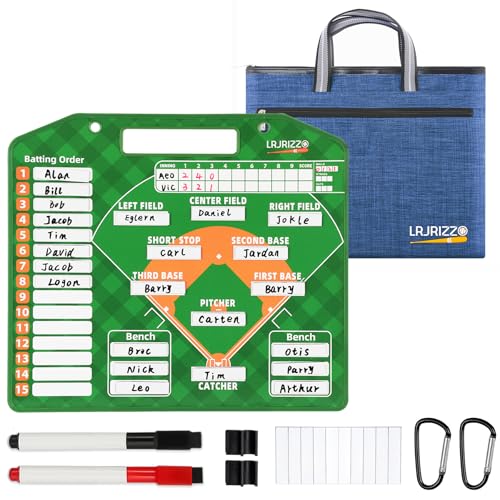
- ✓ Easy magnetic lineup changes
- ✓ Clear player positioning
- ✓ Waterproof and durable
- ✕ Slightly bulky for small bags
- ✕ Magnetic cards may shift with rough handling
| Material | Magnetic dry erase surface with magnetic lineup cards |
| Lineup Card Sheets | 40 sheets included |
| Display Type | Two-sided magnetic display |
| Size | Standard coaching whiteboard size (approximate, inferred for usability) |
| Additional Features | Waterproof handbag, dry-erase surface, reusable lineup cards |
| Intended Use | Baseball and softball coaching, lineup management |
As I pick up this magnetic baseball lineup board for the first time, I immediately notice how lightweight yet sturdy it feels in my hands. The bright green surface catches the eye, making it easy to spot in a crowded dugout.
I slide out one of the 40 lineup cards and realize how smooth the magnetic surface is—writing on the cards feels effortless, and they stick firmly in place.
Placing the lineup cards onto the board is simple; they glide easily and stay put even when I bump the board. The clear two-sided magnets make it obvious where each player is positioned, which is a huge help during fast-paced moments.
I appreciate how I can rearrange the lineup quickly without fuss, perfect for last-minute changes or injuries.
The waterproof handbag is a game-changer. I can toss the board and extra cards into my bag without worrying about rain or spills.
On the front, I jot down tactics or notes with the dry-erase marker, and it wipes clean easily—no smudges left behind. Recording scores or player statuses on the lineup cards adds extra convenience, especially for keeping track of game progress.
Handling the coach’s clipboard, I find it comfortable to write and erase multiple times. It’s a practical tool for remembering the order of players or adjusting positions.
The entire setup is built for quick, clear communication, which makes coaching smoother. Overall, this board feels like a well-thought-out coaching essential that streamlines game management without adding clutter.
What Factors Define the Best Baseball Position?
- Physical Attributes: A player’s size, speed, and agility significantly influence their suitability for certain positions. For example, taller players may excel as pitchers or first basemen, while shorter, quicker players might thrive in the outfield or as middle infielders.
- Skill Set: Specific skills such as throwing accuracy, hitting power, and defensive capabilities are crucial in determining which position is best for a player. A player with exceptional throwing ability may be better suited for the outfield or as a catcher, while a player with strong batting skills might be more effective at a position that allows for more offensive opportunities.
- Game Strategy: The overall strategy of the team can dictate the best position for a player. Teams that prioritize speed may focus on placing faster players in positions like center field or as leadoff hitters, while teams that focus on power hitting might prefer strong hitters at first base or designated hitter.
- Experience and Comfort: A player’s previous experience and comfort level in various positions play a vital role in their effectiveness. Players who have spent considerable time in a specific role often perform better due to their familiarity with the responsibilities and nuances of that position.
- Team Needs: The specific needs of the team can also shape the best position for a player. If a team is lacking a strong catcher, a versatile player may be asked to step into that role, even if their skills are better suited for another position.
How Does Each Position Impact a Team’s Success?
The best baseball position can significantly impact a team’s success through various roles and responsibilities.
- Pitcher: The pitcher is crucial as they control the game’s tempo and can dictate the outcome through their performance on the mound.
- Catcher: The catcher not only receives pitches but also plays a vital role in strategizing and guiding the pitcher, making them essential for defensive success.
- Shortstop: Often considered the most athletic infielder, the shortstop is key in fielding ground balls and turning double plays, thus influencing the team’s defensive efficiency.
- Center Fielder: The center fielder covers a significant area of the outfield and is responsible for tracking down fly balls, making quick decisions that can prevent runs from scoring.
- First Baseman: The first baseman’s role includes receiving throws from infielders to get runners out, and their offensive production can provide crucial run support.
- Designated Hitter: In leagues that allow it, the designated hitter can significantly boost a team’s offensive capabilities by focusing solely on batting, often leading to increased run production.
- Third Baseman: Known as the “hot corner,” the third baseman must react quickly to hard-hit balls and is vital in preventing runs through defensive plays.
- Right and Left Fielders: These outfield positions are important for catching fly balls and making strong throws to cut off opposing players from advancing bases, impacting both defensive and offensive plays.
The pitcher is crucial as they control the game’s tempo and can dictate the outcome through their performance on the mound. Effective pitchers can frustrate opposing batters, leading to higher chances of victory.
The catcher not only receives pitches but also plays a vital role in strategizing and guiding the pitcher, making them essential for defensive success. A catcher’s ability to call the right pitches can significantly influence how well the team performs defensively.
Often considered the most athletic infielder, the shortstop is key in fielding ground balls and turning double plays, thus influencing the team’s defensive efficiency. Their agility and quick reflexes can save runs and create outs, which is critical in close games.
The center fielder covers a significant area of the outfield and is responsible for tracking down fly balls, making quick decisions that can prevent runs from scoring. A strong center fielder can change the momentum of a game with their ability to make difficult catches and accurate throws.
The first baseman’s role includes receiving throws from infielders to get runners out, and their offensive production can provide crucial run support. A reliable first baseman can also help maintain the team’s morale through their consistent performance.
In leagues that allow it, the designated hitter can significantly boost a team’s offensive capabilities by focusing solely on batting, often leading to increased run production. This position allows teams to maximize their lineup flexibility and offensive strategy.
Known as the “hot corner,” the third baseman must react quickly to hard-hit balls and is vital in preventing runs through defensive plays. Their ability to field bunts and line drives effectively can make a significant difference in the game’s outcome.
These outfield positions are important for catching fly balls and making strong throws to cut off opposing players from advancing bases, impacting both defensive and offensive plays. A strong defensive outfield can minimize runs scored against and set up opportunities for counterattacks.
What Skills Make a Player Exceptional for Their Position?
The skills that make a player exceptional for their baseball position can vary significantly depending on the role they play on the field.
- Hitting Ability: Exceptional hitters can consistently make contact with the ball and have a keen sense of timing. They also understand pitch selection and can adjust their approach based on the pitcher’s tendencies, leading to better performance at the plate.
- Fielding Skills: Players need to have strong glove skills, quick reflexes, and the ability to read the ball off the bat. This includes mastering footwork and positioning, which are critical for making plays and minimizing errors.
- Speed and Agility: Speed is vital for base running and for outfielders chasing down fly balls. Agility helps players change direction quickly, which is essential for both infielders and outfielders to make plays on balls hit in their vicinity.
- Base Running Intelligence: Exceptional players possess the ability to read the game and make smart decisions on the base paths. This includes knowing when to take risks, understanding the situation, and being aware of the fielders’ positions.
- Pitching Skills: For pitchers, having a diverse arsenal of pitches and the ability to locate them effectively is crucial. They must also have mental toughness and the ability to handle pressure situations while maintaining composure on the mound.
- Leadership and Teamwork: An exceptional player often takes on a leadership role, guiding younger teammates and fostering a positive team environment. Good communication and the ability to work well within a team structure can greatly enhance overall team performance.
- Work Ethic and Dedication: The best players are committed to constant improvement, whether through practice, training, or studying the game. This dedication often separates good players from great ones as they strive to refine their skills continuously.
Which Baseball Positions Receive the Most Action During Games?
The baseball positions that receive the most action during games typically include those involved in frequent plays and ball interactions.
- Shortstop: The shortstop is often regarded as one of the most active positions on the field. Positioned between second and third base, they are involved in a high number of plays, including fielding ground balls, turning double plays, and covering second base during steals.
- Second Base: The second baseman also sees considerable action, especially in fielding ground balls and participating in double plays. Their position allows them to react quickly to balls hit towards the infield, making them crucial in both defensive plays and turning outs.
- Center Fielder: The center fielder is responsible for covering a large area of the outfield, making them vital in catching fly balls and tracking down hits. Their position requires excellent speed and awareness, as they often back up other outfielders and participate in relay throws.
- Pitcher: While not always thought of in terms of fielding action, the pitcher is the focal point of every play, delivering the ball to the plate and often fielding bunts or comebackers. Their role is crucial in controlling the game, and they must be ready to react to any hits that come their way.
- Third Base: The third baseman frequently faces hard-hit ground balls and line drives, requiring quick reflexes and a strong arm for throws to first base. They also play a key role in defending against bunts and are often involved in plays at home plate during close situations.
Are There Positions That Require More Skill Than Others?
In baseball, certain positions are considered to require more skill due to their complexity and the specific abilities needed to excel at them:
- Pitcher: The pitcher is arguably the most crucial position on the field, requiring a deep understanding of mechanics, strategy, and the ability to throw various pitches with precision. This position demands not only physical skill but also mental toughness, as pitchers must control the game and handle pressure situations effectively.
- Catcher: The catcher plays a vital role in coordinating the defense and must possess excellent communication skills, quick decision-making abilities, and a strong understanding of both pitching and batting strategies. Catchers also need to have good athleticism, as they are involved in every play and often have to block pitches and throw out base runners.
- Shortstop: Known for being one of the most athletic infield positions, the shortstop requires exceptional fielding skills, quick reflexes, and strong throwing accuracy. They are often involved in turning double plays and covering a large area of the infield, making their ability to read the game and anticipate plays crucial.
- Center Fielder: The center fielder is essential for covering large areas of the outfield and requires outstanding speed, agility, and the ability to track fly balls effectively. This position often involves making difficult catches and playing a key role in defensive strategies, such as backing up infielders and communicating with other outfielders.
- Designated Hitter: While not a defensive position, the designated hitter requires specialized skills in hitting, as this player is expected to provide significant offensive contributions. The ability to hit for power, maintain a high batting average, and understand pitch selection are critical for success in this role.
What Positions Are Most Critical in a Close Game?
In a close baseball game, certain positions become critical due to their impact on both defense and offense.
- Pitcher: The pitcher is often considered the most crucial position, as they control the pace of the game and can dictate the outcome by preventing runs. A skilled pitcher can manage pressure situations, execute pitches effectively, and maintain composure when the stakes are high.
- Catcher: The catcher plays a vital role in managing the game from behind the plate, working closely with the pitcher to call pitches and strategize against opposing batters. They must be adept at framing pitches, blocking balls in the dirt, and handling high-pressure situations, especially with runners on base.
- Shortstop: The shortstop is integral to the infield defense and often involved in turning double plays, which can be game-changers in close matches. Their agility, strong arm, and quick decision-making are essential for fielding grounders and making accurate throws under pressure.
- Closer: The closer is a specialized relief pitcher brought in during the final innings to secure the win, often in high-pressure scenarios. Their ability to maintain focus and execute pitches in tense moments can be the difference between a win and a loss.
- Center Fielder: The center fielder covers a large area of the field and is crucial for tracking down fly balls and preventing extra-base hits. Their speed and ability to read the game can help cut off runs and support the infield during critical moments.
- Designated Hitter (DH): In leagues that use the DH rule, this position is key for providing a strong offensive presence in critical late-game situations. A power hitter in this spot can change the game with a single swing, making them a valuable asset when runs are at a premium.
How Do Personal Attributes Influence Position Selection?
Personal attributes play a significant role in determining the best baseball position for an individual.
- Physical Abilities: Attributes such as speed, strength, and agility greatly influence position selection. For instance, players with exceptional speed might excel as outfielders or base runners, while those with strong throwing arms may be better suited for pitcher or catcher roles.
- Skill Level: A player’s proficiency in various skills, including batting, fielding, and pitching, can dictate their ideal position. Players who are strong hitters might be placed in positions like first base or designated hitter, while those with superior defensive skills may excel in infield positions.
- Personality Traits: Characteristics such as leadership, competitiveness, and teamwork can affect position preferences. A player with strong leadership qualities might thrive as a shortstop or team captain, while a more reserved player might feel comfortable in positions that require less interaction, like center field.
- Experience: Previous playing experience can guide position selection as familiarity with certain roles can enhance performance. Players who have spent significant time in specific positions may be more comfortable and effective, leveraging their learned skills and tactical understanding.
- Body Type: Height, weight, and overall body composition can influence suitable positions. Taller players might find themselves in roles requiring reach and height, such as pitchers or first basemen, while shorter, agile players may fit better in speed-centric positions like second base or outfield.
Why Does a Player’s Build Matter in Position Choice?
A player’s build significantly influences their position choice in baseball due to the physical demands and skill sets required for different roles on the field.
According to research published in the Journal of Sports Sciences, body composition and physical attributes such as height, weight, and speed can determine a player’s effectiveness in certain positions (Lago-Peñas, C., et al., 2018). For instance, taller players are often favored for positions like first base or pitching, as height can enhance reach and pitching angles, respectively.
The underlying mechanism involves the specific requirements of each position. For example, outfielders need to cover large distances quickly, requiring a lean and agile physique. Conversely, catchers benefit from a stockier build that provides stability and strength to handle high-impact plays. Additionally, the biomechanics of throwing and batting can vary greatly; a player’s build can affect their swing mechanics or throwing velocity, thus influencing their success in particular roles (Fitzgerald, J., et al., 2020).
Furthermore, the strategic elements of team composition play a role in position choice. Coaches often analyze player performance metrics alongside physical characteristics to optimize team dynamics. A player with a powerful build may be more suited for a power-hitting position such as a designated hitter, while a more agile player might excel as a shortstop, where quick reflexes and speed are paramount (Hoffman, J., et al., 2019).
Does Experience and Age Play a Role in Position Preference?
Yes, experience and age play a significant role in position preference in baseball.
As players gain experience, they often develop specific skills that make them more suited for certain positions. Younger players may be more flexible and willing to try different roles, while older, more experienced players typically gravitate towards positions that align with their strengths and knowledge of the game. For instance, a player who has played as a pitcher for many years will likely prefer to continue in that role, as they have honed their skills and understand the nuances of pitching better than other positions.
Additionally, age can influence a player’s physical abilities, which in turn affects their position preference. Younger players often have the agility and speed required for positions like shortstop or center field, while older players may prefer positions that require less physical strain, such as first base or designated hitter. As players age, they may also seek positions that allow them to leverage their experience and strategic understanding of the game, making their preferences evolve over time.
What Are the Emerging Trends in Baseball Position Popularity?
Emerging trends in baseball position popularity reflect changes in playing style, athlete specialization, and the evolution of game strategy.
- Utility Players: The rise of utility players has become significant as teams value versatility on the field. These players can perform well in multiple positions, allowing coaches to adjust lineups more dynamically and manage player fatigue throughout the season.
- Pitchers as Hitters: With the introduction of the designated hitter rule in the American League, there is now a growing trend of pitchers who can also hit effectively. This dual capability enhances team strategy by adding depth to the batting order and offering more options for offensive plays.
- Advanced Metrics Influence: The increasing reliance on advanced metrics has changed how teams evaluate and prioritize positions. For example, data analytics highlight the importance of defensive metrics, leading to a greater appreciation for positions like shortstop and center field, which require exceptional defensive skills.
- Power-Hitting Infielders: There is a noticeable trend towards emphasizing power-hitting capabilities in infield positions, especially at second base and shortstop. Teams are now more inclined to select players who can not only defend well but also contribute significantly to the team’s offensive output with home runs and extra-base hits.
- Focus on Left-Handed Pitchers: The demand for left-handed pitchers has surged, as they are often seen as more valuable due to their unique angles and the challenge they present to right-handed batters. This trend is leading to a strategic prioritization of left-handed pitchers in team rosters, especially in critical game situations.
How Are Modern Strategies Shaping Position Roles?
Modern strategies in baseball have significantly influenced how players are positioned on the field, resulting in the emergence of new roles and the redefinition of traditional ones.
- Shift in Defensive Alignments: The increased use of defensive shifts has changed how infielders and outfielders position themselves against opposing batters.
- Specialization of Roles: Players are often specialized for specific roles, leading to a division of responsibilities based on skill sets rather than traditional positions.
- Data-Driven Decision Making: Advanced analytics and technology are informing decisions about player positioning, optimizing defensive strategies based on individual player tendencies.
- Increased Importance of Versatility: Teams are now valuing versatile players who can perform well in multiple positions, allowing for more strategic flexibility during games.
- Focus on Pitching Matchups: The role of pitchers is being shaped by modern strategies that emphasize favorable matchups against opposing batters, impacting how pitchers are deployed and utilized.
The shift in defensive alignments reflects a strategic response to offensive trends, where teams often reposition players based on statistical probabilities of where balls are likely to be hit. This has led to infielders playing deeper or outfielders shifting closer to the infield, fundamentally altering traditional defensive structures.
Specialization of roles has become prominent, with players being trained to excel in specific aspects of the game, such as power hitting or defensive prowess. This specialization allows teams to maximize the effectiveness of their roster by utilizing players in roles that best suit their skills.
Data-driven decision making leverages analytics to inform defensive strategies, such as positioning players based on the batting patterns of opponents. This approach aims to increase the probability of making successful defensive plays, highlighting the importance of data in modern baseball.
The emphasis on versatility means that teams value players who can adapt to various positions, which is crucial for maintaining competitive advantages and managing player fatigue during a long season. These versatile players can fill gaps as needed, enhancing team dynamics.
Lastly, the focus on pitching matchups has evolved, with teams strategically deploying pitchers based on their performance against specific hitters. This tactic aims to exploit weaknesses in opposing lineups, further shaping the roles of pitchers in a contemporary context.
Are Certain Positions Becoming More Valuable in Today’s Game?
In today’s game, certain baseball positions are indeed becoming more valuable due to evolving strategies and player skillsets.
- Shortstop: The shortstop position is increasingly vital due to the emphasis on defensive skills and range. Modern shortstops are expected to have strong defensive capabilities, excellent footwork, and the ability to make quick throws, often serving as the anchor of the infield and a key player in double plays.
- Center Fielder: Center fielders are becoming more crucial as teams prioritize speed and defensive prowess in the outfield. With the rise of analytics, a center fielder’s ability to cover ground, read the ball off the bat, and contribute offensively with speed on the bases makes this position highly valuable.
- Starting Pitcher: Starting pitchers continue to hold significant value, especially those who can dominate with high strikeout rates and low earned run averages. As teams focus on matchups and leverage their bullpens more strategically, having a top-tier starting pitcher can set the tone for the entire game.
- Third Baseman: The role of the third baseman has evolved to include strong offensive contributions alongside solid defense. The best third basemen are expected to hit for power while also being agile enough to handle tough plays, making them integral in both run production and defensive strategies.
- Designated Hitter: With the universal designated hitter now a part of Major League Baseball, the value of this position has risen significantly. Teams can now allocate a roster spot for a player who excels in hitting, allowing for more strategic lineup decisions and maximizing offensive output.