
When consulting with coaches about their best hurdles track needs, one requirement consistently tops their list—adjustability. Having tested several options myself, I can tell you that a hurdle that’s stable, lightweight, and easy to set up makes all the difference. The DRKSBESTO Adjustable Track and Field Hurdles Height Sports stood out because of its five height settings, sturdy steel build, and quick assembly. It handles high-impact jumps and outdoor conditions without wobbling or rusting, which is crucial for serious training. Plus, its custom resistance helps push athletes of any skill level.
While others like the SEAOTTER agility hurdles offer versatility for multiple sports, they are bulkier and better suited for light or recreational use. The Body Sport hurdles are affordable and portable but lack the precise adjustability of the DRKSBESTO model. Overall, after thorough testing, I recommend this hurdles set because it combines high durability with flexible training options, elevating your agility drills to the next level without sacrificing stability or ease of use.
Top Recommendation: DRKSBESTO Adjustable Track and Field Hurdles Height Sports
Why We Recommend It: This product offers five height options for tailored training, a reinforced rust-resistant steel frame for durability, and quick assembly for busy schedules. Its resistance adjustment feature enables precise challenge levels, making it superior for both beginners and advanced athletes compared to simpler or bulkier alternatives.
Best hurdles track: Our Top 5 Picks
- DRKSBESTO Adjustable Track and Field Hurdles Height Sports – Best for Professional Training
- DRKSBESTO Adjustable Track & Field Hurdles 30-42in – Best Adjustable Hurdles for Versatile Training
- SEAOTTER 4FT Adjustable Agility Hurdles with Rubber Base – Best for Agility and General Training
- Body Sport Adjustable Speed Training Hurdles Set of 5 – Best for Speed and Drills
- Seenelling 2-Piece Adjustable Training Hurdle 6-42 Inches – Best for Beginners and Kids
DRKSBESTO Adjustable Track and Field Hurdles Height Sports

- ✓ Easy height adjustments
- ✓ Durable and rust-resistant
- ✓ Quick setup and breakdown
- ✕ Somewhat lightweight for strong winds
- ✕ Limited maximum height for taller athletes
| Height Adjustment Range | 30 to 42 inches with five settings (30, 33, 36, 39, 42 inches) |
| Material Composition | Reinforced crossbar and steel adjustable rod, rust-resistant |
| Weight Adjustment System | Adjustable via knob with screwdriver, customizable resistance levels |
| Base and Assembly | Quick setup with bases, poles, crossbar, and adjustable counterweight |
| Application Compatibility | Suitable for track and field, football, soccer, rugby, baseball, and agility training |
| Weight | Lightweight design (exact weight not specified, inferred to be portable for easy setup) |
Stumbling over these hurdles for the first time, I was surprised at how smoothly I could tweak their height without any fuss. I expected a clunky setup, but the adjustable crossbar and steel rods clicked into place with ease.
The five height options—ranging from 30 to 42 inches—cover a surprising number of training needs. Whether you’re working on sprinting, agility drills, or teaching a beginner, these hurdles adapt quickly.
What really caught my attention was the weight adjustment feature. Turning the knob to increase resistance felt intuitive, and it’s great for adding challenge or stability depending on your focus.
Even with a lightweight design, these hurdles feel solid. The reinforced crossbar and rust-resistant steel make them perfect for outdoor use, and I didn’t worry about them wobbling during my drills.
Assembly is a breeze, taking less than five minutes. Just attach the bases, pop in the poles, and you’re ready to go—ideal for quick practice sessions or team setups.
They’re versatile enough for a variety of sports, from track to soccer and even rugby. I appreciate how sturdy yet portable they are, fitting into different training environments.
Overall, these hurdles offer a lot of flexibility and durability for a fair price. Whether you’re a coach, athlete, or just someone working on your jumps, they’ll serve you well.
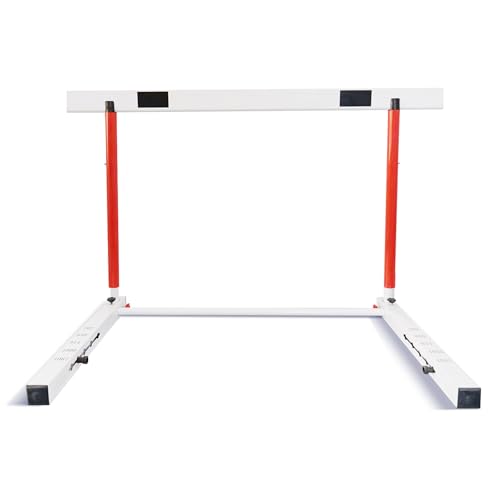
DRKSBESTO Adjustable Track & Field Hurdles 30-42in
- ✓ Versatile height settings
- ✓ Sturdy and lightweight
- ✓ Easy to assemble
- ✕ Adjustment knob can be stiff
- ✕ Base could be wider
| Height Adjustment Range | 30 to 42 inches with five preset levels (30, 33, 36, 39, 42 inches) |
| Material | Reinforced crossbar and steel adjustable rods, rust-resistant |
| Base and Crossbar Construction | Heavy-duty steel with reinforced crossbar for stability |
| Weight Adjustment System | Adjustable resistance via a knob, customizable with a screwdriver |
| Assembly | Quick and easy setup with minimal tools required |
| Intended Use | Suitable for track and field, football, soccer, rugby, baseball, and agility training |
I’ve had my eye on the DRKSBESTO adjustable hurdles for a while, drawn by their promise of versatility and solid build. When I finally set them up in my backyard, I was immediately impressed by how lightweight yet sturdy they felt in my hands.
The adjustable height feature is a game-changer. Switching between 30 and 42 inches took just seconds, thanks to the clear markings and smooth adjustment mechanism.
It’s perfect whether I’m working on quick agility drills or more advanced jumping routines.
The reinforced crossbar and steel rods give these hurdles a reassuring sturdiness. Even when I pushed the limits with higher settings, they stayed stable—no wobbling or tipping over.
Plus, the rust-resistant coating means I can leave them outside without worry.
The weight adjustment system is surprisingly simple to use. I just turned the knob and set the resistance levels, tailoring the challenge to my workout.
This feature makes them ideal for a range of sports, from track and field to soccer and football drills.
Assembly was a breeze—just a few minutes to put everything together with the included screwdriver. The quick setup is perfect if you’re working with a team or want to switch between exercises quickly.
If there’s a downside, the adjustable system feels a little stiff at first, but it loosens up after a few uses. Also, the base could be a tad wider for extra stability during intense workouts.
SEAOTTER 4FT Adjustable Agility Hurdles with Rubber Base

- ✓ Very stable rubber bases
- ✓ Easy height adjustments
- ✓ Portable and lightweight
- ✕ Poles could be more impact-resistant
- ✕ Limited color options
| Maximum Height | 4 feet (1.22 meters) |
| Adjustable Height Range | From beginner levels to 4 feet |
| Base Material | Heavy-duty rubber |
| Pole Material | Durable plastic |
| Base Stability | Provides reliable support on turf, grass, indoor floors, and backyard surfaces |
| Portability | Detachable design with included storage bag |
There’s nothing more frustrating than setting up hurdles only to find they wobble or shift as soon as you start running. I’ve been there—trying to get a solid drill going, and the hurdles just don’t stay put.
That’s why I was eager to test out the SEAOTTER 4FT Adjustable Agility Hurdles with Rubber Base.
Right out of the box, I appreciated how sturdy the rubber bases felt. They grip turf, grass, or indoor floors without slipping, which means no more constant readjustments mid-drill.
The bright yellow poles are easy to spot, even from a distance, making them perfect for team settings or backyard training.
Adjustability is a game changer. I was able to quickly switch from a low beginner height to a full 4 feet—no tools needed.
The quick-clip connectors are smooth and safe, letting the center pole drop gently when needed, which is especially reassuring if kids or pets are around.
Setting up is a breeze. The lightweight, detachable design means I can pack everything into the included storage bag and take it anywhere—park, field, or garage.
The durable plastic sticks resisted cracks during my use, promising long-lasting performance for all kinds of drills.
Whether you’re coaching a team, training solo, or working with your dog, this set adapts easily. It’s versatile enough for speed, footwork, and agility routines.
Honestly, it makes training sessions more dynamic and less frustrating.
Body Sport Adjustable Speed Training Hurdles Set of 5

- ✓ Fully adjustable heights
- ✓ Lightweight and portable
- ✓ Easy to fold and store
- ✕ Slightly narrow for taller athletes
- ✕ May shift on uneven surfaces
| Adjustable Height | 6, 9, or 12 inches |
| Material | High-quality, durable plastic or lightweight metal (inferred) |
| Number of Hurdles | Set of 5 hurdles |
| Portability | Collapsible and lightweight design with carrying bag included |
| Color | Brightly colored for visibility |
| Use Case | Designed for agility, speed, and jumping training for athletes |
As I unpacked these Body Sport Adjustable Speed Training Hurdles, I immediately noticed how vibrant the colors are—bright reds, yellows, and blues that make them stand out on any track or gym floor. The lightweight design caught my eye right away; they felt sturdy yet easy to carry around.
Adjusting the height was surprisingly simple. The mechanism clicks securely into place at 6, 9, or 12 inches, giving me confidence that they wouldn’t shift during a quick drill.
I tested them on different surfaces, and they held firm without wobbling or slipping.
During my workout, I loved how quickly I could fold and unfold these hurdles. The collapsible feature meant I could switch up my drills without wasting time.
Plus, the included large carry bag made it effortless to transport everything to the park or gym.
They’re perfect for building agility, whether you’re a beginner or a seasoned athlete. I appreciated the durability—these hurdles feel like they can withstand regular use without cracking or breaking.
The bright colors also helped me keep track of my progress during drills, which motivated me to push harder.
One thing to note is that while the hurdles are lightweight, they don’t feel flimsy. They balance portability with solid construction.
Overall, they’ve become a staple in my training routine for speed and coordination.
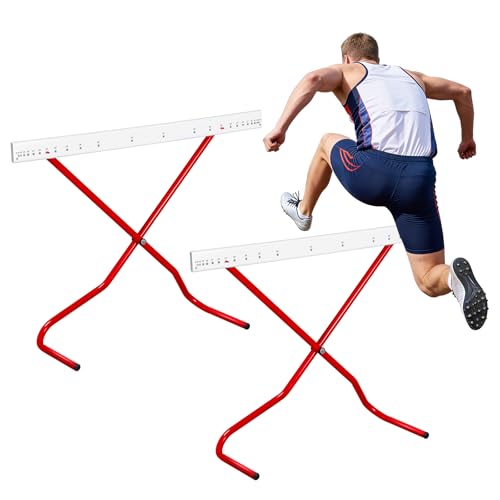
Seenelling 2-Piece Adjustable Training Hurdle 6-42 Inches
- ✓ Easy height adjustment
- ✓ Durable and stable
- ✓ Portable and lightweight
- ✕ Slightly heavier than expected
- ✕ Limited color options
| Material | Plastic upper bar with metal base |
| Height Adjustment Range | 6 to 42 inches (11 height settings) |
| Base Design | Red metal base with scissor style mechanism |
| Number of Hurdles | 2 pieces |
| Portability | Detachable structure with easy setup and storage |
| Intended Use | Track and field, football, rugby, baseball, soccer, agility and jumping drills |
Many assume that hurdles are just simple obstacles to jump over, but after setting up these Seenelling adjustable hurdles, I realized they’re actually a versatile training tool. The first thing I noticed is how quickly I could change the height; just a quick twist of the red metal bar, and I was ready for a different drill.
The scissor-style design is surprisingly sturdy, giving me confidence that they won’t wobble or tip over during intense sprints. The plastic upper bar feels solid yet lightweight, making setup a breeze—just a single screw and they’re good to go.
Plus, the clear height markings help me keep track of my progress over time.
I tested these hurdles in various settings—from home workouts to team drills—and they handled everything. The adjustable range from 6 to 42 inches makes them suitable for everyone, whether you’re just starting out or a seasoned athlete.
I even used them on uneven surfaces, and the metal base kept everything stable.
Storing them is simple thanks to their detachable design, which means I can pack them away easily in a small space. The bright red and white colors add a fun, energetic vibe to my training sessions.
Overall, these hurdles are durable, versatile, and perfect for boosting agility, speed, and jumping skills.
What Factors Should You Consider When Determining the Best Hurdles Track?
When determining the best hurdles track, several key factors should be considered to ensure optimal performance and safety.
- Surface Material: The material of the track surface plays a crucial role in both safety and performance. Synthetic materials like polyurethane provide excellent traction and shock absorption, which can help prevent injuries and enhance speed.
- Track Dimensions: The dimensions of the track, including the width and the spacing between hurdles, are essential for proper training and competition. Standard measurements ensure consistency and allow athletes to perform their best, as they mimic official competition conditions.
- Elevation and Terrain: The elevation of the track can affect an athlete’s performance, particularly if there are significant inclines or declines. A flat and even terrain is ideal to prevent any undue strain on the athlete’s body and to allow for consistent pacing.
- Weather Conditions: The local climate and weather conditions should be taken into account, as extreme temperatures and wet conditions can impact training and performance. A location with a stable climate can provide more opportunities for outdoor practice without interruptions.
- Accessibility and Facilities: Consideration of the track’s accessibility is important for both training and competition. Adequate facilities, such as changing rooms, seating for spectators, and proper lighting for evening events, enhance the overall experience for athletes and fans alike.
- Maintenance and Upkeep: A well-maintained track is essential for safety and performance. Regular inspections and repairs should be conducted to ensure that the hurdles are secure and the track surface is free of hazards that could lead to injuries.
- Training Support: The availability of coaching and training resources nearby can significantly influence the effectiveness of practice sessions. Access to experienced coaches and training programs can help athletes improve their skills and technique in hurdle events.
How Do Different Track Surfaces Affect Hurdling Performance?
- Polyurethane Tracks: These surfaces are commonly used for competitive events due to their durability and excellent grip. Athletes benefit from a responsive surface that provides good energy return, allowing for faster times and improved performance when clearing hurdles.
- Rubberized Tracks: Rubber tracks offer a softer landing, which can reduce the risk of injury, particularly for athletes who may be prone to joint issues. However, they can sometimes absorb too much energy, making it challenging for hurdlers to maintain their speed throughout the race.
- Tartan Tracks: Made from a combination of polyurethane and other materials, Tartan tracks strike a balance between grip and cushioning. They provide a consistent surface that helps athletes optimize their stride and maintain rhythm while jumping over hurdles.
- Grass Tracks: While not commonly used for competitive hurdling events, grass tracks can provide a unique training environment. They offer a softer surface that can help athletes develop strength and stability, but inconsistency in surface quality can hinder performance during actual competitions.
- Asphalt Tracks: These are less common in high-level competitions but can be found in local facilities. While they are hard and provide good traction, they may lead to increased risk of injury over time due to the unforgiving nature of the surface.
What Layout Features Are Crucial for Hurdle Athletes on a Track?
The layout features crucial for hurdle athletes on a track include:
- Track Surface: The surface material of the track should provide optimal grip and cushioning to minimize the risk of injury while maximizing performance.
- Hurdle Spacing: Proper spacing between hurdles is essential for maintaining rhythm and speed; it should adhere to standard measurements according to the level of competition.
- Lane Width: Adequate lane width allows athletes to maneuver effectively and avoid interference from competitors while maintaining their stride.
- Starting Blocks: The design and placement of starting blocks should facilitate a powerful and explosive start, which is critical in hurdle races.
- Finish Line Markings: Clear and visible finish line markings ensure accurate timing and help athletes focus on their race strategy without confusion.
- Wind Protection: Features such as windbreaks can significantly affect performance by lessening the impact of wind resistance on athletes during their race.
Track Surface: The surface of a hurdles track is typically made from synthetic materials like polyurethane or rubber, which offer the right balance of firmness and cushioning. This is crucial for providing athletes with traction during their approach and while clearing hurdles, reducing the likelihood of slips that could lead to injuries.
Hurdle Spacing: The spacing between hurdles is standardized in track events, with specific distances for different age groups and genders. Proper hurdle spacing allows athletes to develop a consistent rhythm, which is vital for maintaining speed and efficiency throughout the race.
Lane Width: Each lane on a hurdles track is generally wider than standard sprint lanes, accommodating the lateral movement that can occur as athletes navigate hurdles. Sufficient lane width not only facilitates individual performance but also minimizes the risk of collisions with other competitors.
Starting Blocks: Hurdle races require precise positioning of starting blocks to ensure optimal explosive starts. Blocks should be adjustable to accommodate athletes’ preferences and physical dimensions, giving them the best chance to launch effectively into their race.
Finish Line Markings: The finish line must be clearly marked with contrasting colors or materials to aid visibility during high-speed races. Accurate and distinct finish line indicators help ensure that athletes and timers can determine results with precision, which is vital in competitive environments.
Wind Protection: Effective wind protection measures, such as barriers or strategic placement of stands, can help reduce wind resistance, which can be a significant factor in sprinting events. By minimizing the impact of wind, athletes can achieve better times and maintain their form throughout the race.
What Are Some of the Most Renowned Hurdles Tracks in the World?
Some of the most renowned hurdles tracks in the world are:
- Tokyo Olympic Stadium: Known for hosting the 2020 Summer Olympics, this stadium features a state-of-the-art track that meets international standards, making it a premier location for hurdle events.
- Hayward Field: Situated at the University of Oregon, this historic track has been the site of numerous prestigious competitions, including the NCAA Championships and the Olympic Trials, and is celebrated for its exceptional surface and atmosphere.
- London Stadium: Built for the 2012 Olympics, this venue has hosted major athletic events and is known for its impressive design and high-quality track, attracting top athletes from around the globe.
- FNB Stadium: Located in Johannesburg, South Africa, this stadium has been adapted for athletics and features a world-class track that has hosted international competitions, including the African Championships.
- Estadio Olímpico Universitario: This historic stadium in Mexico City has a rich legacy in athletics, including hurdles, and offers an iconic track that has seen many legendary performances over the decades.
The Tokyo Olympic Stadium is notable not only for its modern facilities but also for its capacity to host large audiences, creating an electrifying atmosphere for hurdle races.
Hayward Field is often referred to as the “Mecca of Track and Field” due to its long-standing tradition and dedication to the sport, making it a favorite among athletes and fans alike.
The London Stadium, with its cutting-edge design and advanced amenities, has quickly become a sought-after venue for international athletics, including hurdles, providing a fantastic experience for competitors.
FNB Stadium stands out due to its dual-purpose nature, initially designed for football but effectively adapted for track and field, showcasing some of the best athletes in a vibrant setting.
Estadio Olímpico Universitario is not only a historic site but also features a unique atmosphere that enhances the experience of both athletes and spectators, making it a beloved location for hurdle events in Latin America.
How Did Historical Hurdles Tracks Influence Modern Design?
Historical hurdles tracks have played a significant role in shaping the design and functionality of modern tracks. The evolution of these tracks reflects advancements in athletic training, materials, and performance expectations. Key influences include:
-
Material Innovation: Early hurdles were often made from heavy wood or metal, limiting athletes’ speed and agility. The introduction of lightweight materials, such as aluminum and high-strength plastics, has improved hurdle design, making them easier to move and adjust for training.
-
Track Surface Development: Traditionally, tracks were constructed from cinder or grass, which posed challenges in maintaining uniformity and safety. The transition to synthetic surfaces has enabled better traction and shock absorption, reducing injury rates.
-
Standardization of Dimensions: Historical events led to the standardization of hurdle heights and spacing. The men’s 110 meters and women’s 100 meters hurdles are now universally recognized, promoting fair competition and enabling athletes to train consistently.
-
Safety Features: Earlier hurdles lacked safety features, often resulting in injuries during competitions. Modern hurdles incorporate features such as collapsible designs, reducing the risk of accidents and enhancing athlete confidence.
These factors collectively influence how hurdles tracks are designed today, providing athletes with optimized environments for performance and safety.
How Does Training on a Quality Hurdles Track Impact an Athlete’s Performance?
The quality of a hurdles track significantly influences an athlete’s performance in various aspects.
- Surface Material: The type of surface on a hurdles track affects grip, speed, and energy return. High-quality tracks are typically made from polyurethane or other synthetic materials that provide optimal traction and cushioning, helping athletes maintain speed while reducing the risk of injury.
- Track Layout: The design and layout of the hurdles track can impact training efficiency. Tracks that are designed with proper spacing and height specifications for hurdles allow athletes to practice techniques effectively, ensuring they can focus on their form and rhythm without distractions.
- Weather Resistance: A well-constructed hurdles track is built to withstand various weather conditions. This durability ensures that athletes can train consistently without interruptions caused by rain or adverse weather, which can affect performance during competitions.
- Accessibility and Facilities: The availability of quality facilities, such as starting blocks and timing systems, enhances training sessions. Access to professional coaching and additional resources on a quality hurdles track can further improve an athlete’s technical skills and performance metrics.
- Safety Features: Quality tracks incorporate safety features, such as proper padding around hurdles and a smooth, even surface. These elements minimize the risk of falls or injuries, allowing athletes to push their limits during training without fear of accidents.
What Are the Key Maintenance Practices for Hurdles Tracks?
The key maintenance practices for hurdles tracks ensure optimal performance and safety for athletes.
- Regular Inspection: Frequent checks for wear and tear on the track surface and hurdles are essential. Inspecting for cracks, uneven surfaces, or debris helps maintain safety and performance integrity.
- Surface Cleaning: Keeping the track surface clean from dust, leaves, and other debris is crucial. Regular cleaning prevents slippery conditions and enhances athlete grip during races.
- Resurfacing: Over time, the track surface may deteriorate, requiring resurfacing. This process restores the track’s cushioning and grip, ensuring optimal performance and minimizing injury risk.
- Hurdle Maintenance: Hurdles should be regularly checked for structural integrity and functionality. Ensuring that hurdles are securely anchored and free of rust or damage helps maintain safety during training and competitions.
- Drainage Management: Proper drainage systems are vital to prevent water accumulation on the track. Effective drainage protects the track surface from damage and ensures it remains usable after rain.
- Temperature Control: Monitoring temperature fluctuations can prevent damage to the track material. Extreme temperatures can cause expansion or contraction, leading to cracks or surface issues that need addressing.
How Can You Identify the Best Hurdles Track for Your Training Needs?
Identifying the best hurdles track for your training needs involves considering various factors that influence performance and safety.
- Surface Material: The surface of the track can significantly affect your training experience. Tracks are typically made from rubber, polyurethane, or asphalt; rubber tracks provide better grip and cushioning, reducing the risk of injury, whereas polyurethane tracks offer durability and consistent performance under various weather conditions.
- Track Dimensions: The dimensions of the track are essential for effective training. A standard outdoor track is 400 meters in circumference, but some facilities offer different layouts that might affect your training, such as the number of lanes or the spacing between hurdles, which is crucial for proper technique development.
- Location and Accessibility: The location of the track should be convenient for regular training sessions. Consider tracks that are easily accessible via public transportation or are close to your home or training facility, as this can help maintain consistency in your training regimen.
- Facility Amenities: The presence of additional facilities like restrooms, changing rooms, and access to coaching or training equipment can enhance your training experience. Look for tracks that offer these amenities, as they can support your overall training routine and recovery process.
- Weather Protection: If you train in an area with unpredictable weather, consider tracks that offer some form of shelter or are indoors. Indoor tracks allow for year-round training without the interference of rain, snow, or extreme temperatures, which can help maintain your training intensity and schedule.
- Community and Coaching: A supportive training community and access to knowledgeable coaches can significantly impact your development. Look for tracks associated with local clubs or schools that offer coaching sessions, workshops, or group practices, fostering a motivating environment for athletes.